Dawson City History
Long before the arrival of prospectors and the founding of Dawson City, the region was the traditional territory of the Tr’ondëk Hwëch’in, a Hän-speaking First Nation whose ancestors had occupied the central Yukon for thousands of years. The confluence of the Klondike and Yukon rivers was particularly important because of its rich salmon fishery. The Tr’ondëk Hwëch’in maintained a seasonal fishing camp at Tr’ochëk, directly across the Klondike River from the future site of Dawson City.
Traders and prospectors began entering the region in increasing numbers during the nineteenth century. A commercial fur-trading post was established at Fort Reliance, downstream from the future Dawson City townsite, in 1874. By the 1880s prospectors were searching the Yukon River and its tributaries for placer gold, and small discoveries gradually drew a permanent mining population into the territory. Forty Mile, established near the mouth of the Fortymile River following gold discoveries in that region, became the principal mining settlement in the Yukon before the Klondike strike.
The region was also surveyed during this period by Canadian geologist George Mercer Dawson of the Geological Survey of Canada. Dawson explored and mapped portions of the Yukon in 1887, and the future gold-rush city was named in his honor.
Discovery of Gold
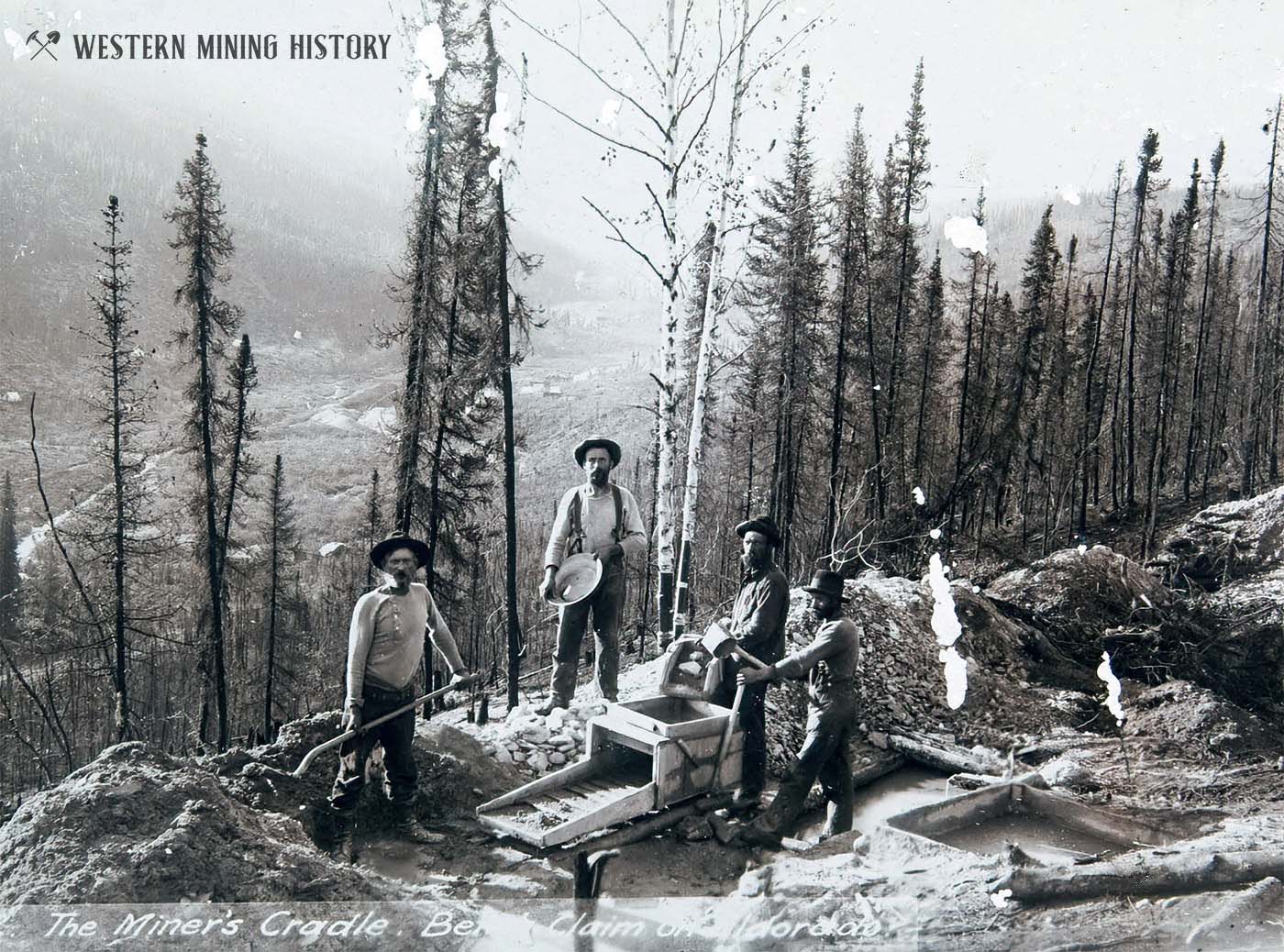
The event that transformed the region occurred in August 1896. Keish, better known as Skookum Jim Mason, Káa Goox, known as Dawson Charlie, and American prospector George Carmack were traveling in the Klondike region when the party discovered rich placer gold on Rabbit Creek, a tributary of the Klondike River. The creek was soon renamed Bonanza Creek. Keish is generally credited with making the discovery on August 16, although surviving accounts differ on some details.
On August 17, Carmack, Keish, and Dawson Charlie staked claims on the creek. Carmack subsequently traveled to Forty Mile, where the claims were formally registered. News spread rapidly through the small Yukon mining community. Prospectors abandoned older diggings and hurried into the Klondike, and Bonanza and Eldorado creeks were soon staked from end to end.
Trader and prospector Joseph Ladue quickly recognized that the new goldfield would require a supply center. In 1896 he staked out a townsite at the confluence of the Yukon and Klondike rivers. The settlement was named Dawson City in honor of George Mercer Dawson.
During the winter of 1896-1897, Dawson City remained a remote frontier settlement occupied primarily by miners, traders, and merchants already living in the Yukon. That changed dramatically after news of the strike reached the outside world in 1897.
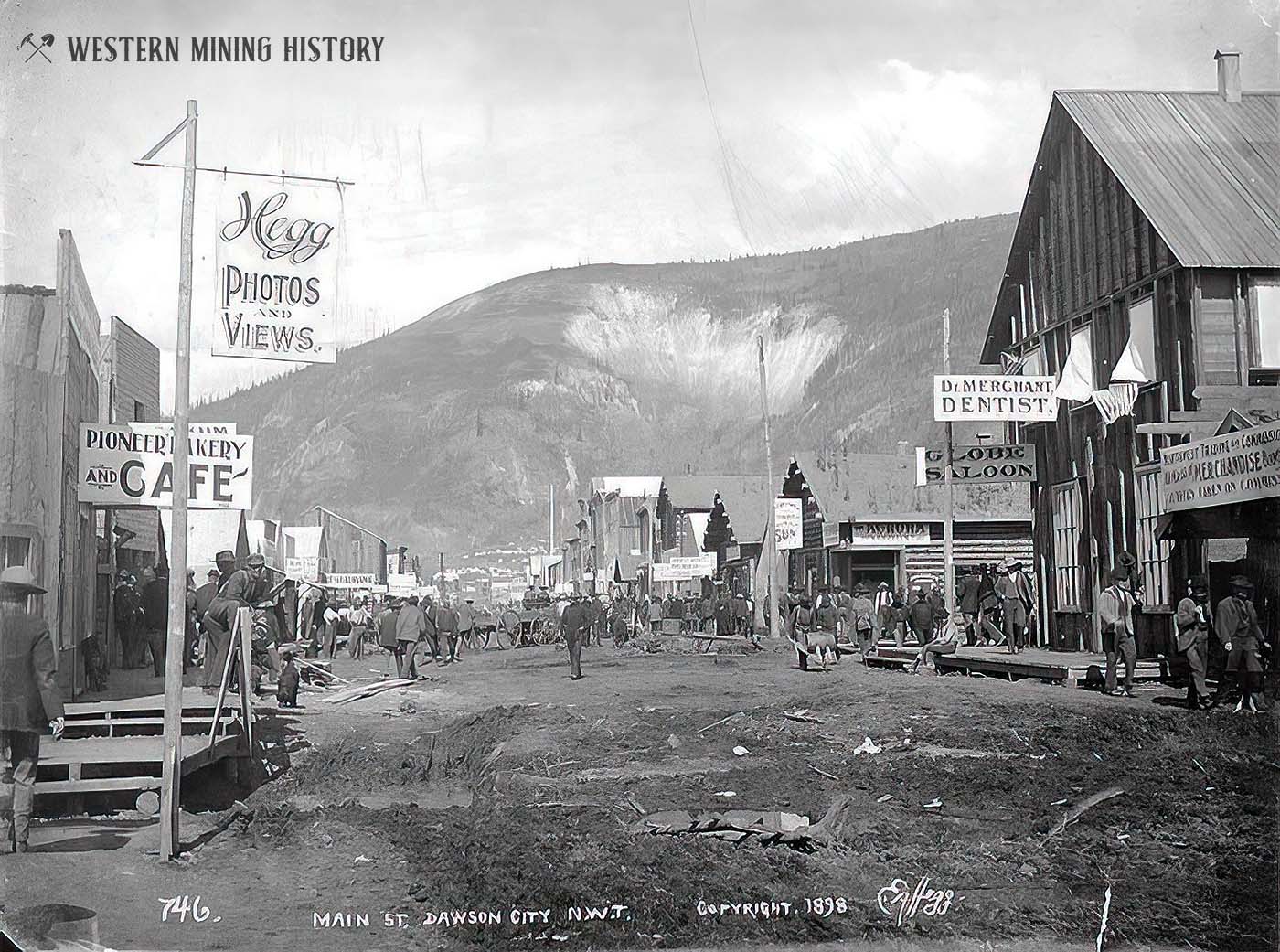
In The Klondike Stampede of 1897–1898, Tappan Adney described Dawson City as it appeared in the fall of 1897. Main Street, which followed the riverfront, was already lined with log hotels, saloons, restaurants, stores, warehouses, and dance halls, with tents and smaller cabins filling the spaces between. Along the river's edge were even more makeshift structures. Adney described the scene:
On the river's edge, facing this irregular row, are tents, rough buildings hastily constructed out of slabs, scows with tents built over them and warmed by Yukon stoves, and used as offices and restaurants or residences, etc.–a ragged, motley assemblage. In the middle of the road, and evidently built there before the town was surveyed, stands a cabin with one window, the Ladue cabin, the first built in Dawson, and now used as a bakery, when there is anything to bake.
Beyond the hotels and saloons stood the substantial stores and warehouses of the Alaska Commercial Company and the North American Transportation and Trading Company, followed by Harper and Ladue's sawmill and additional cabins farther along the riverfront.
The Klondike Stampede
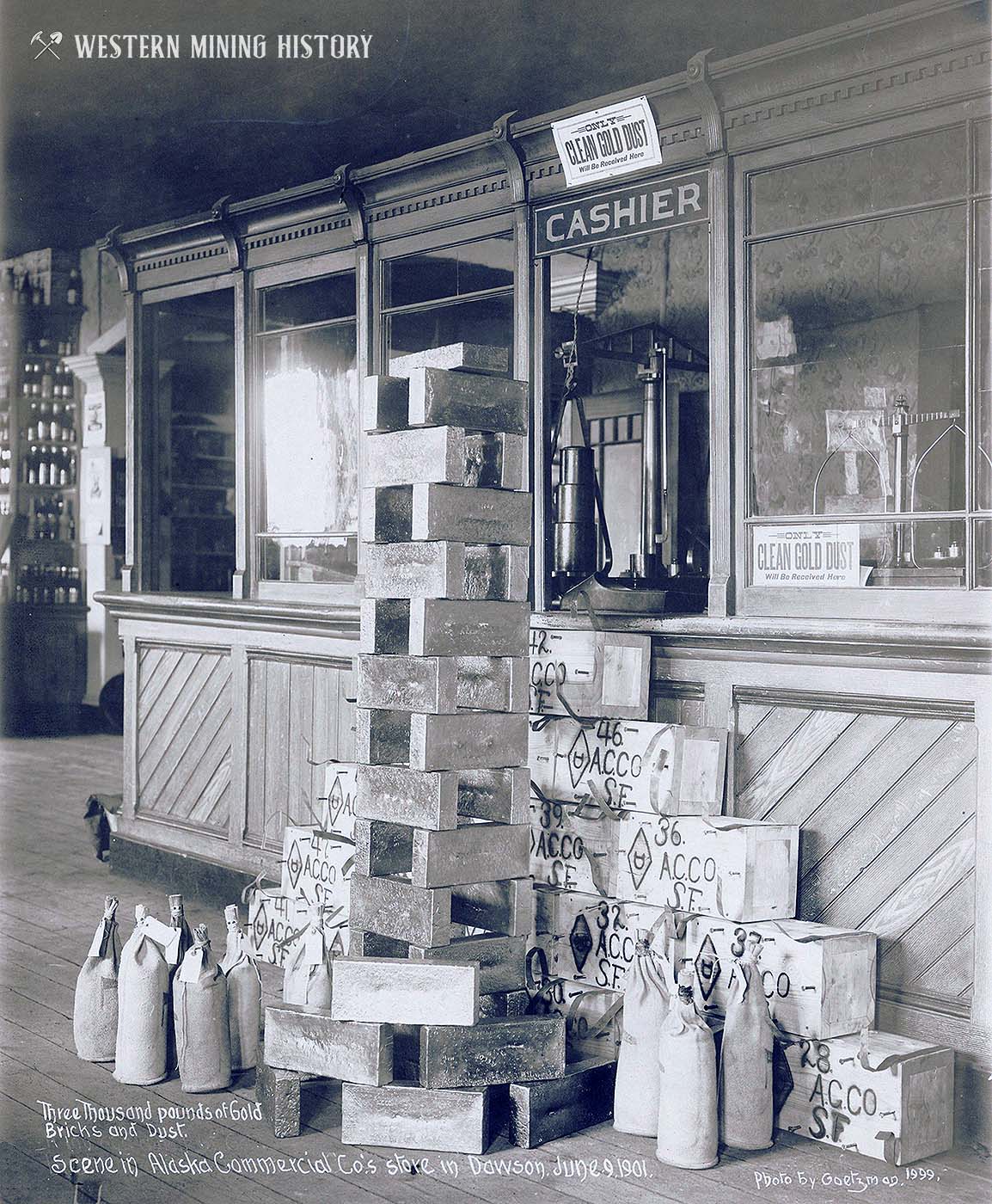
In the summer of 1897, ships reached ports on the Pacific coast carrying successful Klondike miners and large quantities of gold. Newspaper reports of extraordinary riches ignited one of the last great gold rushes of the nineteenth century.
Approximately 100,000 people set out for the Klondike, although only a fraction completed the journey. Many traveled north through Dyea and Skagway, Alaska, crossed the Coast Mountains over the Chilkoot or White Pass trails, and continued toward the Yukon River and Dawson.
By the summer of 1898, approximately 30,000 stampeders had reached Dawson City. Many arrived only to discover that almost all of the promising ground on Bonanza, Eldorado, and the other productive creeks had already been claimed. Nevertheless, the newcomers transformed Dawson into one of the largest communities in western Canada.
Dawson City Boom Town
Dawson City's population during the height of the rush is difficult to establish precisely because thousands of transient residents passed through the town. Estimates generally place its population between 20,000 and 30,000 during 1898 and 1899.
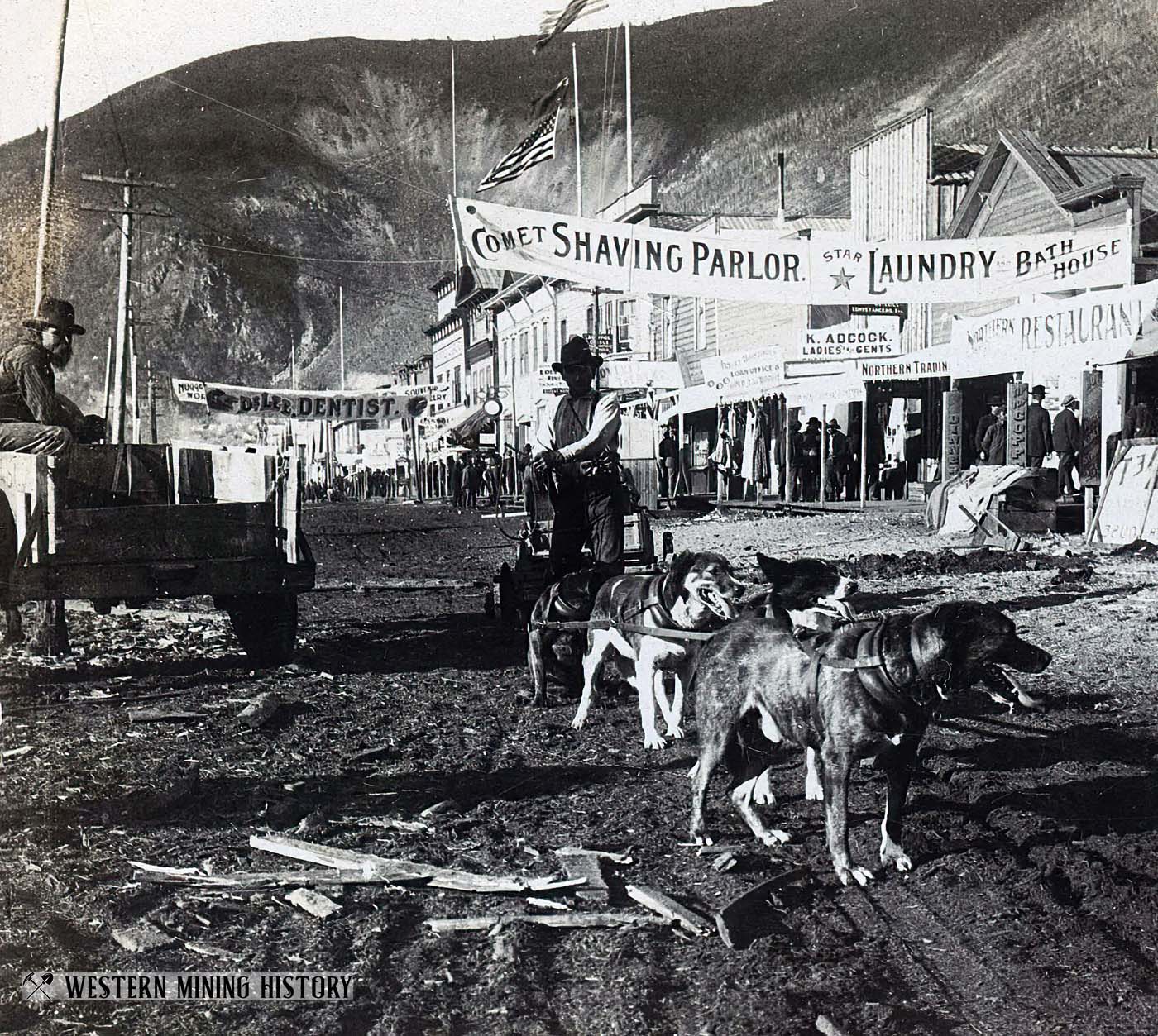
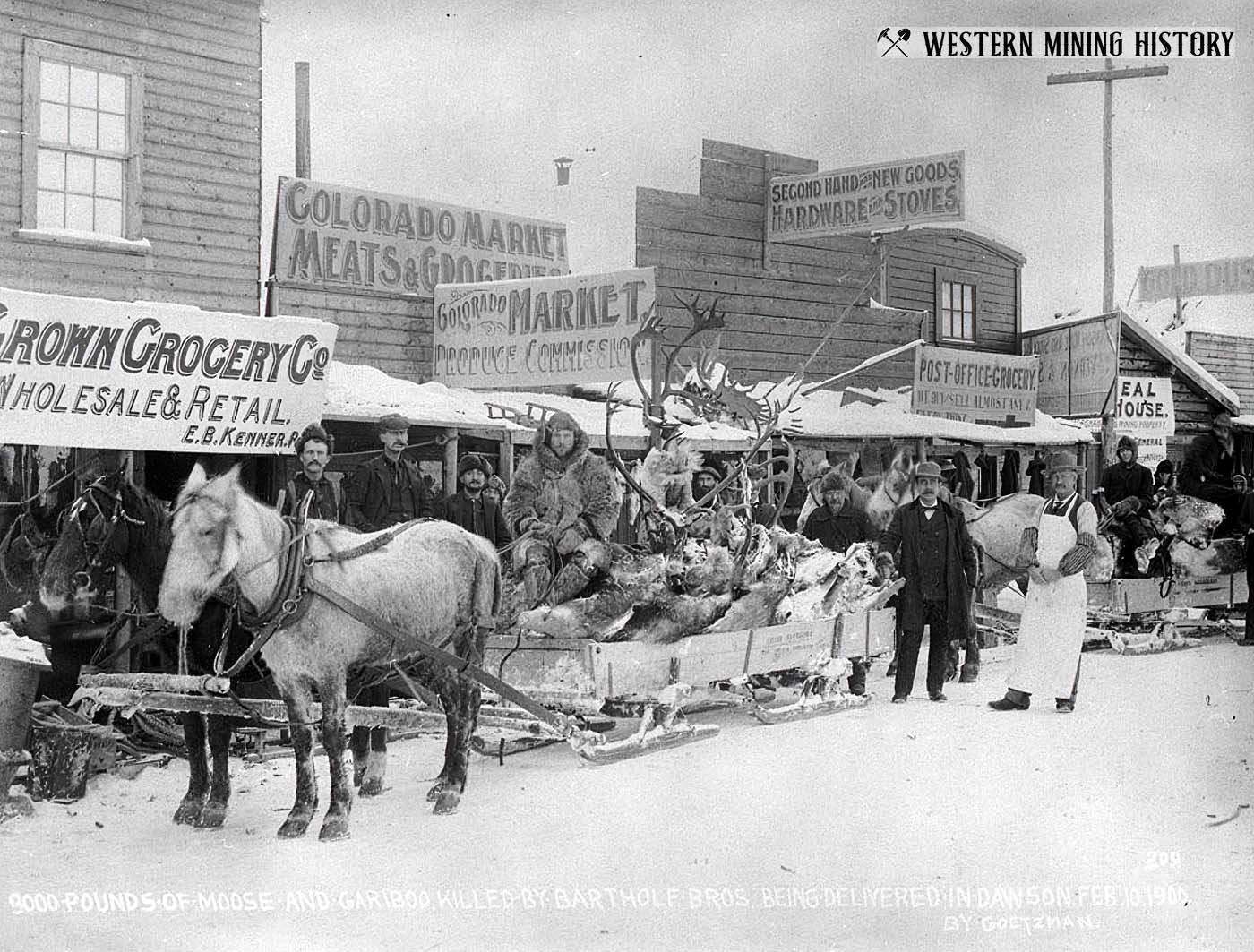
The physical growth of the town was chaotic. Tents, log cabins, warehouses, stores, saloons, hotels, restaurants, dance halls, and other buildings crowded onto the low ground along the Yukon River. The muddy tent town of the rush years quickly developed into a substantial urban center, and by 1900 Dawson had churches, theaters, newspapers, municipal services, stores, and increasingly substantial buildings. Fires were a constant threat, destroying large portions of the town three times, in 1897, 1899, and again in 1900.
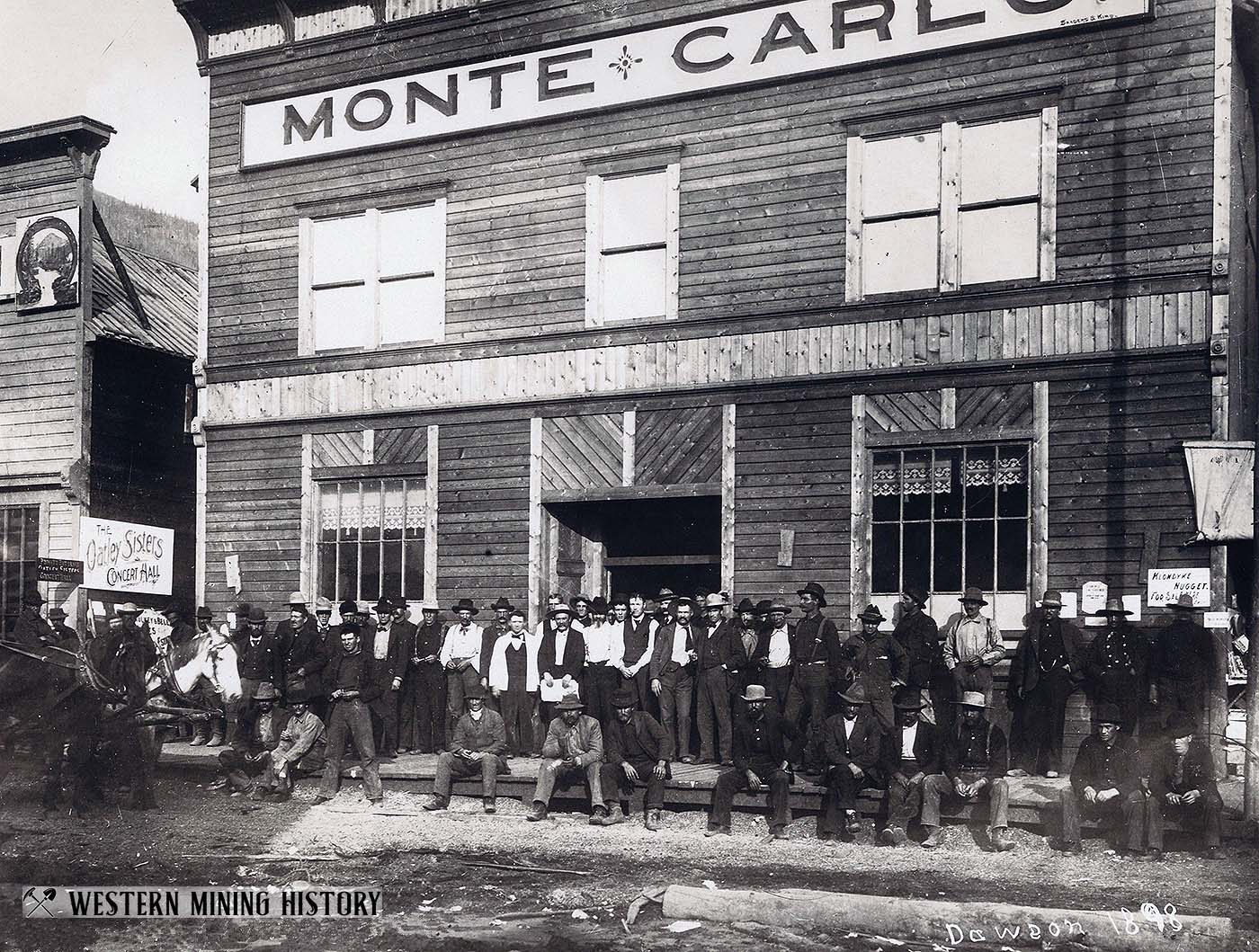
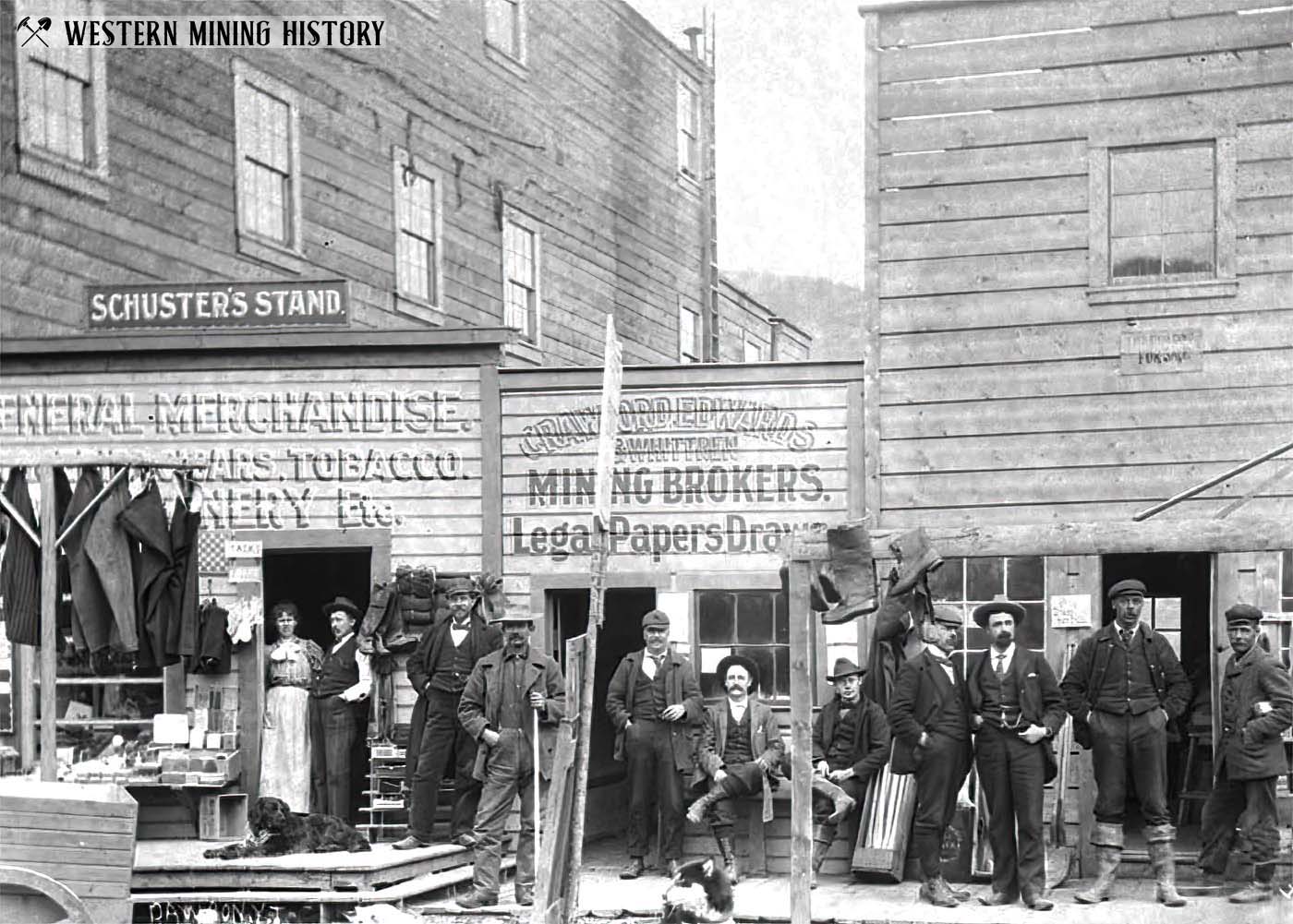
Dawson City's greatest importance was as the commercial center of the goldfields. Nearly everything needed by the thousands of miners working the surrounding creeks passed through the town. Food, clothing, mining equipment, lumber, tools, and machinery commanded high prices because nearly all supplies had to be transported great distances into the Yukon.
River transportation expanded rapidly to serve the boom. Between June and September 1898, 57 registered steamboats carrying more than 12,000 tons of supplies arrived at Dawson. By the following year, 60 sternwheelers, eight tugs, and twenty barges were operating on the Yukon River system.
Business flourished. More than 300 businesses opened in Dawson City in 1898, ranging from hardware and grocery stores to blacksmith shops, saloons, dance halls, and clothing stores. Fortunes were often easier to make by supplying and entertaining miners than by searching for gold.
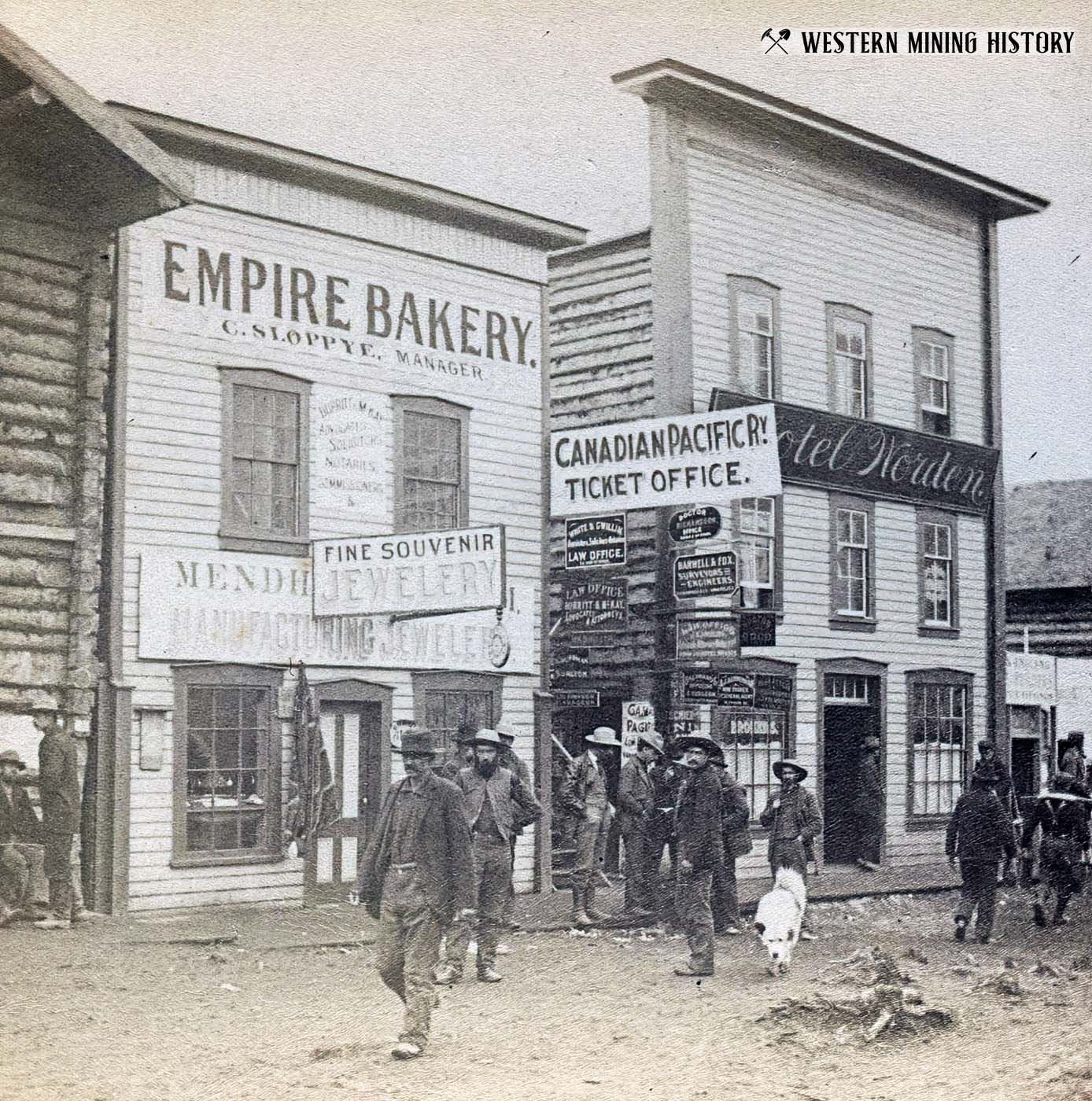
The town became famous for its nightlife. Saloons, gambling halls, theaters, and dance halls flourished, and the abundance of gold combined with Dawson City's isolation to produce a reputation for extravagant spending that became an enduring part of Klondike mythology.
Despite its frontier image, Dawson City was not entirely lawless. The North-West Mounted Police had established a presence in the Yukon before the main rush and enforced Canadian mining regulations, customs laws, and criminal law. As Dawson City developed, the Canadian government established an increasingly substantial administrative presence in the community.
Capital of the Yukon
The enormous influx of people convinced the Canadian government that the Yukon required an administration separate from the Northwest Territories. In 1898 the Yukon Territory was created, with Dawson City as its capital.Government offices, courts, police facilities, and other public institutions added permanence to the town. Dawson City was formally incorporated as a city in 1902, and the Canadian government erected a number of substantial public buildings.
By this time, Dawson City increasingly resembled a permanent community rather than the improvised mining camp of 1897 and 1898. Churches, theaters, newspapers, municipal services, banks, government offices, and an extensive commercial district reflected the town's transition from boomtown to regional center.
The End of the Rush
Dawson City's spectacular boom was already ending by 1899. That year, reports of gold discoveries near Nome, Alaska, drew thousands of people away from the Klondike. At the same time, mining within the Klondike was undergoing a fundamental transformation. The richest easily worked deposits had been extensively developed, and profitable mining increasingly required greater amounts of capital and machinery.
Individual miners began selling their claims to companies capable of operating on a much greater scale. Dredging became particularly important. The first dredge was constructed in the Yukon in the fall of 1899, beginning a new era of mechanized placer mining that allowed enormous quantities of lower-grade gravel to be worked economically over the following decades.
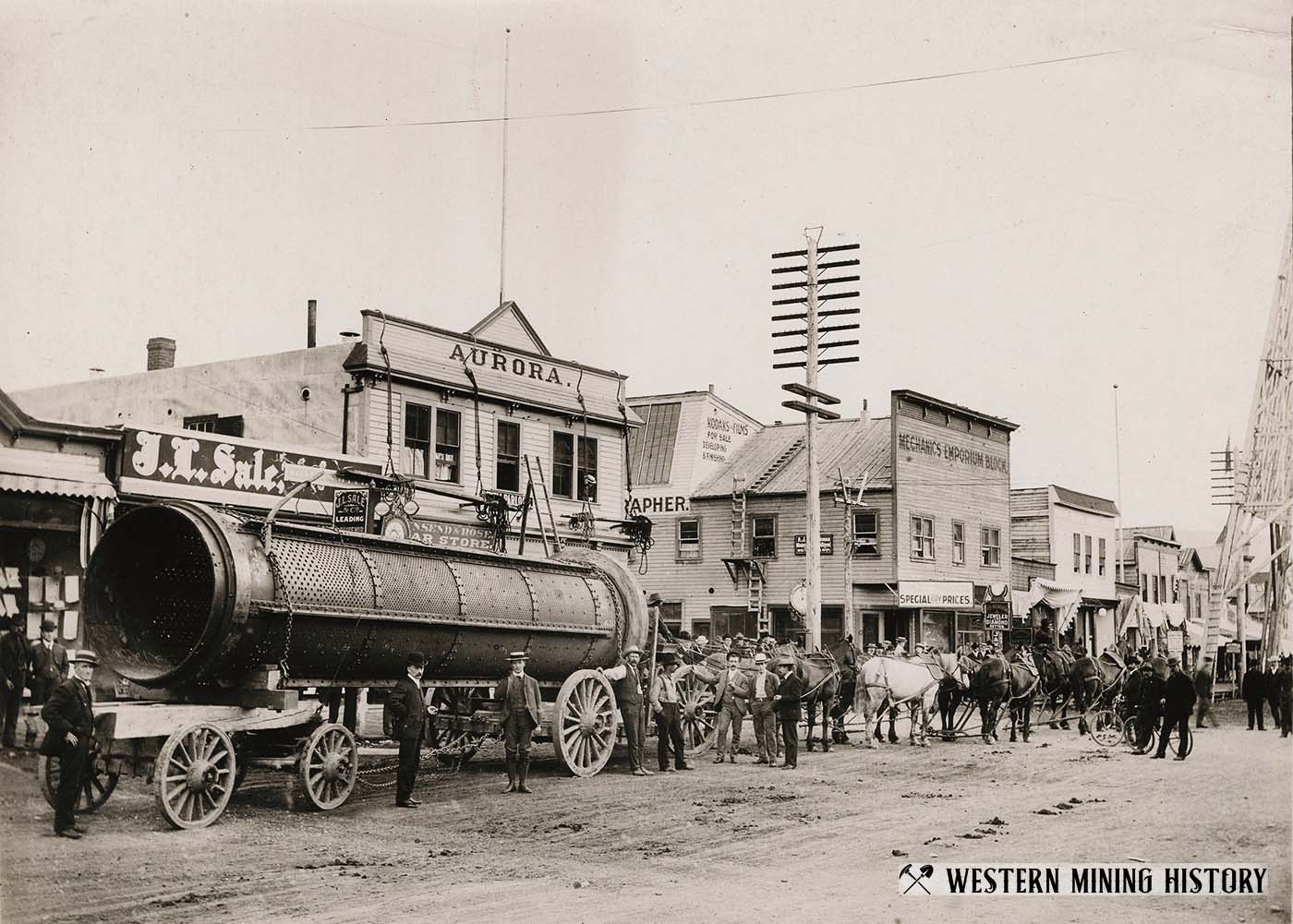
Transition to dredging allowed the Klondike to remain an important gold-producing district long after the stampeders had departed, but industrial mining required far fewer workers. Dawson City's population consequently declined rapidly. By 1918 fewer than 1,000 people remained.
Dawson City in the Twentieth Century
Isolation remained one of Dawson City's defining characteristics. For decades the Yukon River was the principal transportation route, and sternwheelers connected Dawson City with Whitehorse and communities downstream. The navigation season was short, however, and the river froze for much of the year.
Riverboats were essential to the development of the Yukon mining industry. During the gold rush they carried enormous quantities of supplies into Dawson City, and in later decades they transported passengers, equipment, gold, silver, lead, zinc, and other freight associated with the mining districts of the Yukon.
The development of better overland transportation gradually shifted the economic and political center of the territory southward toward Whitehorse. Dawson City eventually lost its position as territorial capital when the government was transferred to Whitehorse in 1953.
Large-scale dredging also declined during the mid-twentieth century. Without the government bureaucracy and industrial mining operations that had supported it for decades, Dawson City faced an uncertain future.
Ironically, the long economic decline helped preserve much of the old town. Unlike many western boomtowns that were extensively rebuilt, Dawson City retained numerous buildings and streetscapes dating from the gold-rush and early twentieth-century periods.
Beginning in the 1950s and 1960s, increasing attention was given to preserving this heritage. Between 1959 and 1967, seventeen buildings in Dawson City were recognized as nationally significant, forming the foundation of the Dawson Historical Complex National Historic Site.
Dawson City Today
Tourism has become an important part of Dawson City's economy. Its surviving commercial buildings, cabins, government structures, theaters, and mining landscapes make it one of the best-preserved historic mining communities in North America. Parks Canada's Klondike National Historic Sites include the Dawson Historical Complex, Discovery Claim, Dredge No. 4, the Former Territorial Court House, and the S.S. Keno.
Gold mining never completely disappeared from the Klondike. Placer mining has continued in the creeks surrounding Dawson City, while the physical remains of more than a century of mining are visible throughout the district.