Superior History
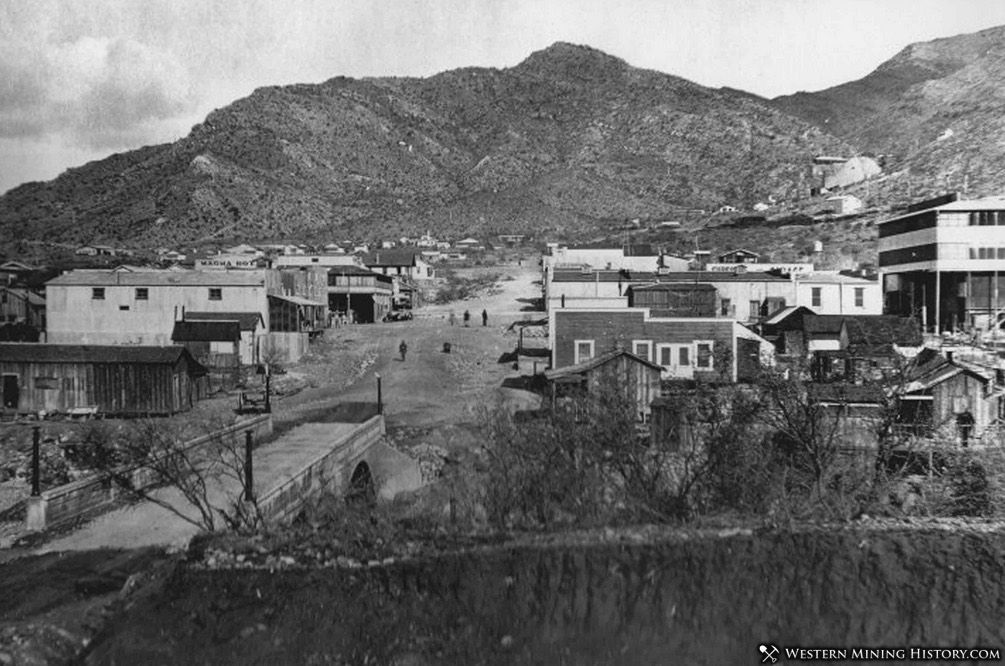
Superior, Arizona, developed from a succession of mining camps established along Queen Creek at the foot of Apache Leap. Mining in the area began with gold and silver during the 1870s, but these early ventures were generally short-lived. The settlement achieved lasting prosperity only after the development of the area's copper deposits and the organization of the Magma Copper Company in 1910.
The first claims at the site were located in 1875. Irene Vail located the Irene claim and William Tuttle discovered the Hub claim, properties that later became part of the Silver Queen mine and ultimately developed into the Magma mine. The Gem and Hastings groups of gold claims were located soon afterward, and mills operated on these properties between 1876 and 1882.
The settlement that developed around these mines was initially known as Queen. Located along Queen Creek near the mouth of the canyon below Apache Leap, it was officially recognized with the establishment of the Queen post office on April 21, 1881. At its peak, Queen had a population of about 100 and contained a general store, several saloons, a boarding house, a restaurant, two hotels, and approximately twenty other buildings, along with tents and dugouts that provided housing for miners.
Queen's boom was brief, and the post office closed on September 5, 1881. Although the gold mills had ceased operations, a small settlement remained and became known as Hastings, named for the San Francisco merchant who owned one of the mills.
Mining elsewhere in the surrounding district was considerably more successful. The rich Silver King mine, discovered nearby during the 1870s, supported the boom towns of Silver King and Pinal. Among the miners at Silver King was George Lobb, Sr., an English immigrant who worked as a level boss and would later become the founder of Superior. Lobb remained in the district after the Silver King mine closed and the neighboring communities declined during the late 1880s.
The Founding of Superior
In 1897, with little activity remaining around the old Queen-Hastings settlement beyond cattle ranching, Lobb relocated the Gem and Hastings claims and renamed them the Golden Eagle Group. Two years later, mining engineer George Chittenden leased the property and employed Lobb and his two sons, but the operation lasted only about a year.
Lobb remained at Silver King, processing ore from the mine dumps there for the next year and a half. During this period, Hastings consisted of only a few frame buildings and tent houses. The settlement's fortunes changed in 1902, when Lobb sold the Golden Eagle Group to the Michigan-based Lake Superior and Arizona Mining Company, which was primarily interested in the property's copper deposits.
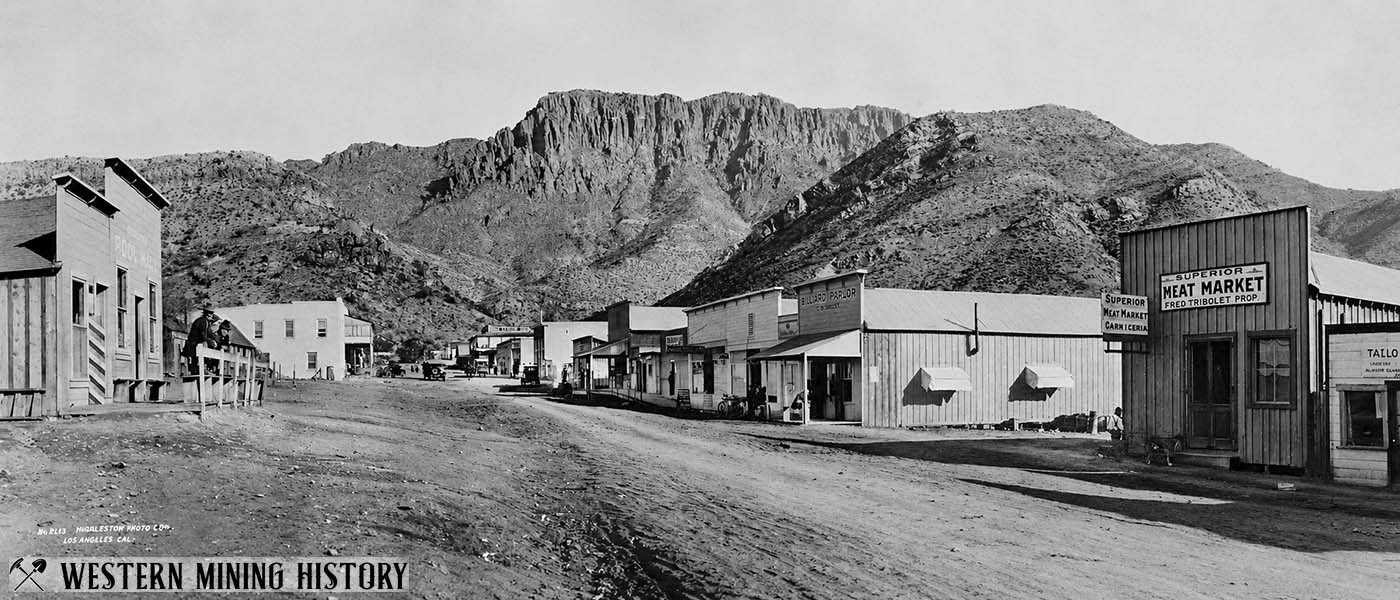
The sale marked the beginning of the permanent town. Lobb laid out a new townsite, naming it Superior after the company that had purchased his claims. A post office opened in his general store on December 29, 1902, with Lobb serving as the town's first postmaster.
The Lake Superior and Arizona mine began operating in October 1902. By April 1904, Superior was still a primitive camp consisting largely of board houses and tents, although it had a general store, post office, boarding house, and blacksmith shop. Some residents were beginning to improve their homes, but uncertainty over the mine's future limited the growth of the community.
Magma Copper
The fortunes of Superior changed dramatically after mining financier William Boyce Thompson purchased the Silver Queen Mine for $130,000 and organized the Magma Copper Company in 1910. Magma acquired the Lake Superior and Arizona property in 1912, consolidating the principal mines around Superior under a single company. Large-scale copper production soon provided the economic stability that the area's earlier gold and silver ventures had failed to achieve.
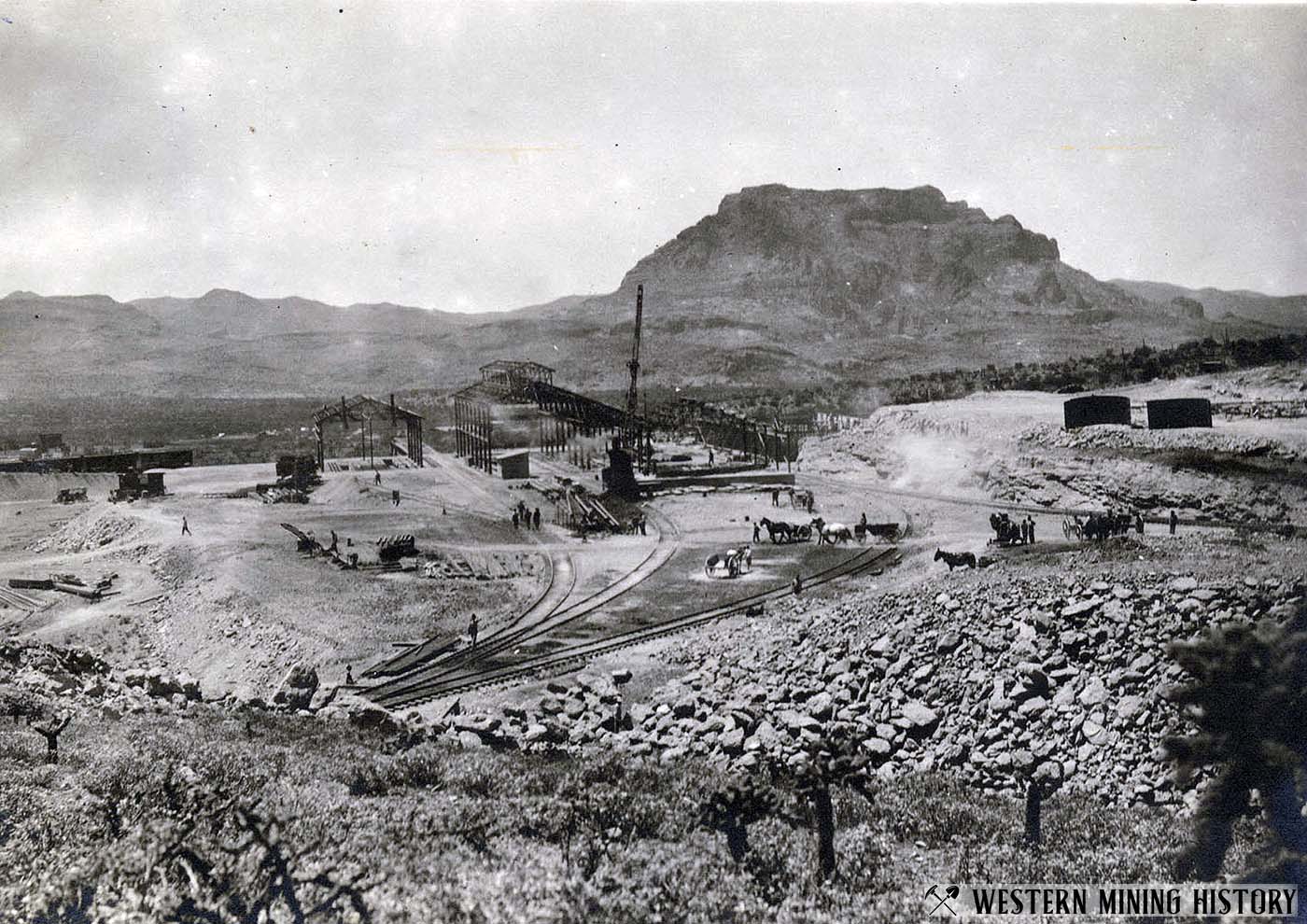
Magma's first concentrator began producing concentrates in April 1914.That same year the Magma Arizona Railroad was incorporated, and construction began on a 36-inch narrow-gauge line connecting Superior with the Phoenix and Eastern Railroad at Webster, later known as Magma Junction. The 31-mile railroad was completed in May 1915 and entered service the following month.
The railroad helped transform Superior from an isolated mining camp into an established industrial community. Magma's workforce grew from about 150 men in 1915 to more than 1,100 in later years. The company constructed a hospital and an employee clubhouse with a gymnasium, swimming pool, bathhouses, and tennis court. Hotels appeared, streets were laid out and named, and additional neighborhoods developed. The town became divided into two principal communities, with the eastern section known as "American Town" and the western section as "Mexican Town."
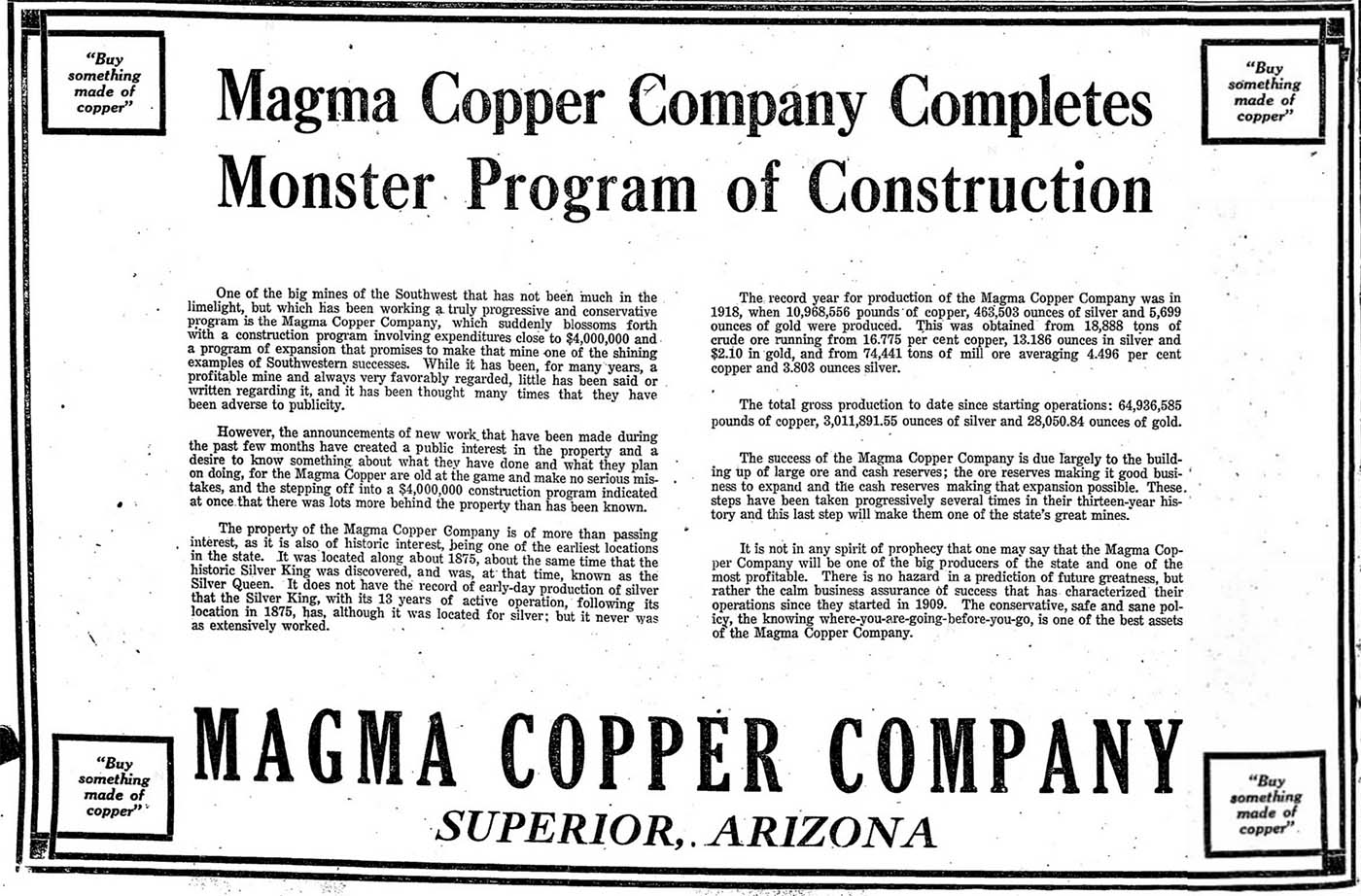
By the 1920s, Superior's copper industry was thriving, and the Magma Copper Company invested a staggering $3.6 million in the construction of a new smelter. The plant began operating on March 31, 1924, with a capacity of three million pounds of copper per month. Its 300-foot smokestack became a prominent local landmark.
Magma continued investing heavily in Superior during the 1920s. Houses for mine supervisors were constructed along present-day High School Avenue in a neighborhood known as "Jiggerville," while homes for smelter supervisors and foremen along Smelter Road became known as "Smelter Town." In 1929 the company constructed a brick hospital with separate wings for patients and nurses.
Other mining companies also attempted to develop properties around Superior. The most ambitious was the Belmont Mining Company, which spent nearly $1 million on exploration during the 1920s and for a time appeared capable of becoming the town's second major mining operation. The Belmont closed in 1929, however, leaving Magma as the dominant economic force in the community.
Depression and War
The Great Depression brought uncertainty to Superior, forcing many mines in the district to close, but Magma continued operating. Production and working hours were reduced, and the mill and smelter occasionally shut down for brief periods, but the mine remained active. As a result, Superior escaped the severe unemployment experienced by many other industrial communities.
Magma continued to improve its underground operations as increasing mine depths brought increasingly severe heat. In 1935, rock temperatures on the 4,000-foot level reached 140 degrees. Beginning in 1937, the company installed underground refrigeration equipment, eventually cooling numerous working levels. The system represented an important technological achievement in underground mining and was later designated a National Historic Mechanical Engineering Landmark by the American Society of Mechanical Engineers.
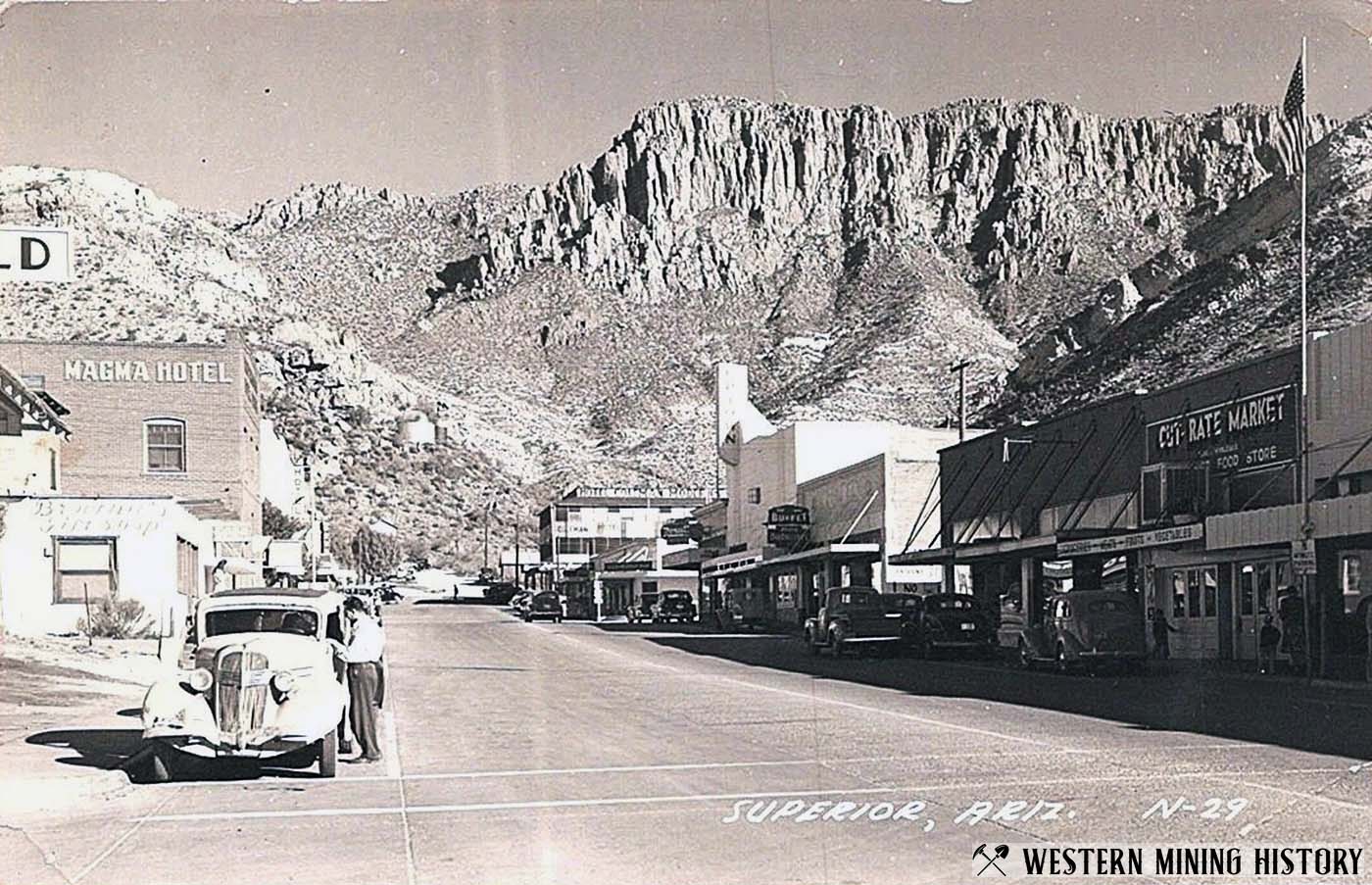
The United States entry into World War II created new demands for Superior's copper. Magma initially experienced serious labor shortages as workers left for higher-paying defense jobs or entered military service. By 1942, however, these difficulties had largely been overcome and copper production for the war effort was operating at a high level. The mine entered another period of prosperity that would continue for decades.
Copper Legacy
Declining copper prices and high operating costs finally forced the Magma Mine to close in 1982. The mine reopened in 1990 and operated until 1996. Over its long history, the Magma is credited with producing approximately 1.3 million short tons of copper, 36,550 short tons of zinc, 686,000 ounces of gold, and 34.3 million ounces of silver.
Unlike many western mining towns, Superior did not disappear when its mines closed. Today, approximately 2,400 people still call Superior home, while continued exploration of the area's extensive copper deposits may yet bring another chapter of mining to the historic community.
Arizona Mining Photos
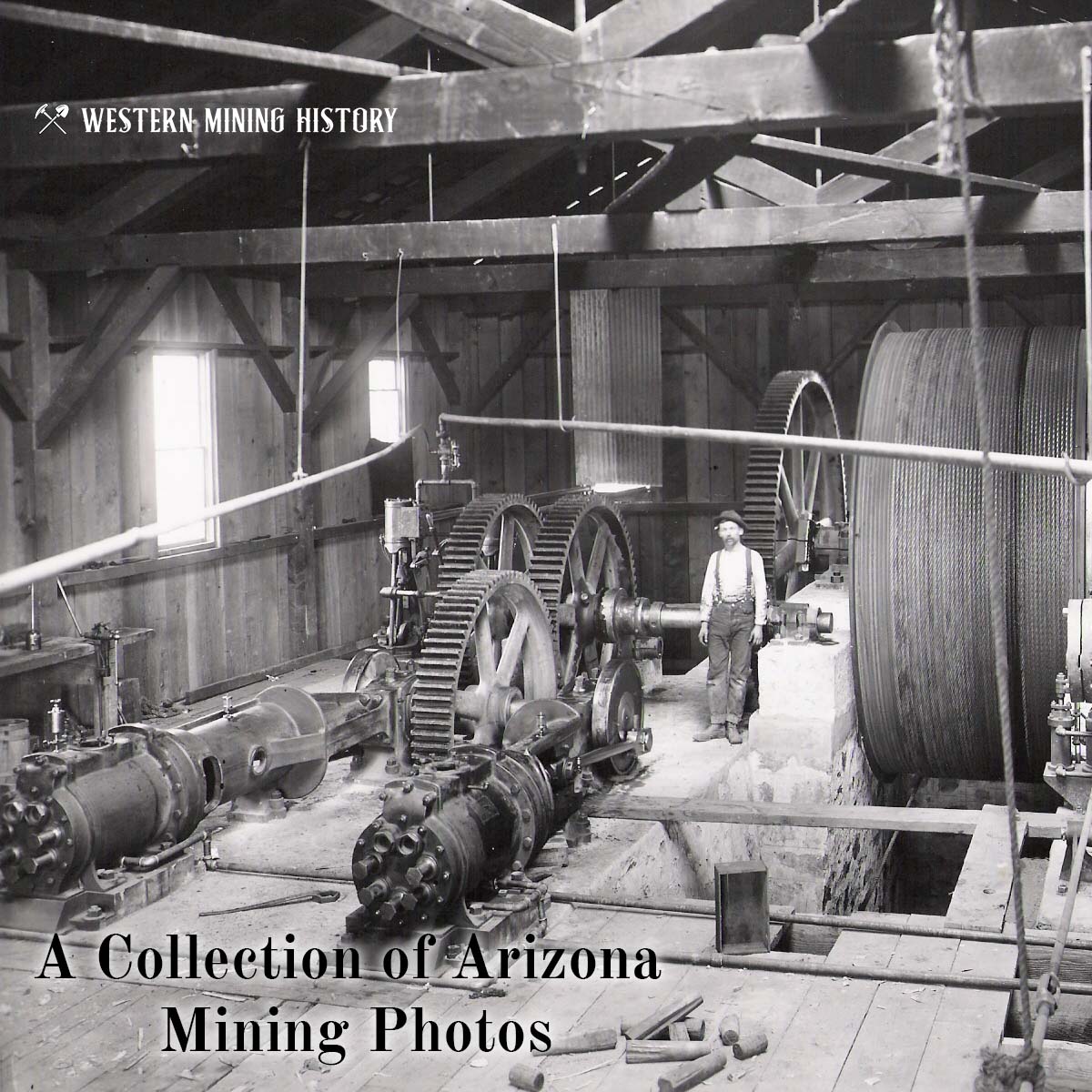
View over 35 historic Arizona mining scenes at A Collection of Arizona Mining Photos.
Arizona Gold
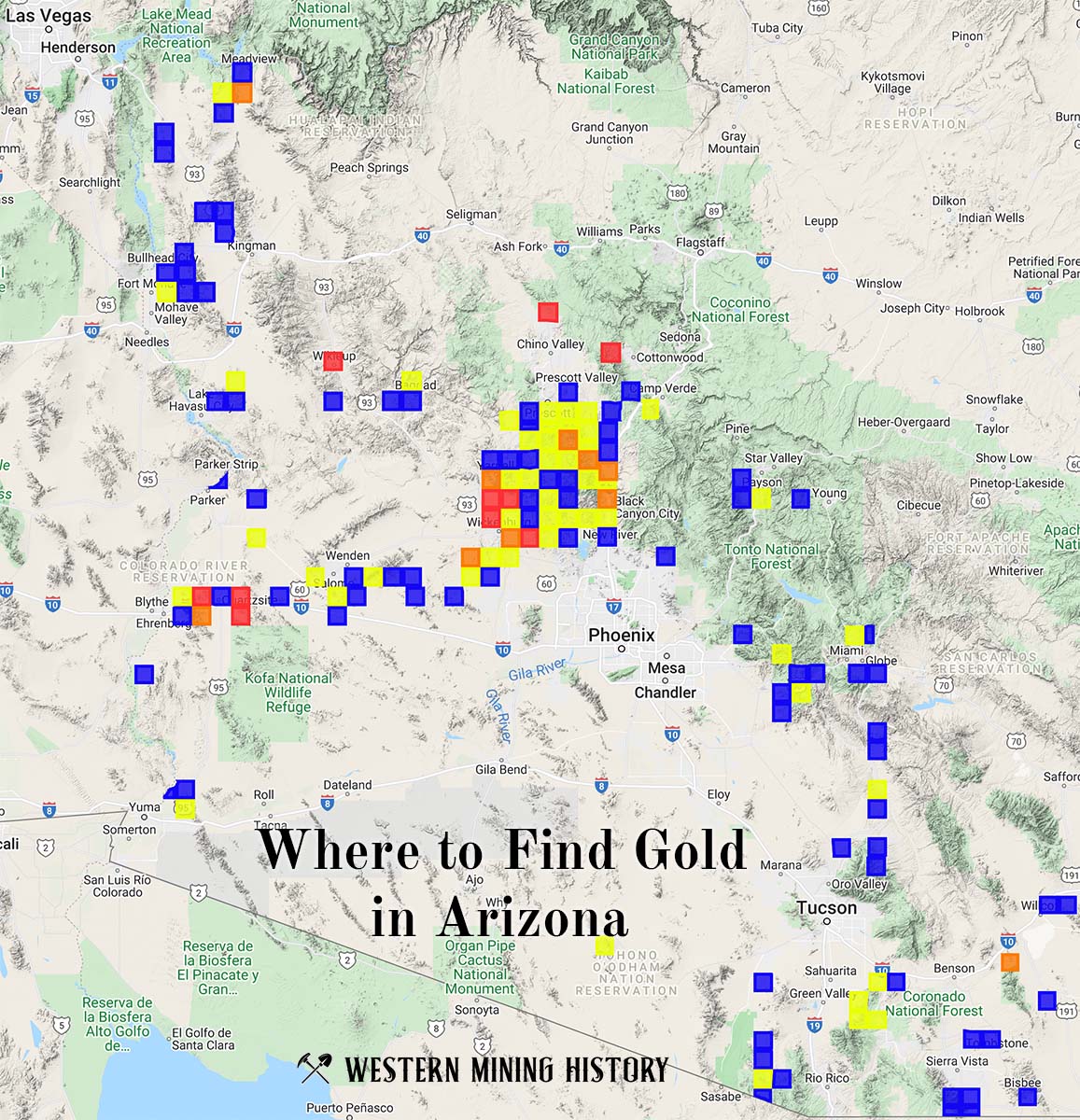
"Where to Find Gold in Arizona" looks at the density of modern placer mining claims along with historical gold mining locations and mining district descriptions to determine areas of high gold discovery potential in Arizona. Read more: Where to Find Gold in Arizona.