Sunrise History
The earliest mining activity at Sunrise focused on copper rather than iron. During the Hartville Uplift copper boom of the 1880s, Henry T. Miller staked a claim in 1881 on land later occupied by the Sunrise Iron Mine. Copper ore was hauled by wagon to a smelter near Guernsey, and total production between 1881 and 1887 amounted to approximately 250 tons.
A small settlement emerged during this period, including a post office that operated briefly in 1884. Economic challenges ultimately doomed the venture. The high cost of transporting ore and importing coke for smelting, coupled with a decline in copper prices from $370 per ton in 1882 to $220 per ton in 1886, brought the district's copper boom to a close by 1887.
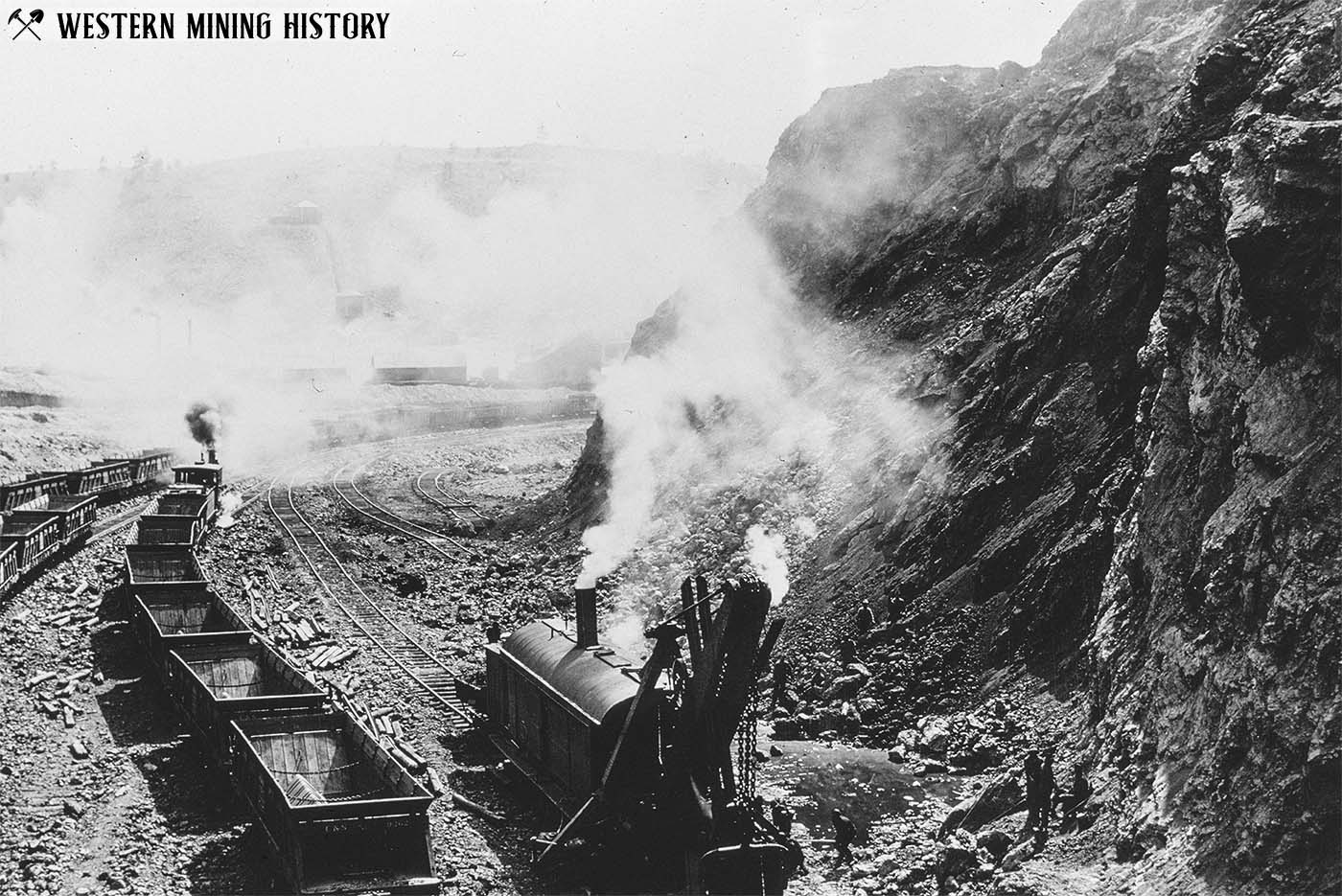
Sunrise is best known for iron mining, which continued from 1898 until 1980. The decade preceding large-scale development, roughly 1888 to 1897, marked a transitional period during which prospectors shifted their attention from copper to the district's extensive iron deposits.
Among the first to recognize the potential of the iron ore was Ichabod Bartlett, a founder of the Wyoming Copper Company in 1881, who turned to iron mining after the collapse of the copper boom. Although as much as 10,000 tons of ore were mined annually, the operation was hampered by the need to haul the ore fifteen miles by freight wagon to the nearest rail connection, making transportation costly and inefficient.
Another early advocate of the district's iron resources was local rancher Charles A. Guernsey, who later served as a U.S. Senator from Wyoming. After visiting the iron-mining regions of Minnesota, Guernsey became convinced that the area's iron deposits could be developed on a much larger scale. Upon returning to Wyoming, he began acquiring mining claims throughout the district. In 1890, Guernsey joined Bartlett and a group of Chicago investors to organize the Wyoming Railway and Iron Company (WR&I), laying the foundation for what would become one of the largest iron-mining operations in the American West.
With an iron content of approximately 60 percent, the Sunrise ore was exceptionally high-grade. Encouraged by the quality of the deposit, Charles A. Guernsey expanded his holdings and initiated large-scale development of the district in 1898.
At the same time, the Colorado Fuel and Iron Company (CF&I) of Pueblo, Colorado, was undertaking a major expansion of its steel-making operations and was actively seeking new sources of iron ore. After investigating the district, a company representative reported that the Sunrise deposits were both extensive and economically workable.
Based on this favorable assessment, CF&I leased all of the Wyoming Railway and Iron Company's claims in 1899. The arrangement proved successful, and in 1904 CF&I purchased the Sunrise Mine outright for $500,000, securing a long-term supply of iron ore for its Pueblo steel works.
To improve transportation, CF&I established the Colorado and Wyoming Railway, a subsidiary created specifically to move ore from Sunrise to Guernsey. There, the line connected with the Cheyenne and Northern branch of the Colorado and Southern Railway, allowing iron ore to be shipped approximately 375 miles south to the company's steel works in Pueblo, Colorado.
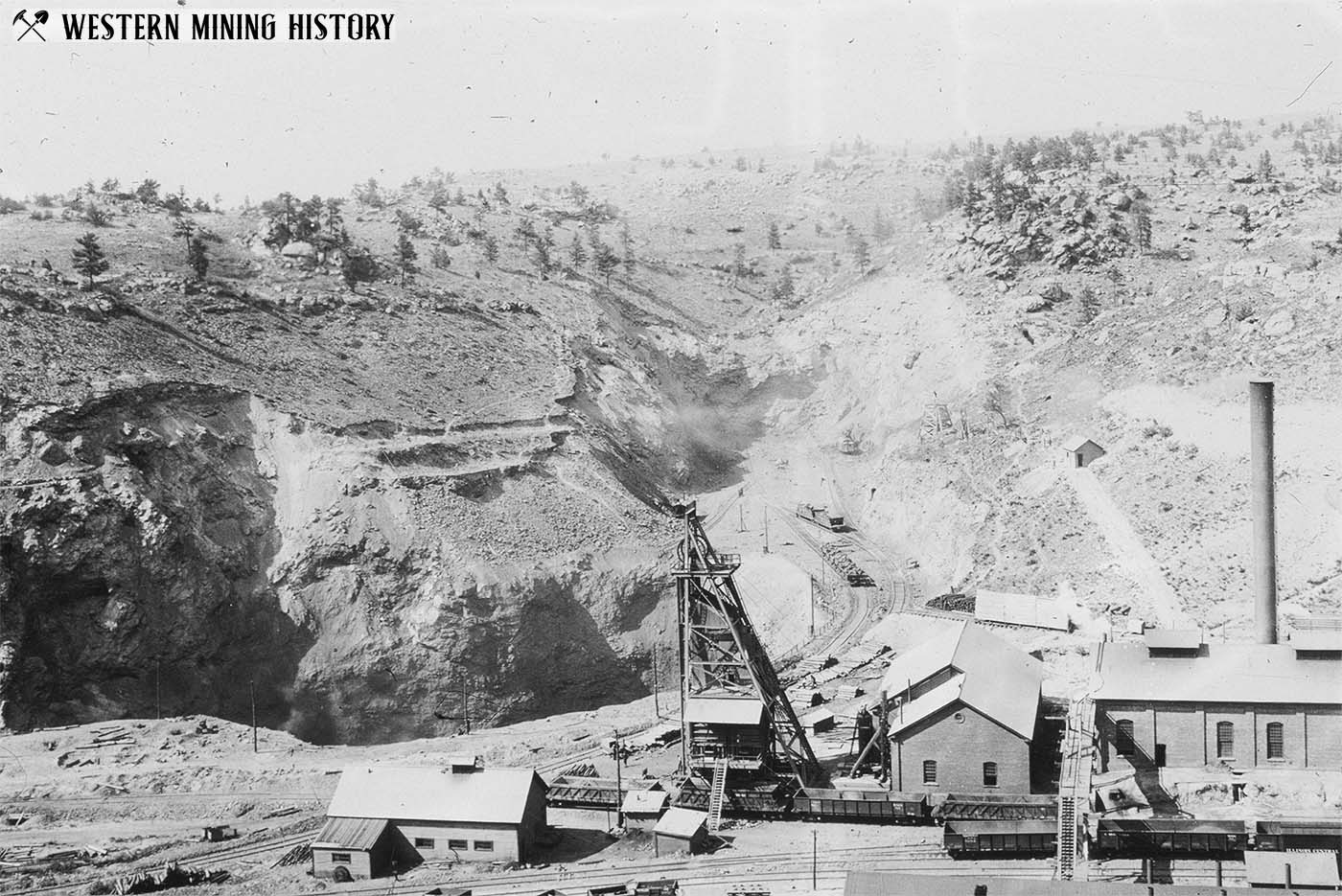
The first ore train departed Sunrise in 1900, marking the beginning of large-scale production. Output increased rapidly, and by 1901 the mine was shipping an average of 21,000 tons of ore each month to Pueblo.
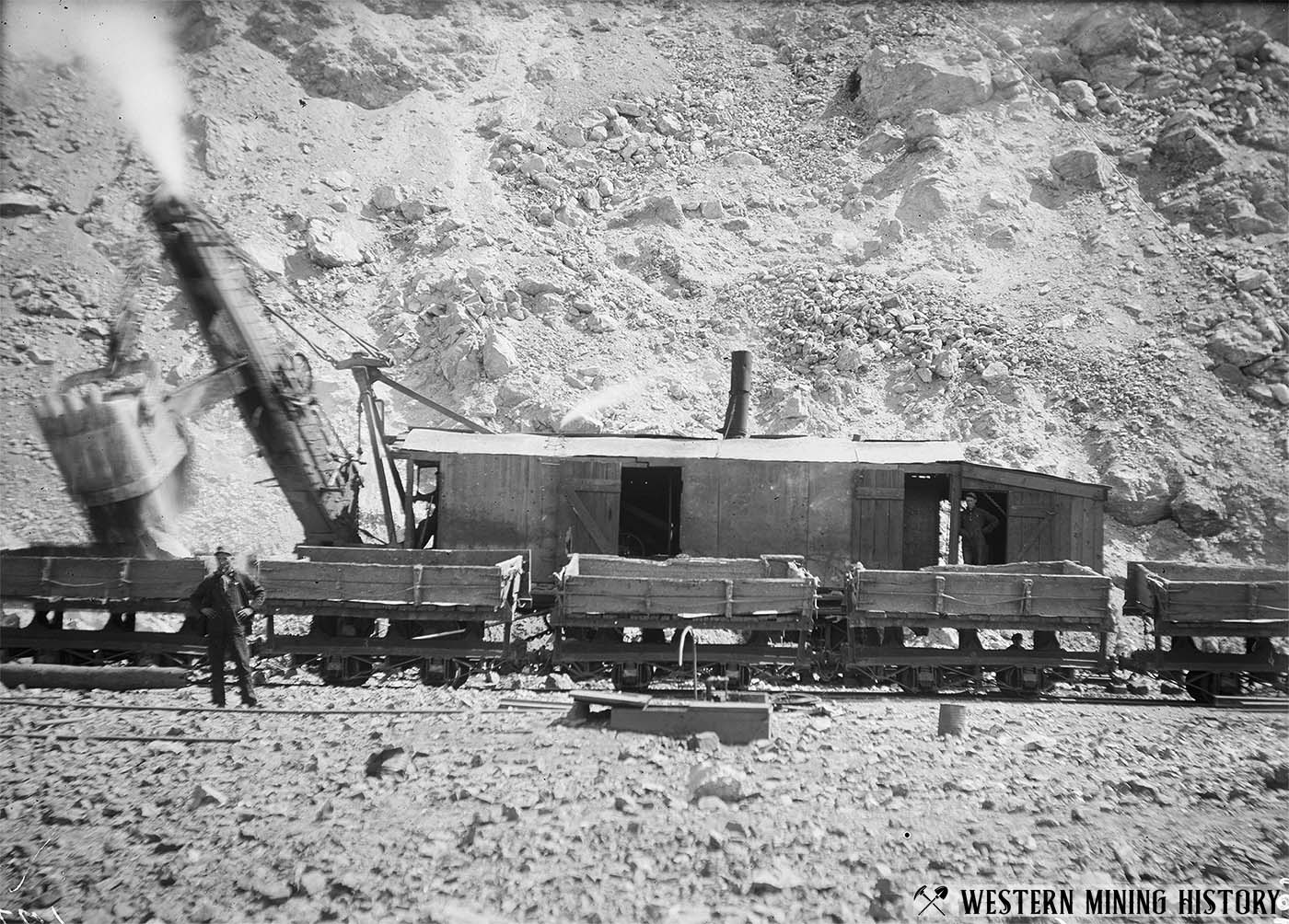
In 1901, the Sunrise Mine employed 175 workers. Production expanded rapidly, and by 1905 the operation was producing approximately 600,000 tons of iron ore annually, valued at roughly $900,000. This remarkable growth fueled the development of the company town that emerged around the mine, transforming Sunrise into one of Wyoming's most important industrial communities.
Unlike many mining camps of the American West, whose fortunes were often fleeting, Sunrise endured for more than eighty years. It became the longest-lived iron mine in Wyoming and provided employment for several generations of eastern Wyoming residents. Over its lifetime, the mine produced and shipped approximately 40 million tons of iron ore–more than any other mine operated by the Colorado Fuel and Iron Company.
When CF&I abruptly ceased operations in 1980, it brought to a close not only the history of Wyoming's most productive iron mine, but also a significant chapter in the industrial and mining history of the American West.
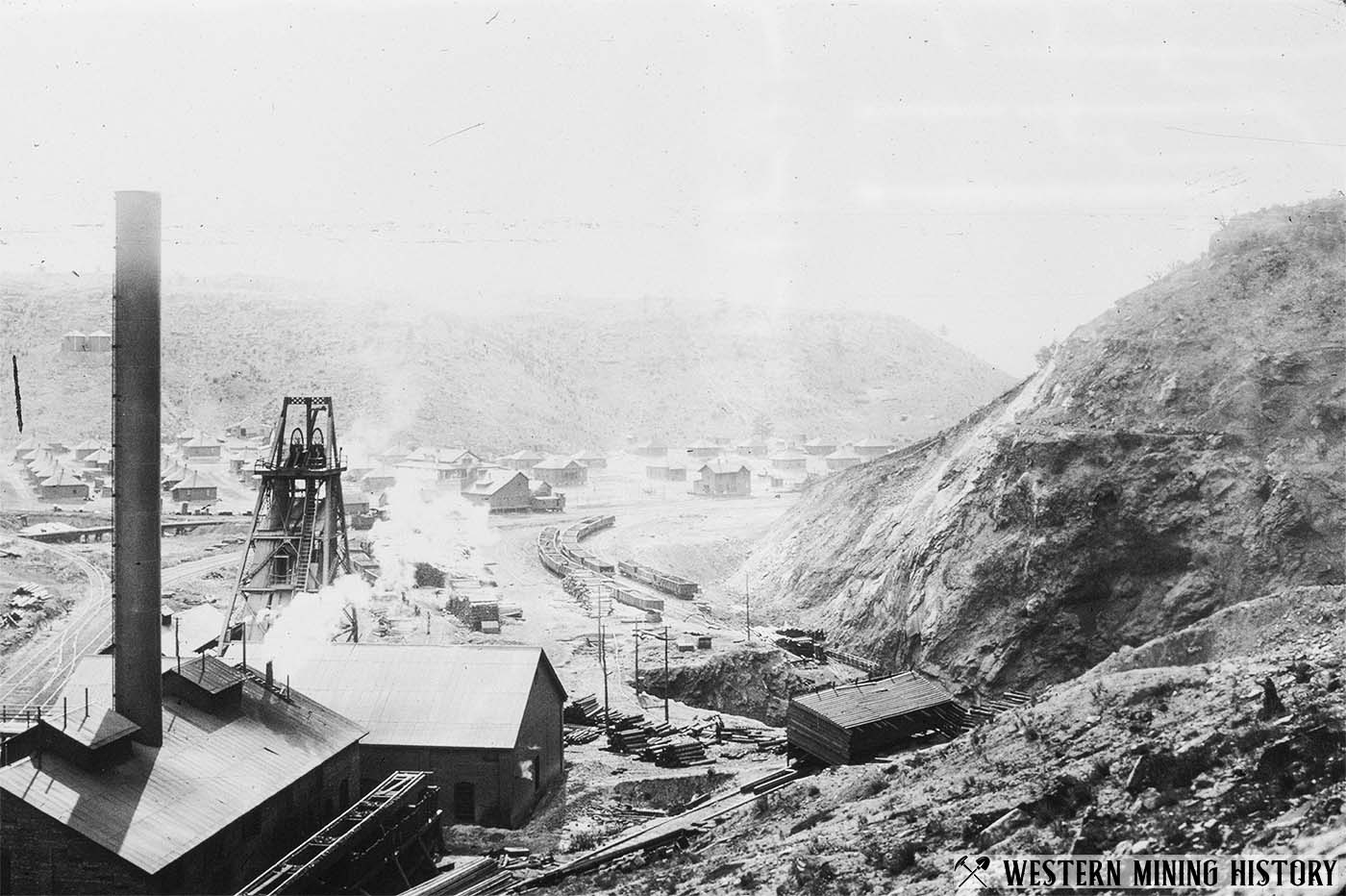
Company Town
Construction of the Colorado and Wyoming Railroad in 1899 marked the beginning of Sunrise as a mining community. An initial workforce of 80 men built the rail line, developed the mine, dug wells, and constructed bunkhouses. By the completion of the railroad spur in April 1900, more than 600 workers were in the area, though only a portion remained after construction ended.
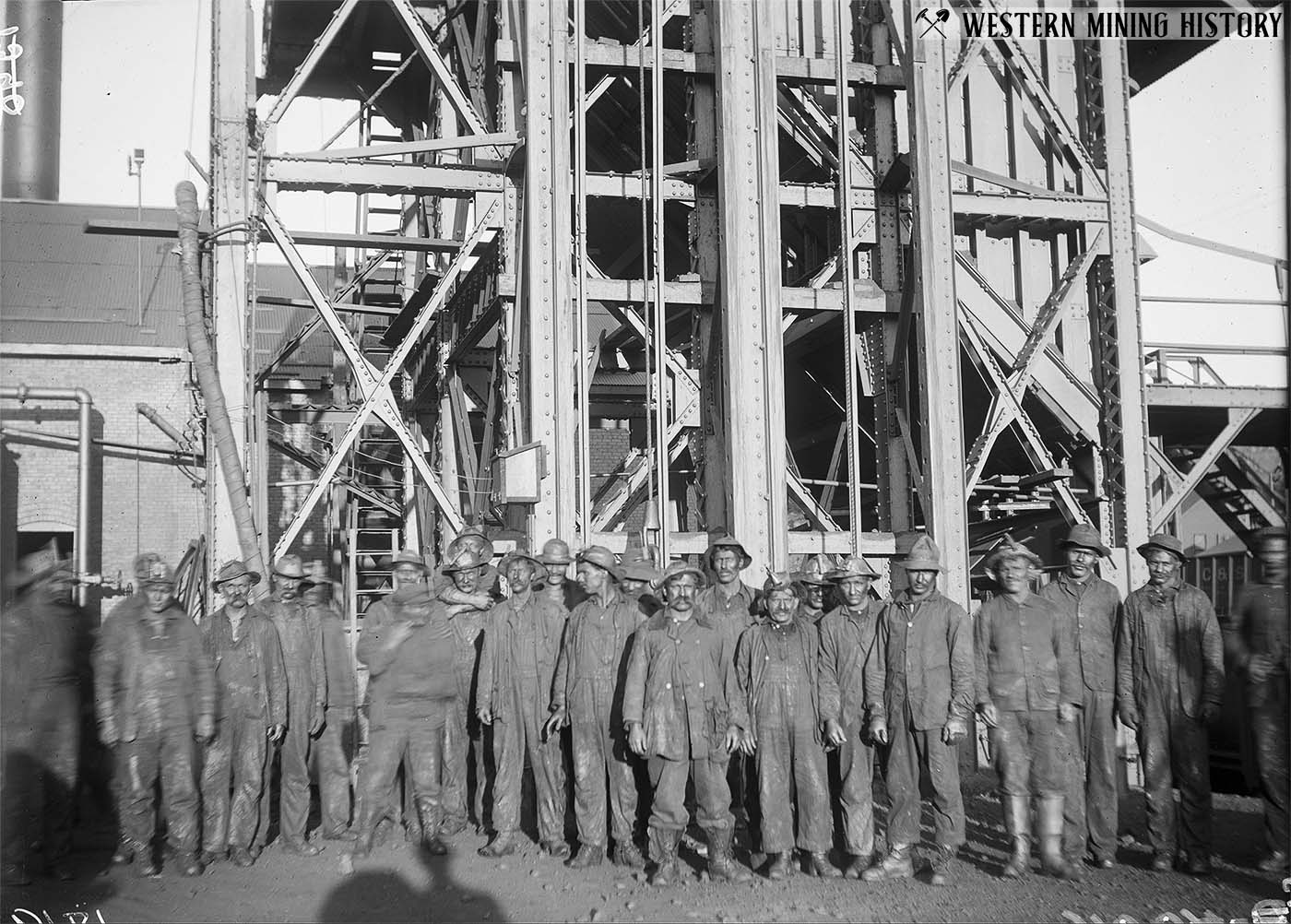
Under superintendent John D. Gilchrist, who arrived in 1901 from Minnesota's Iron Range, Sunrise attracted experienced miners from the Midwest. By early 1902, the mine and railroad employed 205 workers representing a diverse mix of nationalities, including Italians, Americans, Greeks, Irish, Germans, French, Austrians, and Scots.
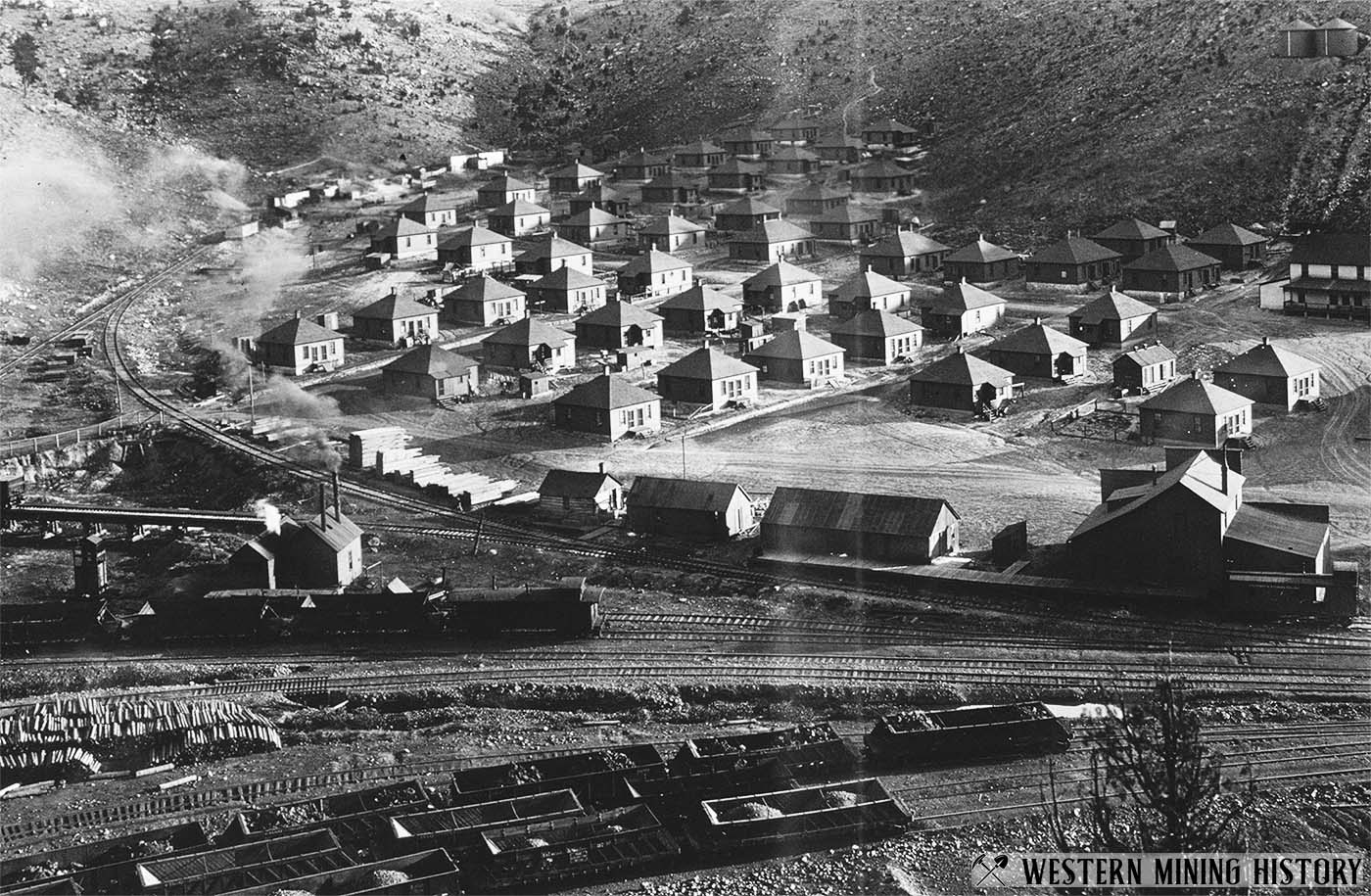
Seeking to avoid the problems common in other company towns, CF&I developed Sunrise as a planned community beginning in 1900. The company quickly built housing, reaching 50 homes and a large boarding house by 1902, although a housing shortage persisted and many single workers were forced to live in crowded quarters or at nearby Hartville. While some homes had indoor plumbing, others relied on outdoor hydrants and outhouses. Water for both the town and mine was hauled in by rail and stored in large tanks overlooking the community.
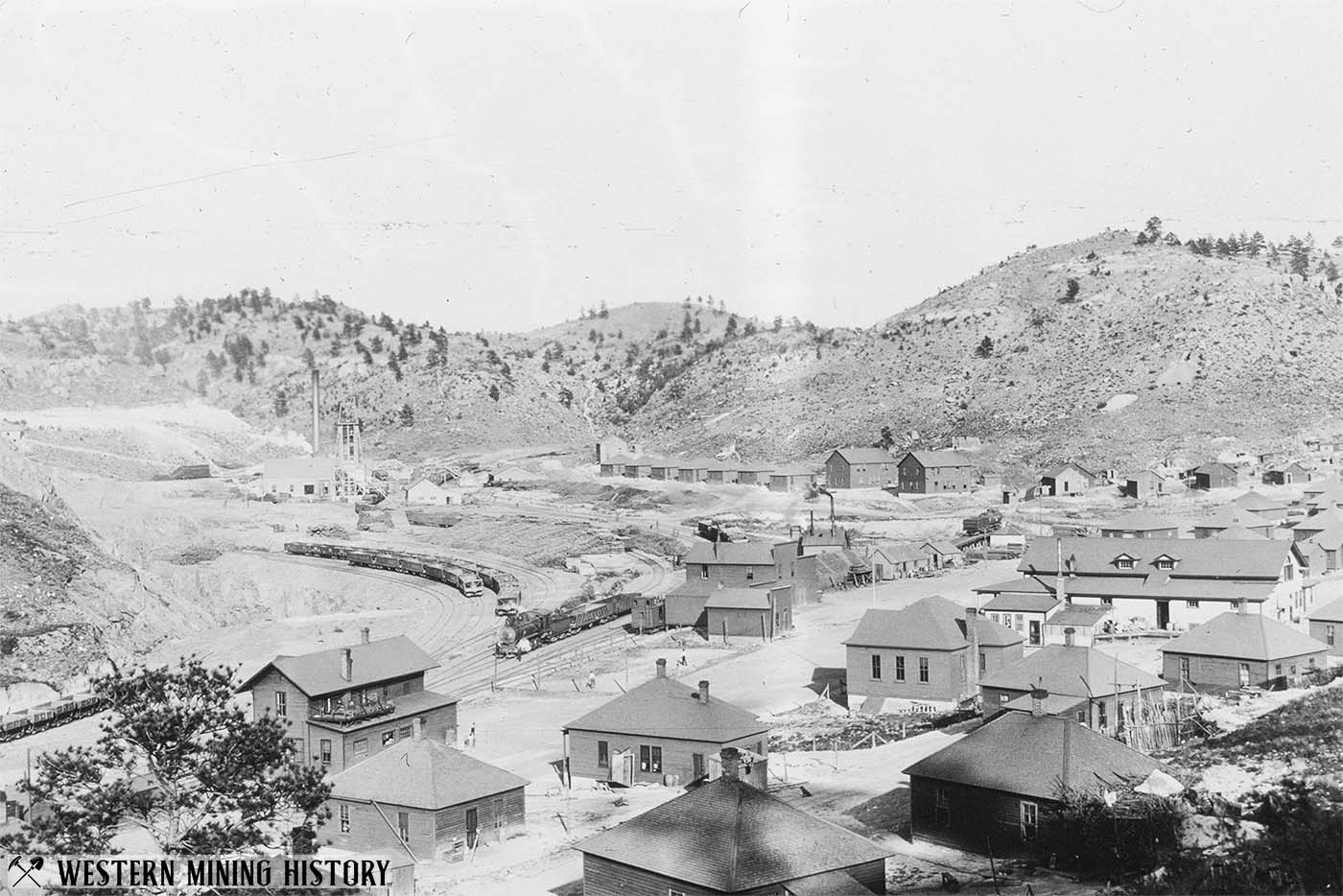
Community facilities at Sunrise reflected CF&I's efforts to create a well-equipped company town. These included the Colorado Supply Company store and a two-story building that housed the offices of the mine superintendent and engineering staff, along with a warehouse, engine house, and blacksmith shop. In 1902, the company completed Sociological Hall, the community's principal recreational and social center. The 30-by-40-foot building featured a large basement, electric lighting, furnace heat, and a reading room stocked with books, magazines, and newspapers.
Additional buildings included an assay office and laboratory, company offices, a bathhouse, and a one-room schoolhouse. By 1920, a junior high school was in operation, and plans were underway for the establishment of a high school.
CF&I prohibited saloons within Sunrise, a policy that contributed to nearby Hartville becoming the primary center for drinking and other forms of vice. By 1900, Hartville supported nine saloons and two dance halls. This concentration of vice, which included prostitution, continued to expand until 1918, when Hartville was finally declared a “dry” town.
CF&I's company towns were connected through Camp and Plant, the company's official weekly newspaper. Published in English, Italian, German, and Spanish, the paper was designed to foster a sense of community and loyalty among workers and their families across CF&I's widely dispersed mining and industrial operations.
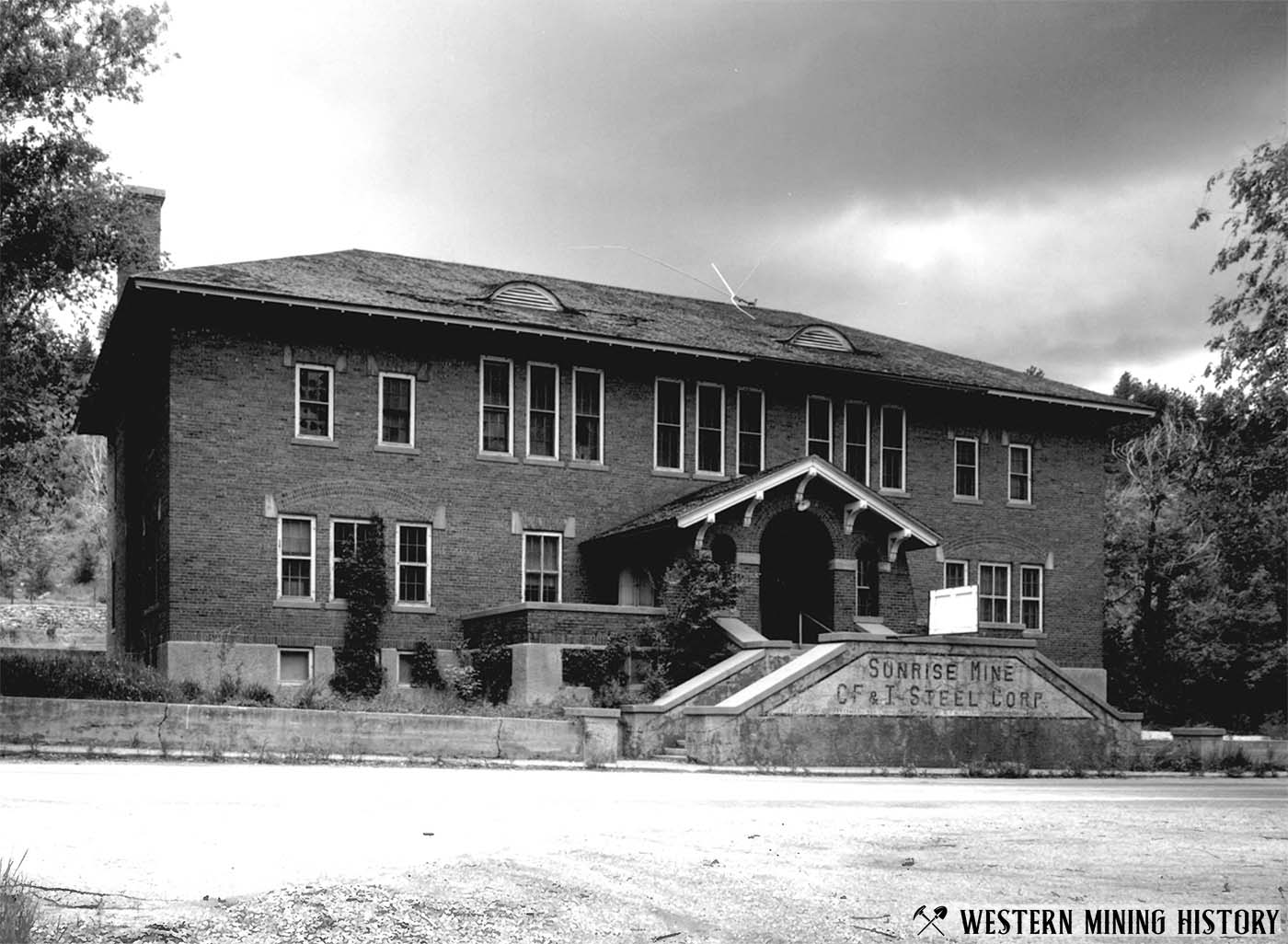
As the years passed, Sunrise continued to expand its infrastructure and community services. In 1911, a nondenominational community church was completed. The town also developed a hospital, volunteer fire department, ambulance service, parks, a ball field, and modern water and sewer systems. In 1917, CF&I completed the first YMCA in Wyoming, a substantial facility that included a gymnasium, bowling lanes, a card room, a billiards and pool room, a barber shop, and a ladie’s lounge.
The community of Sunrise peaked in 1928 when the mine employed 547 people. The onset of the Great Depression greatly impacted employment at the mine, and by 1931 only 112 employees remained. The mine closed the following year, and in 1934 CF&I was bankrupt but was back in operation the following year. By 1941 the mine was back to peak levels of employment and ore production.
The rise of the automobile played a major role in the decline of the company town. Improved roads made it possible for workers to commute to the mine from nearby communities, and many preferred to live elsewhere where they could own their own homes.
By the 1960s, Sunrise’s population had declined to the point that it could no longer sustain most local institutions. Schools and the company store closed, the YMCA was repurposed as office space, and the post office was discontinued in 1967. Although the town itself continued to decline, the site remained an active center of mining infrastructure until the Sunrise Mine finally ceased operations in 1980.
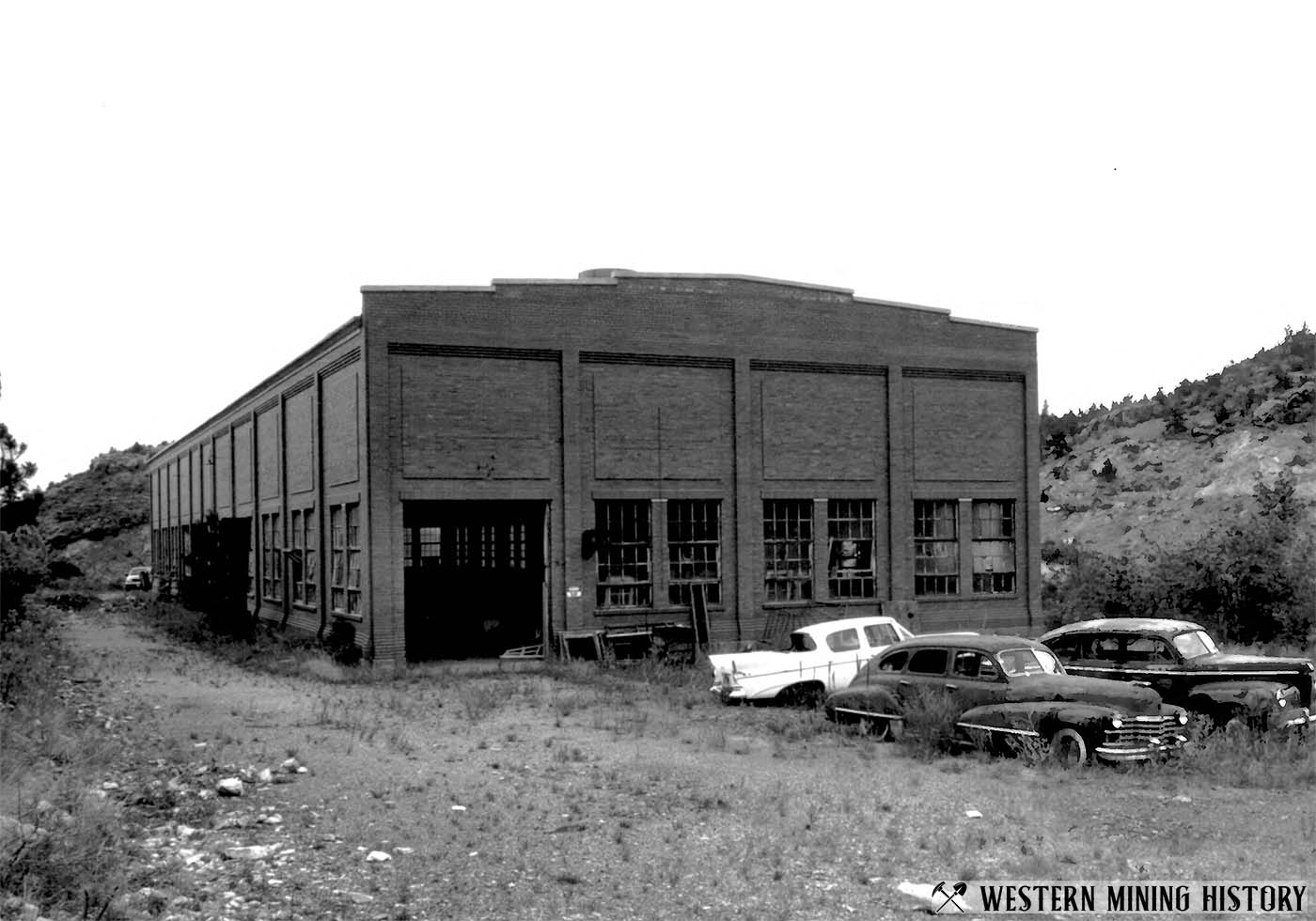
Today, the Sunrise Mine Historic District encompasses 225 acres of the former mine and townsite. The area contains numerous surviving remains, including abandoned buildings, structural foundations, and mining-related features that reflect the scale of the historic operation.
