
Copperopolis History
Copperopolis occupies an unusual place among the mining towns of California’s Mother Lode. While most communities in the region owed their existence to gold, Copperopolis developed around one of California’s most important early copper deposits. Founded in 1860 in the rolling foothills of western Calaveras County, the town rose rapidly during the Civil War, when copper was in high demand. For several years, Copperopolis was one of the most active mining communities in the county and part of one of the nation’s leading copper-producing districts.
Discovery of Copper
Copper had been found elsewhere in western Calaveras County before the discovery that established Copperopolis. In 1860, Hiram Hughes discovered copper mineralization on Gopher Ridge at Quail Hill, and another discovery followed at the Napoleon Mine on Hog Hill. Later that year William K. Reed and Thomas McCarty discovered a prominent copper-bearing gossan in what became known as the Copper Cañon Mining District. Their claim became the Union Mine, the property around which Copperopolis developed. A second important discovery, the Keystone, followed shortly afterward.

A mining district was formally organized during the summer of 1860, and the copper discoveries immediately attracted prospectors, miners, merchants, and investors. The settlement was initially associated with the name Copper Cañon, but by 1861 the growing community was known as Copperopolis, combining “copper” with the Greek polis, meaning city.
The timing of the discoveries could hardly have been more favorable. The California Gold Rush had subsided considerably during the 1850s, leaving many miners and businessmen looking for new opportunities. More importantly, the outbreak of the Civil War in 1861 greatly increased the demand for copper. Copperopolis and the neighboring copper districts of western Calaveras County suddenly possessed a mineral resource of national importance.
Civil War Period
Copperopolis grew with extraordinary speed. By 1861, at least 28 businesses were operating in town. During the height of activity between 1865 and 1867, more than 90 businesses advertised in the Copperopolis Courier. Hotels, saloons, stores, blacksmith shops, stables, boarding houses, and other businesses crowded the commercial district, while churches, schools, and fraternal organizations served the town’s rapidly growing population.

Estimates of the town’s peak population vary, but it numbered at least several thousand people. For a period of five or six years, Copperopolis was described as the most active business and mining community in Calaveras County. During the Civil War, Copperopolis became the chief source of copper for the Union war effort, with its mines supplying large quantities of the metal needed for military and industrial use.
The influence of the war was evident throughout the town. Copperopolis developed around a central Plaza, and several streets received names associated with the Union cause, including Lincoln, Grant, and Sherman. The principal thoroughfare was Union Street, now Main Street. The Union Mine, Union Hotel, and Union Bridge reinforced the strongly Unionist character of the community.
The mines presented a difficult transportation problem. Copperopolis was far from a railroad and even farther from the smelters capable of treating its ores. During the early years, ore was placed in burlap or jute sacks and carried by pack animals to Stockton. From there it traveled by riverboat to San Francisco. Much of the ore was then loaded aboard sailing ships for the long voyage around Cape Horn to smelters on the Atlantic seaboard or at Swansea, Wales.
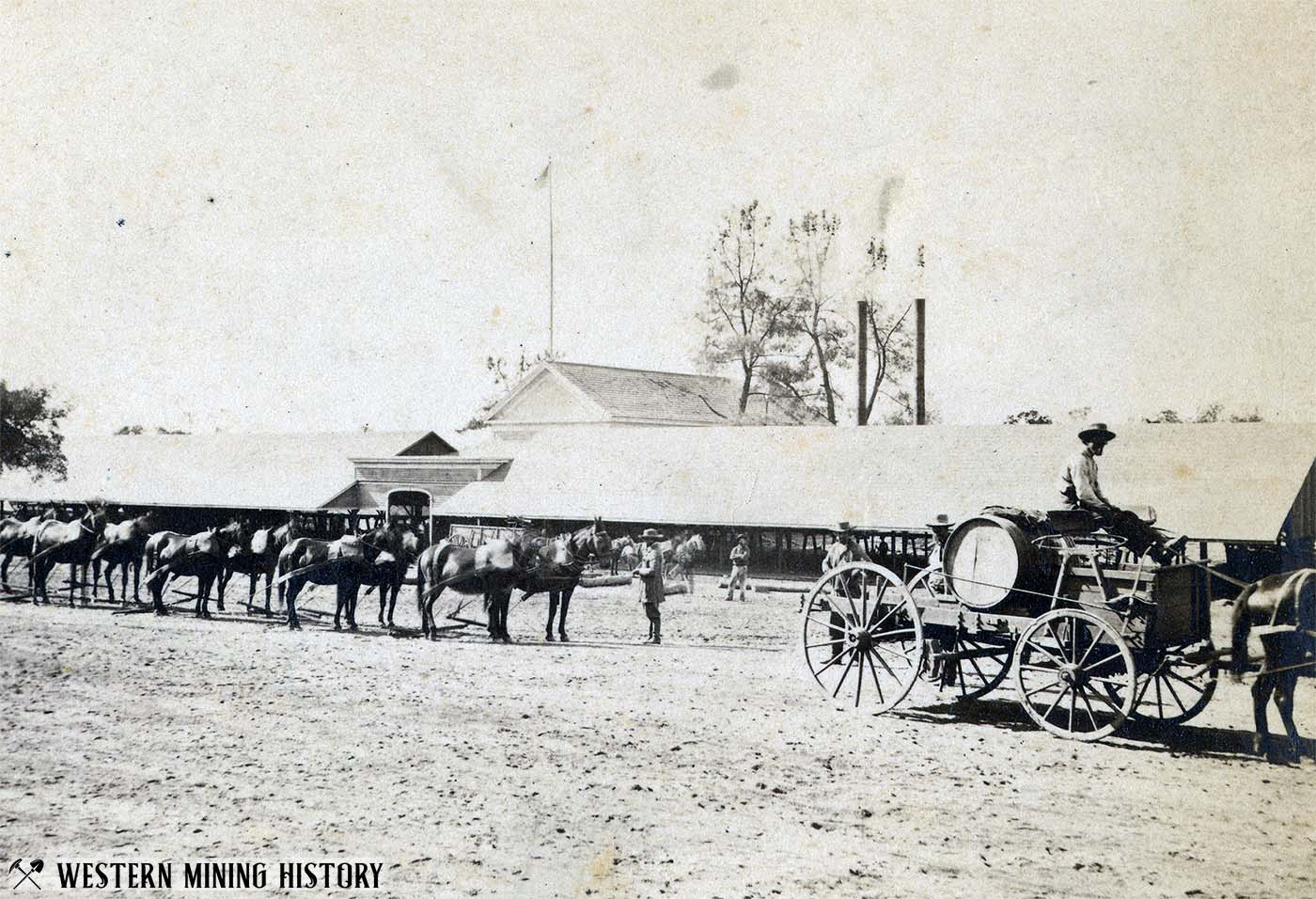
William K. Reed used some of the wealth generated by the Union Mine to improve transportation. Reed’s Turnpike, constructed in 1864-65, connected Copperopolis and the mines around Quail Hill with the main Stockton road. Heavy teams could thereafter haul large quantities of ore westward. The scale of the traffic was considerable: in one six-day period in 1865, more than 1.5 million pounds of ore reportedly passed over the route. The toll road remained an important regional transportation corridor before eventually passing to Calaveras County in 1885.
Decline of the First Copper Era
Copperopolis was unusually dependent upon a single industry, and the conditions that had created the town changed rapidly after 1865. The end of the Civil War reduced wartime demand, while declining copper prices made the enormous cost of transporting California ore to distant smelters increasingly difficult to justify. At the same time, much of the readily accessible high-grade ore had been removed.
Disaster compounded the economic problems. A major fire destroyed much of the center of Copperopolis in 1867. With the mining industry already in decline, much of the burned commercial district was never rebuilt. Of the more than 60 commercial buildings that had once lined the town’s streets during its early period, relatively few substantial masonry buildings survived.
The decline was abrupt. Businesses closed, miners departed, and properties were abandoned. By 1870, less than 200 residents remained at Copperopolis. The town did not disappear, however. Ranching provided some economic activity in the surrounding countryside, and the extensive copper deposits remained attractive whenever metal prices and investment conditions improved.
Revival of the Copper Mines
The first substantial revival came during the late 1880s. The Ames family of Massachusetts, associated with the Ames Tool Company, acquired the Union Mine. The old workings were dewatered and a new smelter was constructed, allowing the property to return to production. This period of activity continued until 1892.
Another reorganization followed in 1899 with the formation of the Union Copper Mining Company. The company acquired the original mining claims along with much of the property in Copperopolis itself. This latest effort lasted only a few years, however, and operations ceased in 1902.
Transportation also improved. By the early twentieth century, the cumbersome system of hauling ore entirely by wagon had been partly replaced by the Mountain Traction Company, whose steam-powered equipment carried ore over a separate traction road to the railroad at Milton. From there the material could be shipped toward Stockton and other destinations.
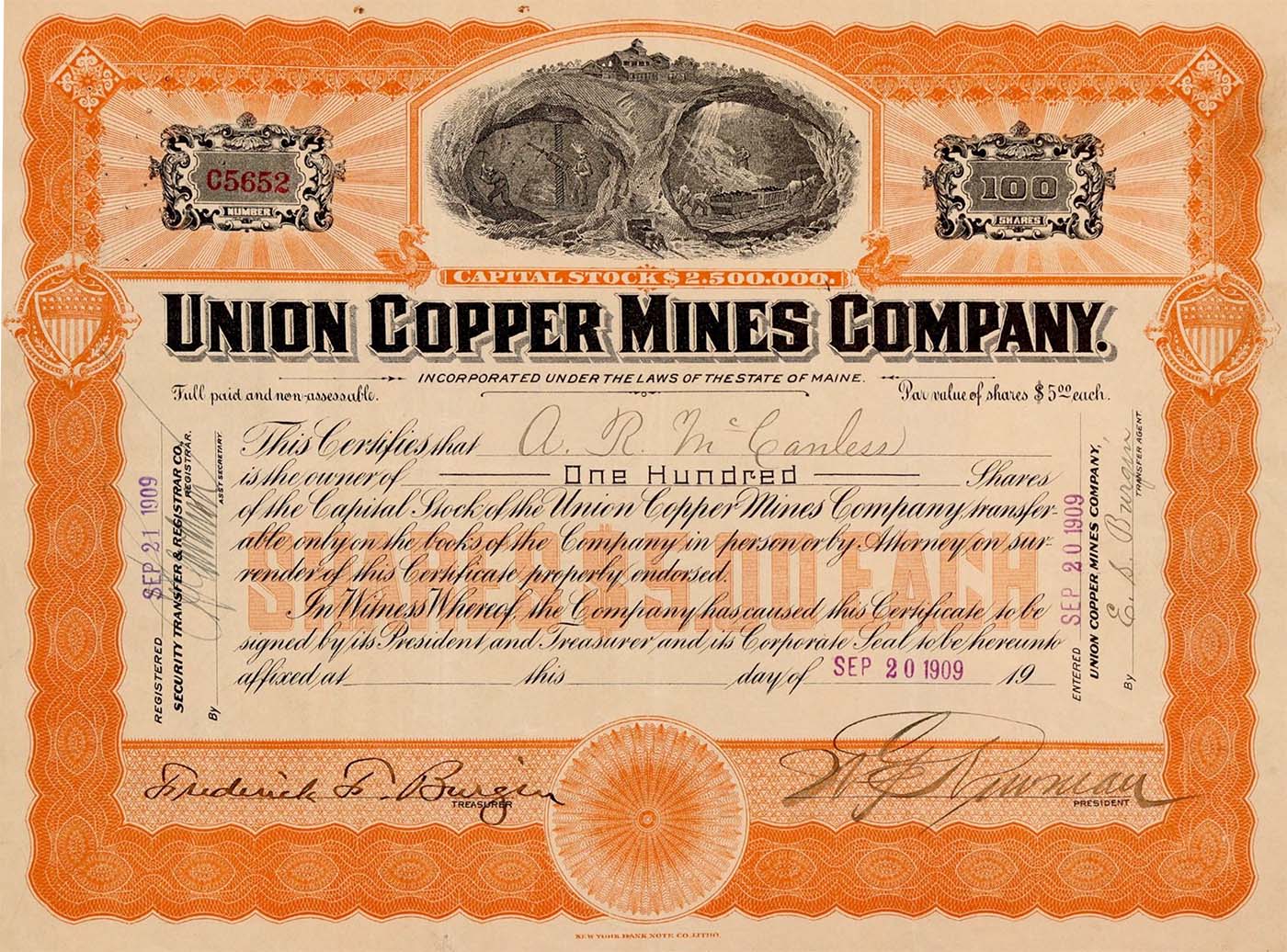
A more important revival began in 1909, when the Calaveras Copper Company acquired the Union interests and much of Copperopolis. The mines were again dewatered, another smelter was constructed, and the district entered a lengthy period of renewed production.
The renewed prosperity was interrupted by a major fire in April 1914. The blaze began in the home of H. D. Hobday, foreman of the Calaveras Copper Company, and swept through the west end of Copperopolis. The fire destroyed much of that part of town and caused an estimated $10,000 in damage, primarily to buildings owned by the mining company.
Copperopolis no longer occupied the dominant position it had enjoyed during the Civil War. Large western copper districts in Arizona, Montana, and Utah operated on a vastly greater scale, while other California mines had also surpassed Copperopolis. Nevertheless, the local mines remained significant within California.
The Calaveras Copper Company became central to the community's economy. In addition to operating the mines, it maintained a store, boarding houses, an electric plant, stables, and housing for employees. Copper prices fluctuated considerably, particularly during and after World War I, but mining continued on a relatively modest scale for much of this period.
The renewed mining activity gave Copperopolis a degree of stability that the town had lacked after the collapse of the 1860s. It never again approached the commercial intensity of its Civil War years, but it survived as a working mining community long after many other early California camps had disappeared.
World War II and the End of Mining
Copperopolis experienced its final significant mining activity during World War II, when copper once again became a strategically important metal. Mining resumed at the nearby Keystone Mine. Because the old local milling facilities were no longer available, ore was crushed at the nearby Mountain King gold mill.
The revival was brief. The Keystone Mine closed in 1945, bringing an end to more than eight decades of intermittent mining at Copperopolis. Over that period, the district produced more than 70 million pounds of copper.
Copperopolis Today
Although the headframes, mine buildings, smelters, and other industrial structures that once dominated the landscape are gone, several important buildings from the historic town survived, however, including structures associated with its Civil War-era development. The Copperopolis Armory and Congregational Church are among the historic buildings that survived in the community, and Copperopolis was designated California Historical Landmark No. 296 in 1938.
It All Started With The Gold Rush
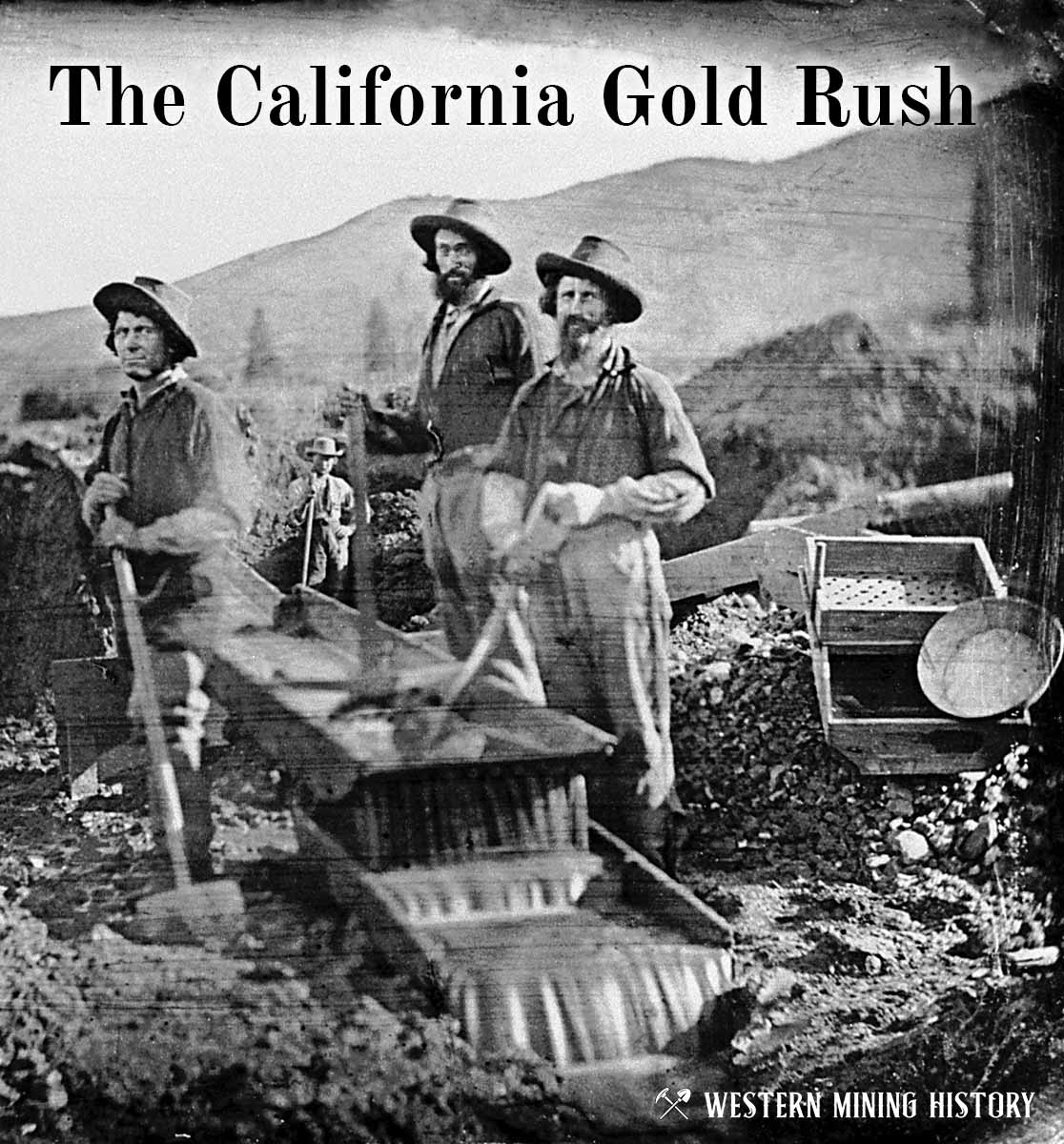
The great California Gold Rush kicked off the entire saga of western mining. Read about it at The California Gold Rush.
California Gold
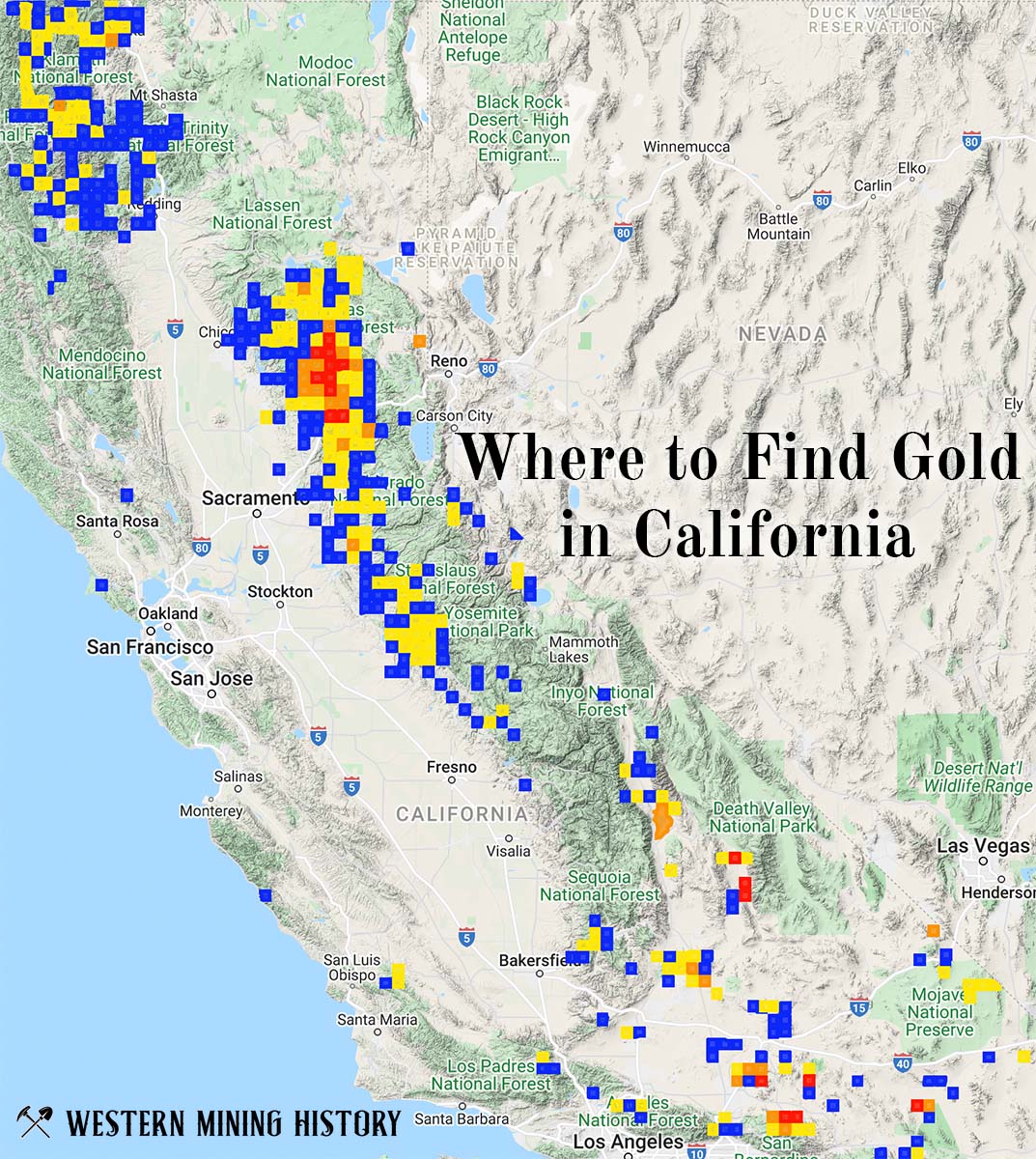
"Where to Find Gold in California" looks at the density of modern placer mining claims along with historical gold mining locations and mining district descriptions to determine areas of high gold discovery potential in California. Read more: Where to Find Gold in California.