Ketchum History
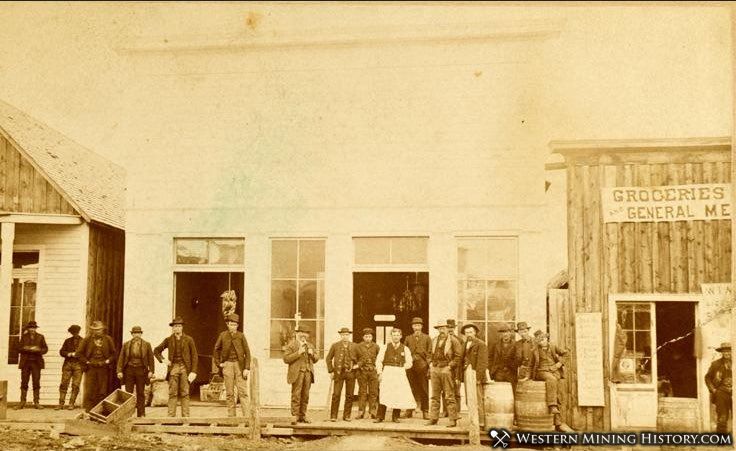
Prospectors had explored portions of the Wood River country during the 1860s and 1870s, but the district remained relatively undeveloped. That changed after 1879, when promising silver-lead discoveries demonstrated the potential of the region.Thousands of prospectors and fortune seekers entered the Wood River Valley in 1880, establishing mining camps and towns throughout the region as new discoveries attracted increasing numbers of miners.
Ketchum's post office was established on April 19, 1880, and the townsite was laid out shortly afterward. The settlement was initially called Leadville, reflecting the importance of the area's lead-silver ores. Postal authorities rejected the name because numerous other western communities were already called Leadville, and the new town became Ketchum, after David Ketchum, a trapper and prospector associated with the early exploration of the upper Wood River country
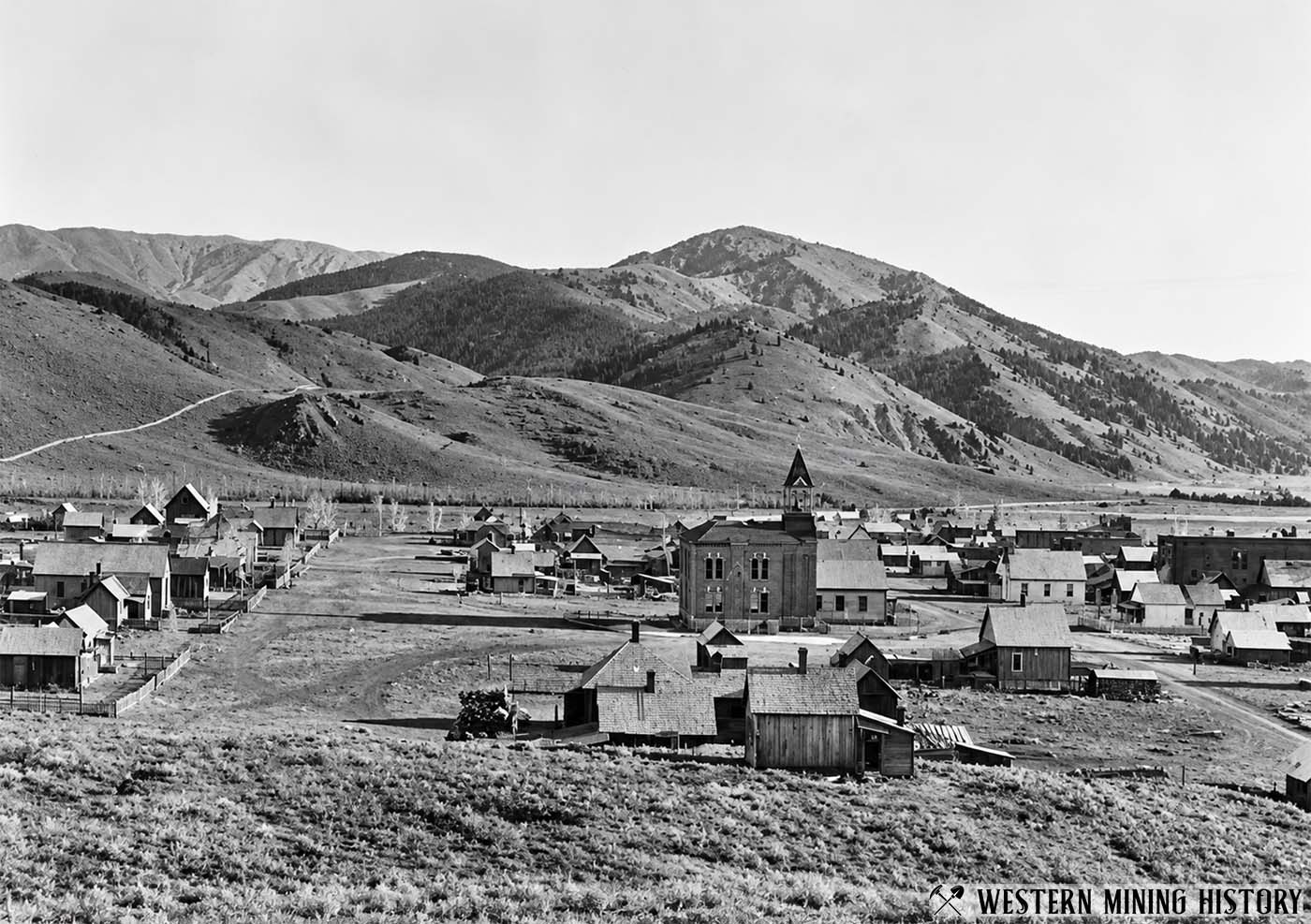
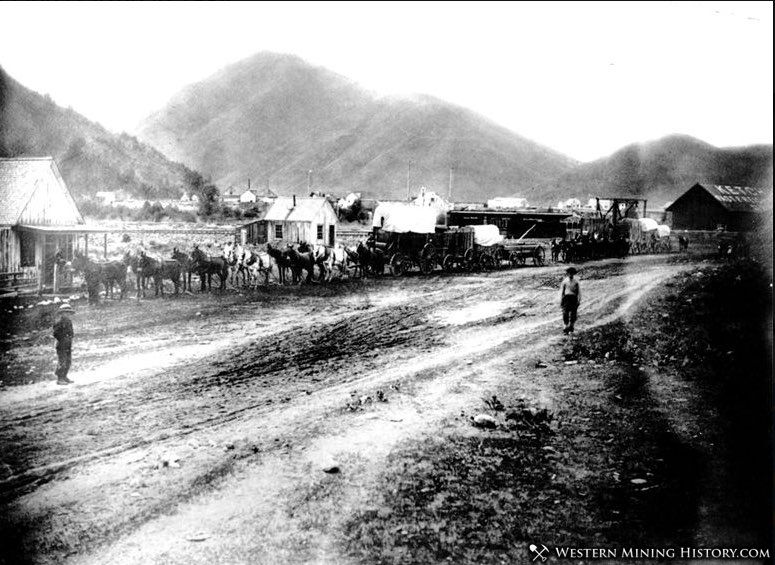
Ketchum quickly developed into the principal supply and ore processing center for mines in the upper Wood River region. Pack trains, freight wagons, and stage lines connected the town with mines in the Warm Springs, Boulder, and Sawtooth country. By the mid-1880s, Ketchum reportedly had more than 2,000 residents and a thriving business district that included hotels, restaurants, banks, stores, blacksmith shops, livery stables, and saloons.
Ketchum’s early prosperity was closely tied to the development of its smelting industry. The Philadelphia Mining and Smelting Company constructed a large smelter near Ketchum in 1881, and production began that October. By 1882, the Philadelphia works handled nearly one-fifth of the metal produced in the Wood River district. The plant was subsequently enlarged, and by 1883 it operated four furnaces capable of producing approximately 40 to 60 tons of silver-bearing lead bullion per day.
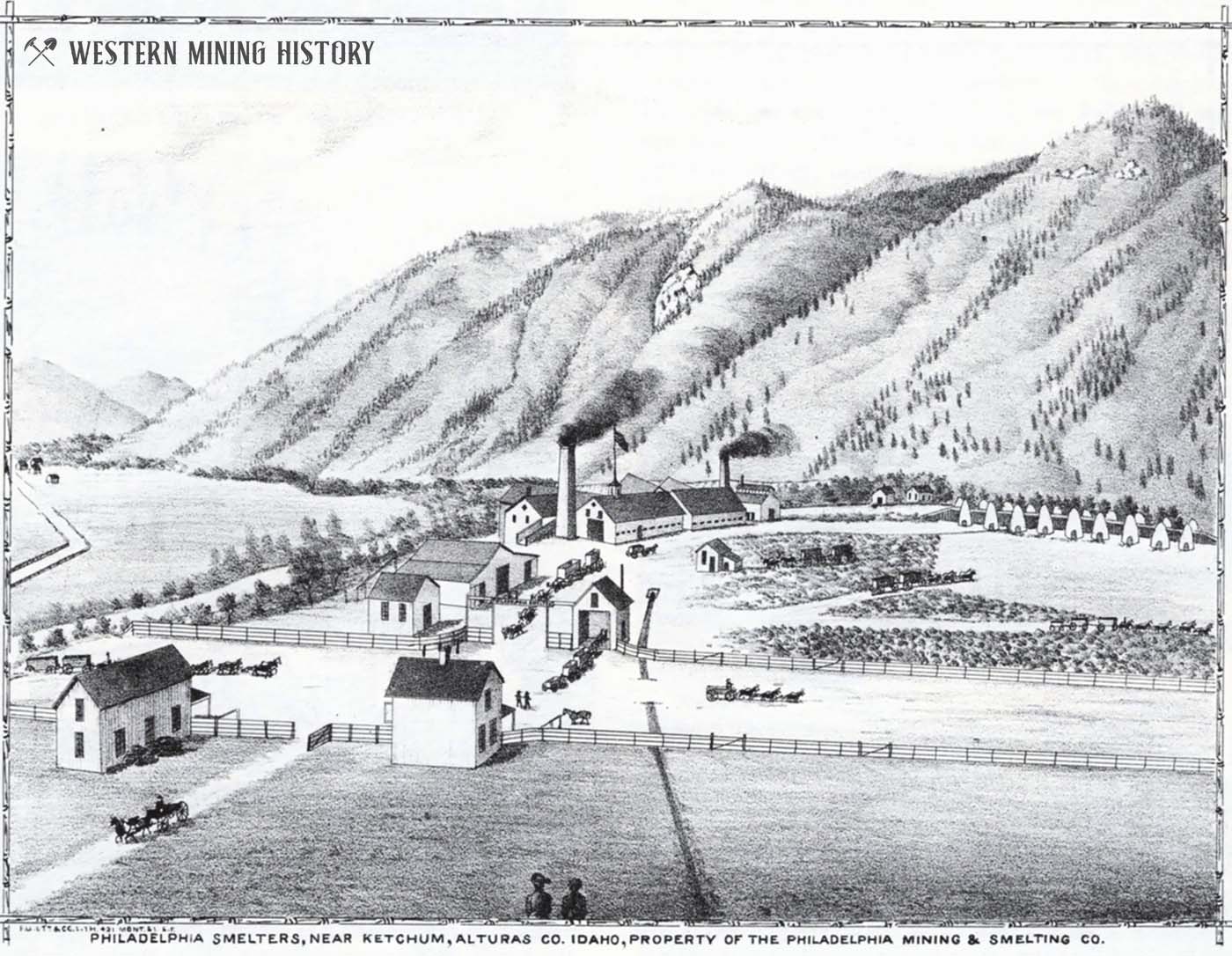
The Elkhorn, Parker, West Fork, Bullion, and Mayflower were among the principal mines supplying ore to the smelter, which reportedly processed ore from more than 80 mines throughout the region. In 1882, Idaho’s first electric-light plant was installed at the smelter.
The arrival of the Oregon Short Line in 1884 strengthened Ketchum’s position as the commercial center of the upper Wood River district. The town became the northern terminus of the railroad’s branch from Shoshone, providing direct rail transportation for bullion, ore, mining equipment, supplies, and passengers.
Even after the railroad reached Ketchum, wagons remained essential for transporting ore from remote mining districts in the surrounding mountains. Among the best known were the massive ore wagons operated by Horace Lewis’s Ketchum East Freight Line, which hauled ore over Trail Creek Summit to Ketchum for shipment by rail. Six of the original Lewis wagons survive and have become enduring symbols of the town’s mining and transportation history. Today they are featured in Ketchum’s annual Wagon Days celebration, where the wagons are pulled through town as part of the famous “Big Hitch.”
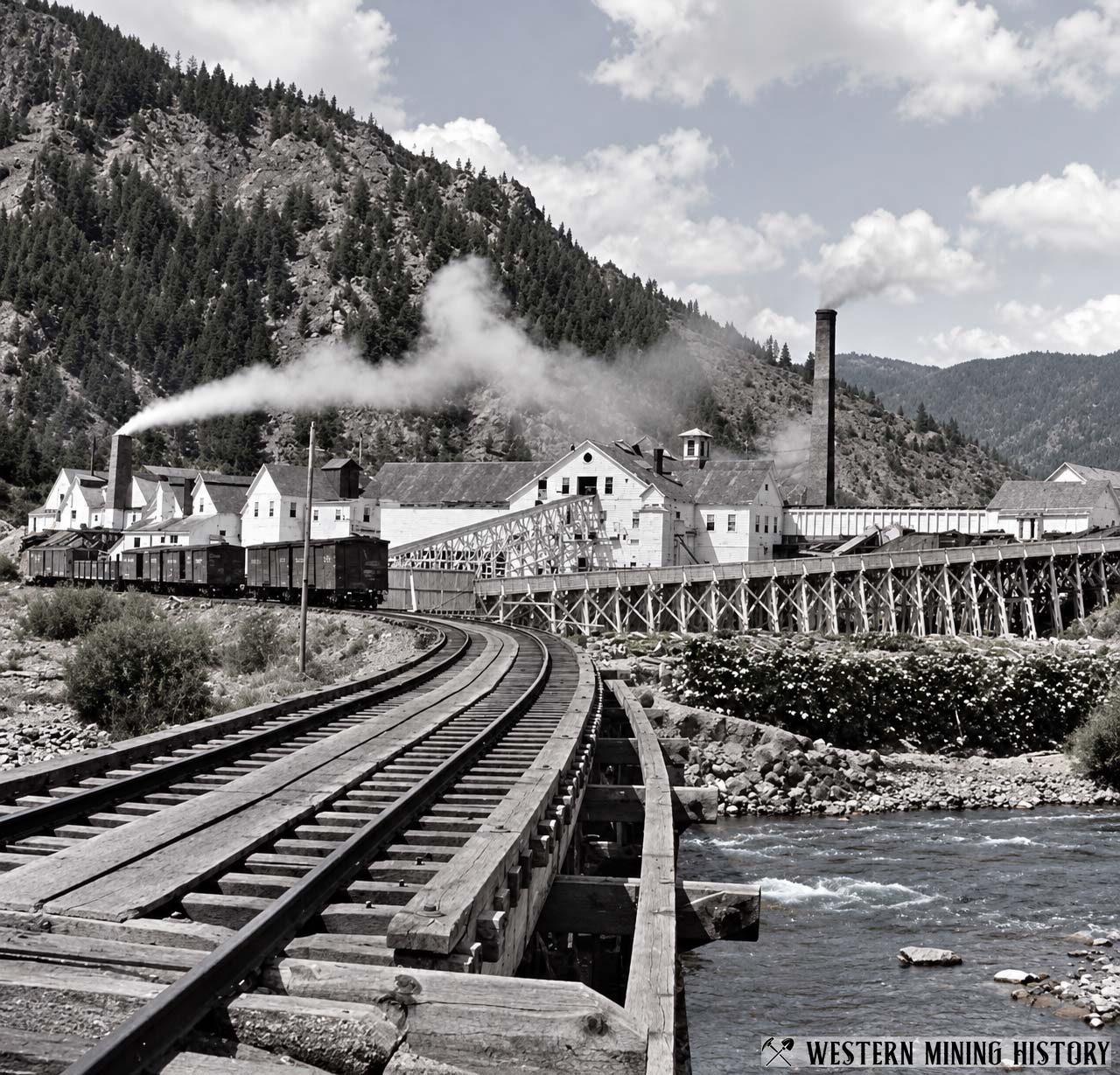
Ketchum's mining prosperity was relatively brief. Falling silver prices and declining activity at many Wood River mines weakened the local economy during the late 1880s and early 1890s. The collapse of silver prices in 1893 accelerated the decline, and smelting and mining operations were sharply reduced. Unlike many western mining camps, however, Ketchum did not disappear. With rail transportation already in place and extensive grazing lands nearby, Ketchum developed into an important center for the region’s sheep industry.
Sheep ranchers had been using the Wood River country since the nineteenth century, moving enormous bands between winter ranges and summer grazing lands in the surrounding mountains. Ketchum's railroad facilities made the town an important shipping point. By 1900, more than two million sheep had been raised or trailed through the Wood River Valley, and between 1910 and 1920 more than one million sheep annually passed through the area. Blaine County records describe Ketchum during this period as one of the largest sheep-shipping centers in the United States.
The next major transformation came during the Great Depression. Union Pacific Railroad chairman W. Averell Harriman sought to develop a western winter resort that could generate passenger traffic for the railroad. In 1935, Austrian skier Count Felix Schaffgotsch surveyed potential locations throughout the West and selected the mountains near Ketchum. Union Pacific constructed Sun Valley Resort just outside town, opening it in December 1936. The resort also became closely associated with the development of the modern chairlift, first installed on nearby ski slopes as part of the project.
Sun Valley fundamentally changed Ketchum. Visitors who once arrived in the Wood River Valley seeking silver now came for skiing, recreation, and the mountain landscape. The resort attracted wealthy vacationers, actors, writers, and other prominent visitors. Ernest Hemingway became particularly associated with the area, eventually purchasing a home near Ketchum in 1959. He lived there during the final years of his life and died in Ketchum in 1961.
During the decades that followed, tourism and outdoor recreation became increasingly important to Ketchum’s economy, gradually replacing the mining, ranching, and railroad industries that had sustained the town during its earlier years. Ketchum’s transition from silver-lead mining center to sheep-shipping point and eventually to resort community allowed the town to remain prosperous long after its original mining industry had declined.
Note: Several images on this page have been digitally upscaled and/or restored. High-quality historical photographs of Ketchum are difficult to source, so some images were enhanced to improve clarity and presentation. Care was taken to preserve the original scenes and historical details without altering their content.
Idaho Gold
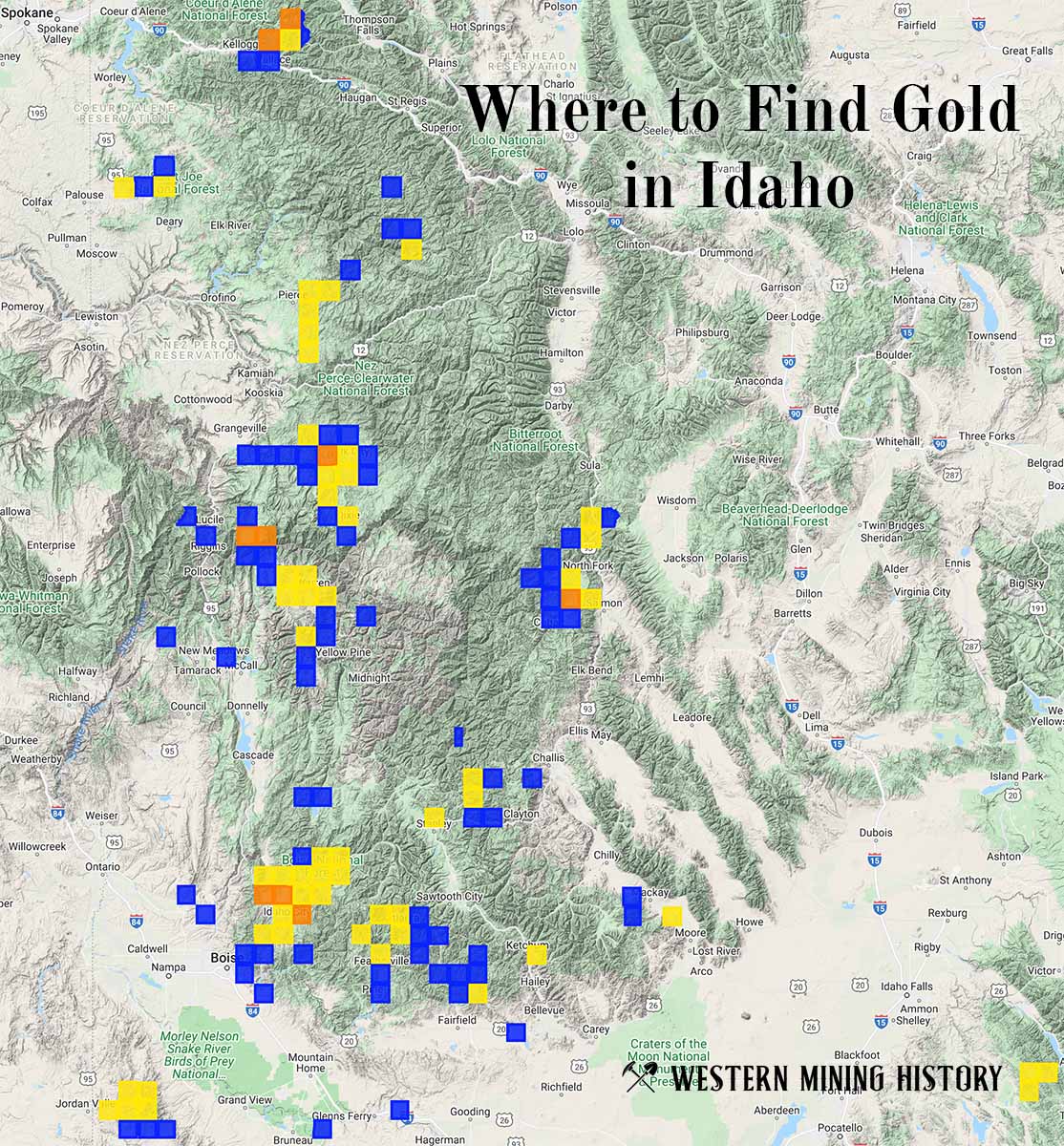
"Where to Find Gold in Idaho" looks at the density of modern placer mining claims along with historical gold mining locations and mining district descriptions to determine areas of high gold discovery potential in Idaho. Read more: Where to Find Gold in Idaho.