Pardee History
The Iron Mountain district, located north of Superior along the Clark Fork River, was centered almost entirely on the Iron Mountain Mine, a producer of silver, lead, and zinc.
The discovery of the Iron Mountain Mine in 1888 is marked by both documented accounts and local legend. While official records credit L. T. Jones, popular stories recount that a boy searching for stray cattle stumbled upon rich ore and later led Jones to the site. Jones, together with partners D. R. S. Frazier and Frank Hall, shipped an initial ten tons of ore for assay, which yielded an impressive $1,400. This promising return attracted the attention of James K. Pardee, who soon acquired the property.
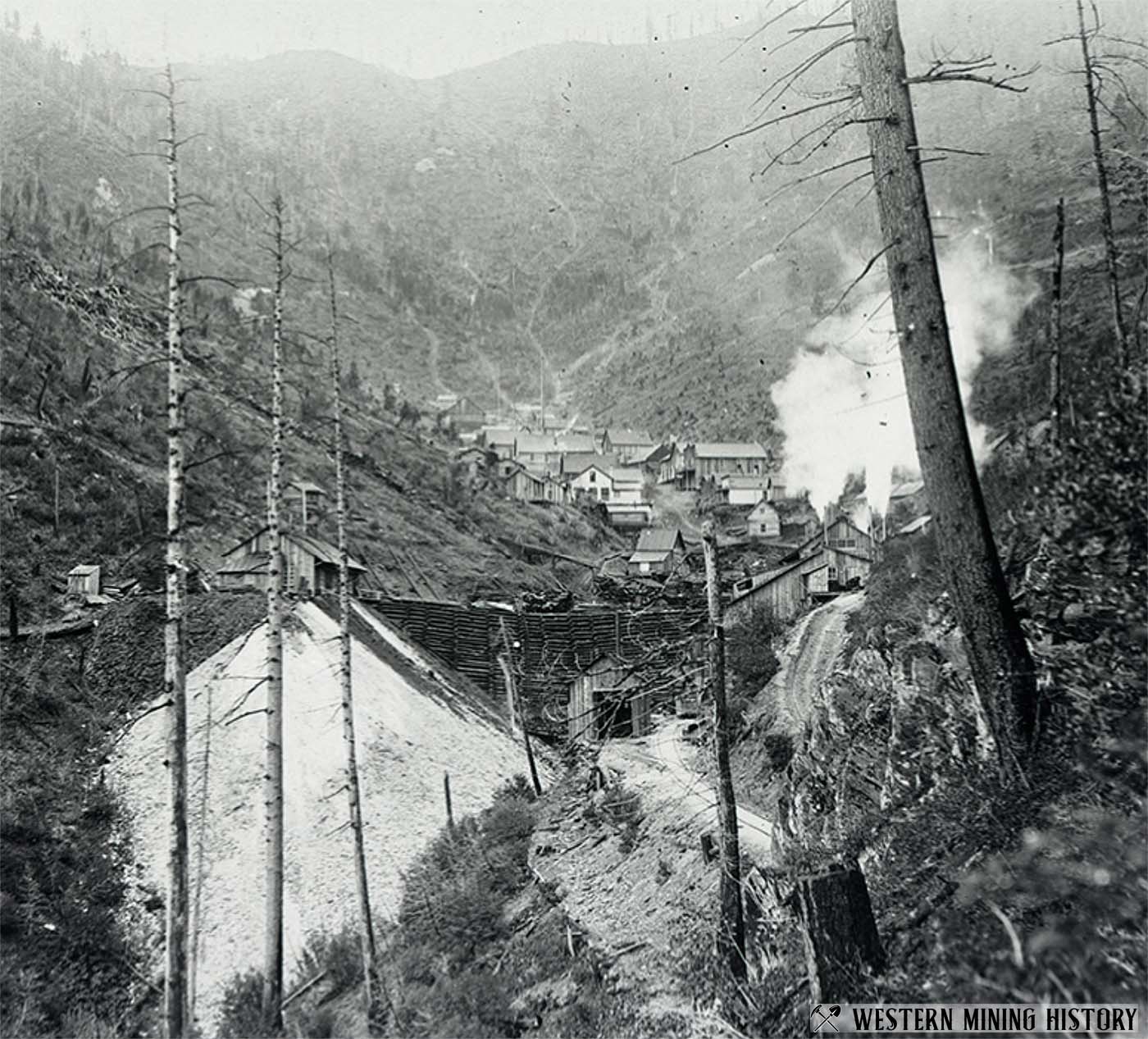
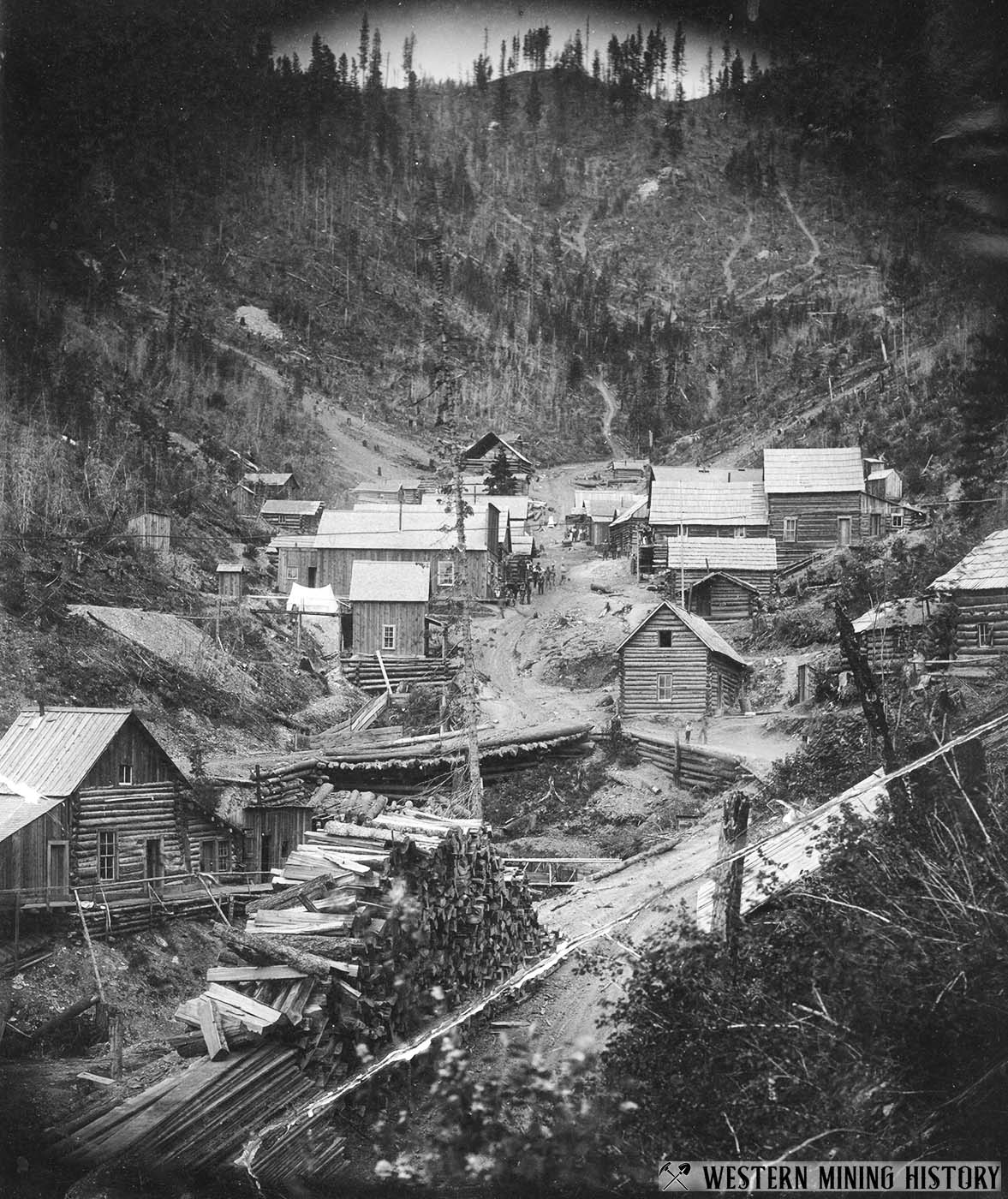
Pardee wasted little time developing the site. He constructed a mill on Flat Creek about a mile from the mine, backed financially by prominent figures such as Samuel T. Hauser and Angus McDonald. Around this mill, the town of Pardee emerged. A post office opened in 1891, and during its peak in the early 1890s, Pardee was a lively mining camp, complete with a saloon, boarding house, dance halls, a Miners’ Union Hall, and a post office. Like many mining towns, its fortunes were closely tied to the success of the mine.
The completion of a Northern Pacific Railroad branch line to Superior in 1891 greatly improved transportation, shortening haulage distances and allowing operations to expand. A larger 100-ton concentrator was constructed at Superior, while an incline tram linked the mine to the Iron Mountain mill at Pardee.
The Iron Mountain Mine proved to be one of the most profitable silver properties in Montana during its early years. Within roughly eight years, it generated about half a million dollars in dividends while also covering all development and infrastructure costs, including the construction of 15 miles of mountain road.
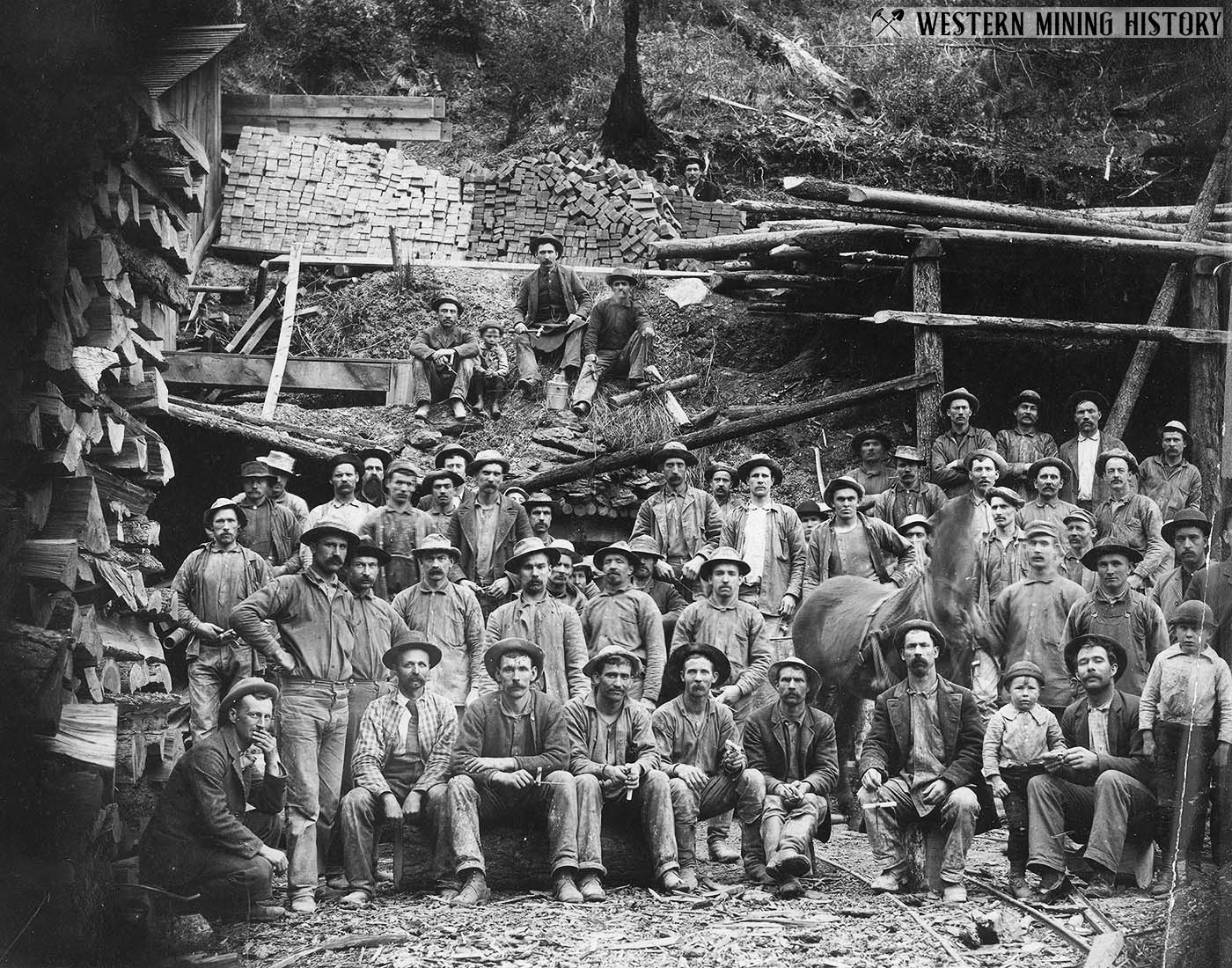
At its height, the mine employed between 100 and 125 workers and operated under the Iron Mountain Mining Company from 1888 to 1896. However, this success was relatively short-lived. In late 1897, facing rising costs associated with extracting ore from the 1,600-foot-deep mine, the operation closed. The Pardee post office closed the following year, and the town was abandoned. New work was undertaken at the mine in subsequent decades, but the town was never revived.
Railroad and Tram
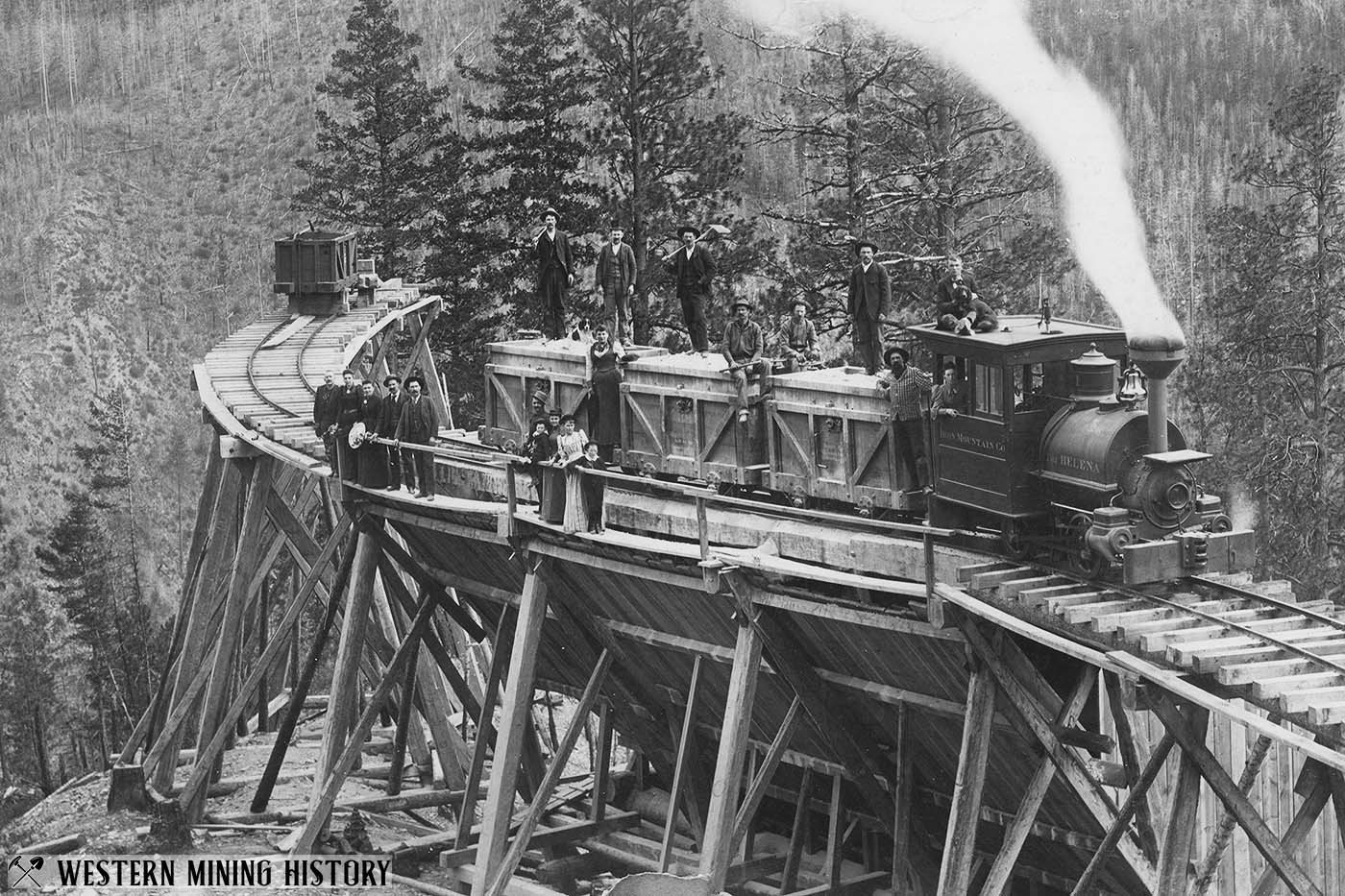
The Iron Mountain Mine had some interesting infrastructure that was captured in historical photos, although accurate text descriptions are difficult to find. Some sources state that an aerial tram linked the mine with the mill at Pardee, but photos indicate that it was an incline tram.
The following photo shows a locomotive named "The Helena" that was used to transport ore about a mile from the mine to the ore bin at the top of the incline tram, where it was then lowered to the mill at Pardee. This was an unusual setup, which was probably the reason for the photo opportunity. Note the dogs on top of the train.
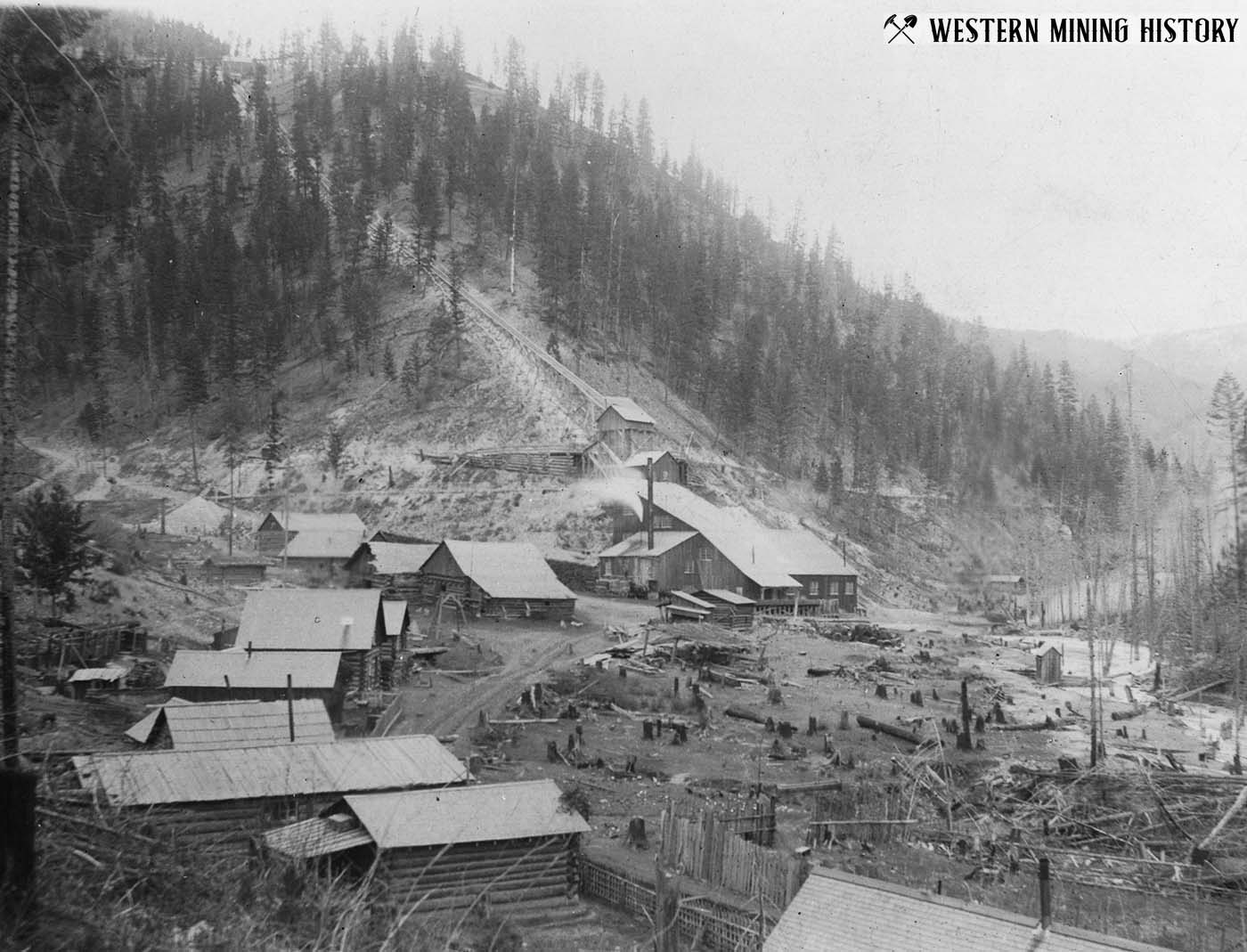
The next photo is an early view of the mill (around 1890?) that gives a good look at the incline tram.
The following ca. 1896 photo gives us a look at the camp at its peak. Note a railroad has been built that is heading down the hill from the mill site. At this point, a larger mill was in operation near Superior. Although I could not find written verification, a source knowledgable in the subject told me that this rail line ran ten miles to the mill at Superior.
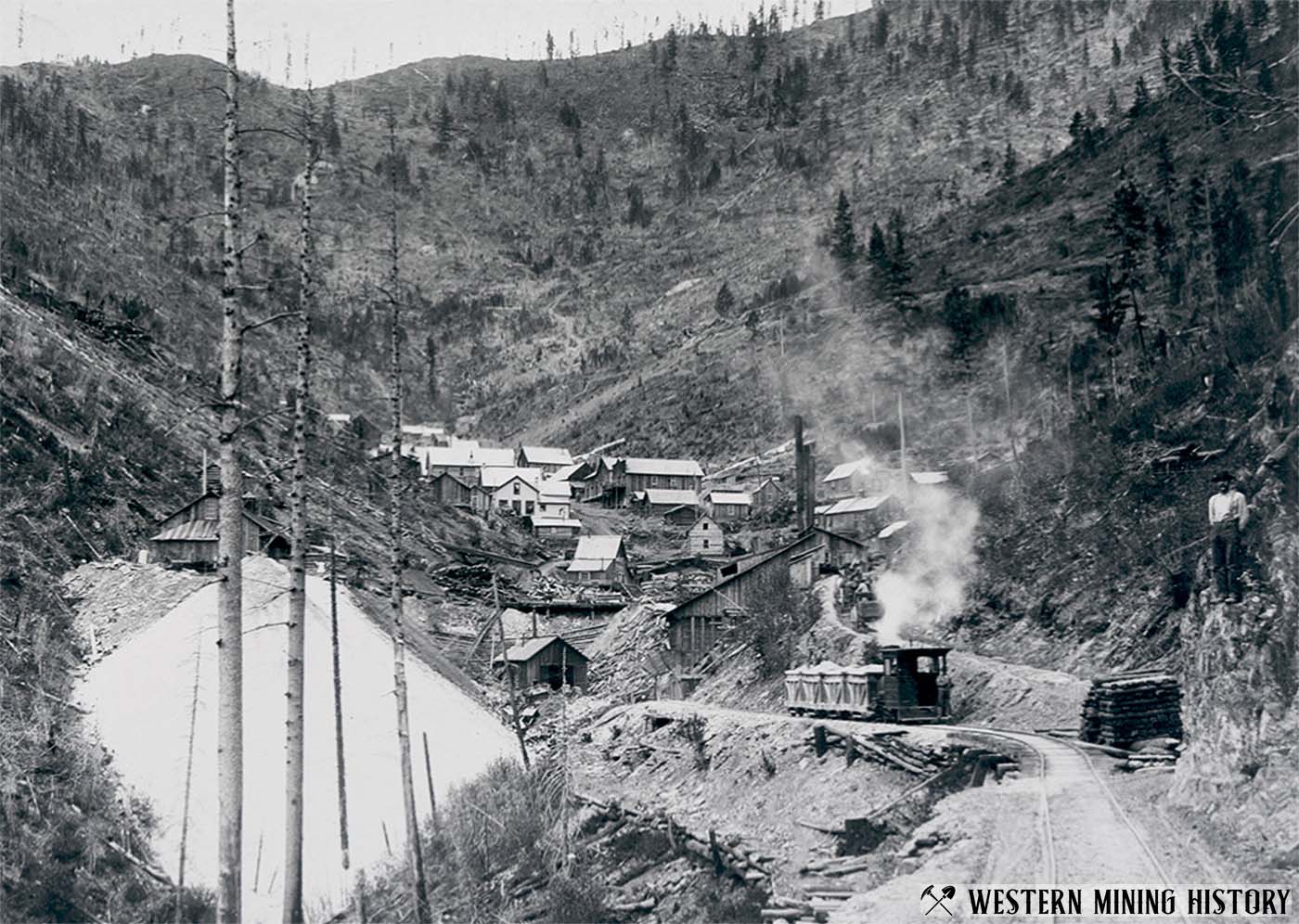
Whether the old mill was still in use at this time, or whether it was simply bypassed by the ore being transported down the mountain, is something I could not ascertain.
Principal Gold Districts of Montana
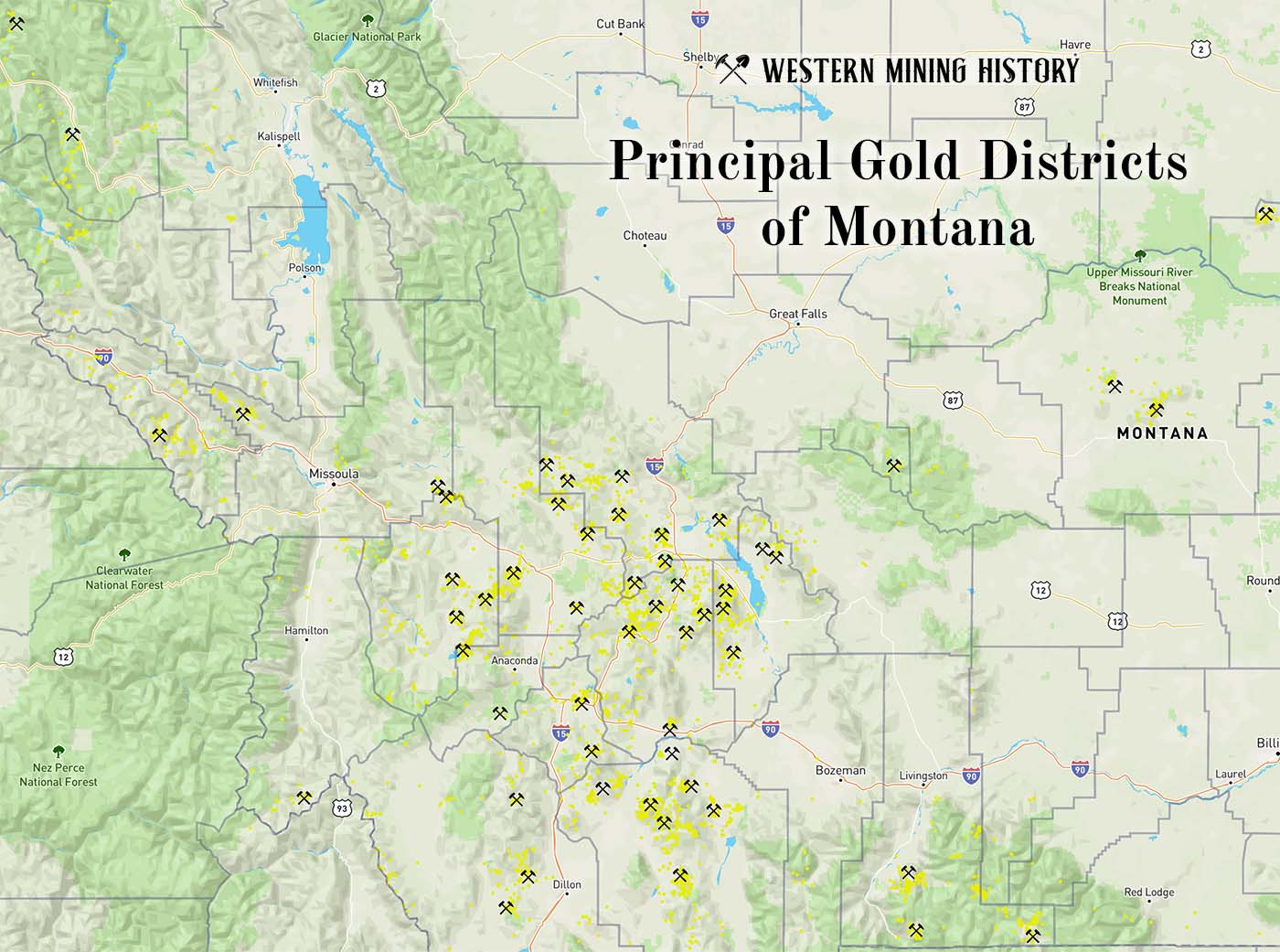
In Montana, 54 mining districts have each have produced more than 10,000 ounces of gold. The largest producers are Butte, Helena, Marysville, and Virginia City, each having produced more than one million ounces. Twenty seven other districts are each credited with between 100,000 and one million ounces of gold production. Read more: Principal Gold Districts of Montana.