Pioneer History
Pioneer was one of the earliest placer-mining camps in Montana. The town was established in what was then Deer Lodge County, an area that became part of the newly created Powell County in 1901.
Pioneer grew out of mining activity in the Pioneer District, the site of Montana's first documented gold discovery. Gold was discovered here in 1852, but the deposits were initially considered too low-grade to trigger a major rush. Additional discoveries prior to 1866 renewed interest in the district, although many prospectors were soon lured away by richer strikes elsewhere in western Montana.
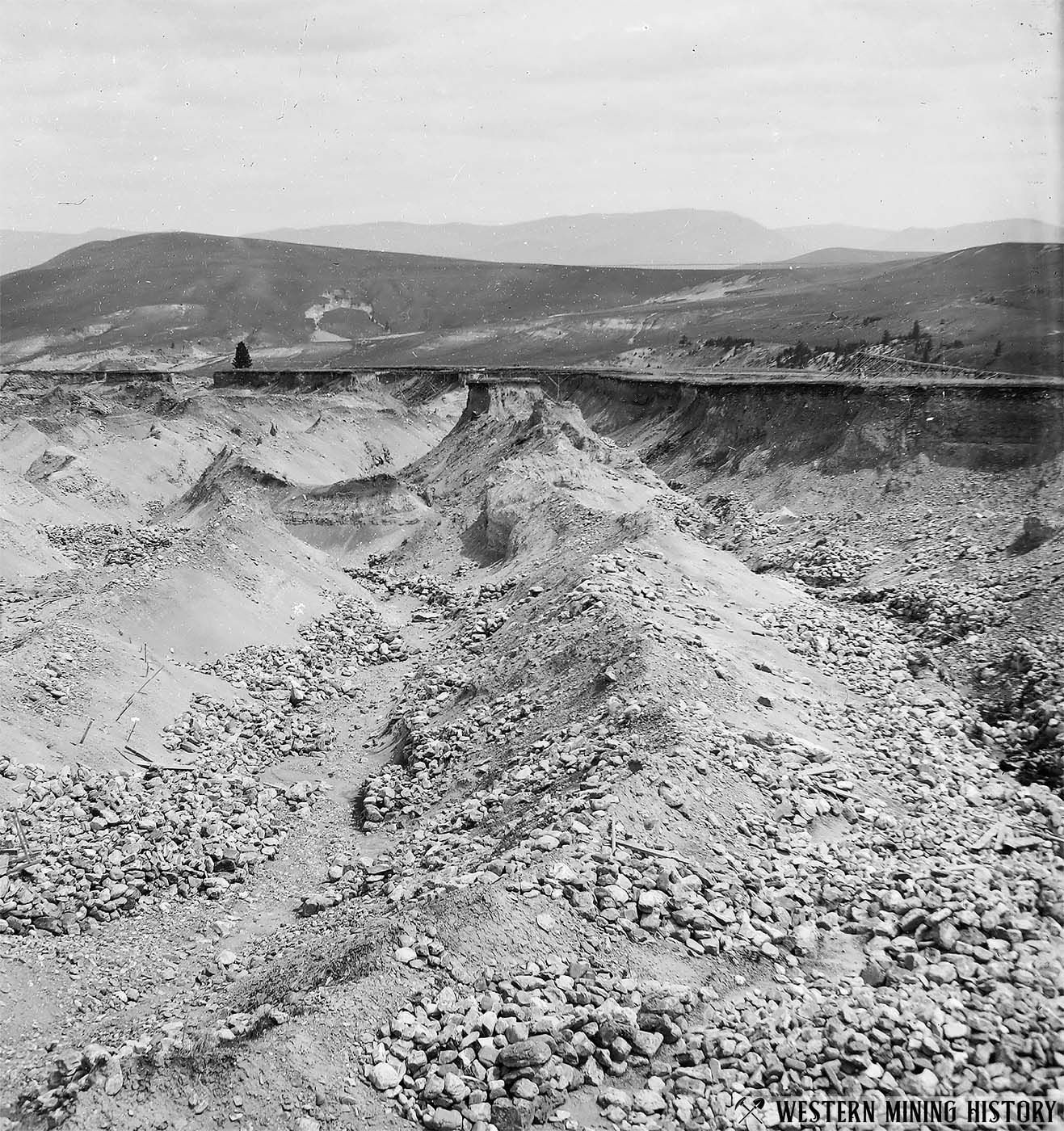
Significant development did not begin until the late 1860s when large-scale water systems made hydraulic mining possible. A sixteen-mile ditch completed in 1868–69 allowed miners to work elevated terrace deposits that had previously been inaccessible. By 1871, multiple hydraulic giants were washing away ancient gold-bearing gravels. The rich terrace deposits of Pioneer Bar became some of the district's most productive ground, yielding more than a million dollars in gold during the late nineteenth century.
The district's first significant settlement was Yamhill, but as the nearby placer deposits were exhausted, miners gradually abandoned the camp in favor of Pioneer. The November 4, 1869 edition of the Helena Semi-Weekly Herald reported on the excitement at Pioneer:
These mines are believed to be extensive, and, so far as prospected, will pay from $18 to $30 per day to the man. About twenty-five miners are making preparations to remain in the gulch and drift during the winter.
Another discovery has been made near the heart of Gold creek, where two companies are working with good results. Some big runs have been on Pilgrim Bar, and some important sales of ground. Smith, Catchen & Co., who purchased Taylor, Horn & Halley's interest for $17,000, recently cleaned up $4,000, the result of one week's run. These gentlemen have refused $82,000 for their claims.
Men are coming in almost daily from different parts of the Territory, and all pronounce Pioneer the liveliest camp they have visited. The town is still improving, and every one is sanguine of good times the coming season.
Jno. Woods & Bro, are erecting a ten pin alley. There are many miners in town laying in their winter supplies, and trade is generally brisk. There are about 200 Chinamen in the camp, some of whom own the best ground in the diggings.
The establishment of a post office in 1870 cemented Pioneer's role as the commercial center of the district. The nearby camp of Pikes Peak briefly competed with Pioneer as a business center, but declined by the late 1870s.
Although relatively little was written about Pioneer, period newspapers provide glimpses of life in the town. An 1869 newspaper advertised a ball at Pioneer Hall on June 10, followed by another at Fenian Hall–constructed specifically for the occasion–on July 2. Newspaper accounts also mention several local businesses, including the McKinstry House hotel, the Kiyus Saloon, Rains, Taylor & Daddow Livery, and Child's House. Pioneer was connected to neighboring communities by a daily stage line serving Pioneer, Pikes Peak, and Deer Lodge.
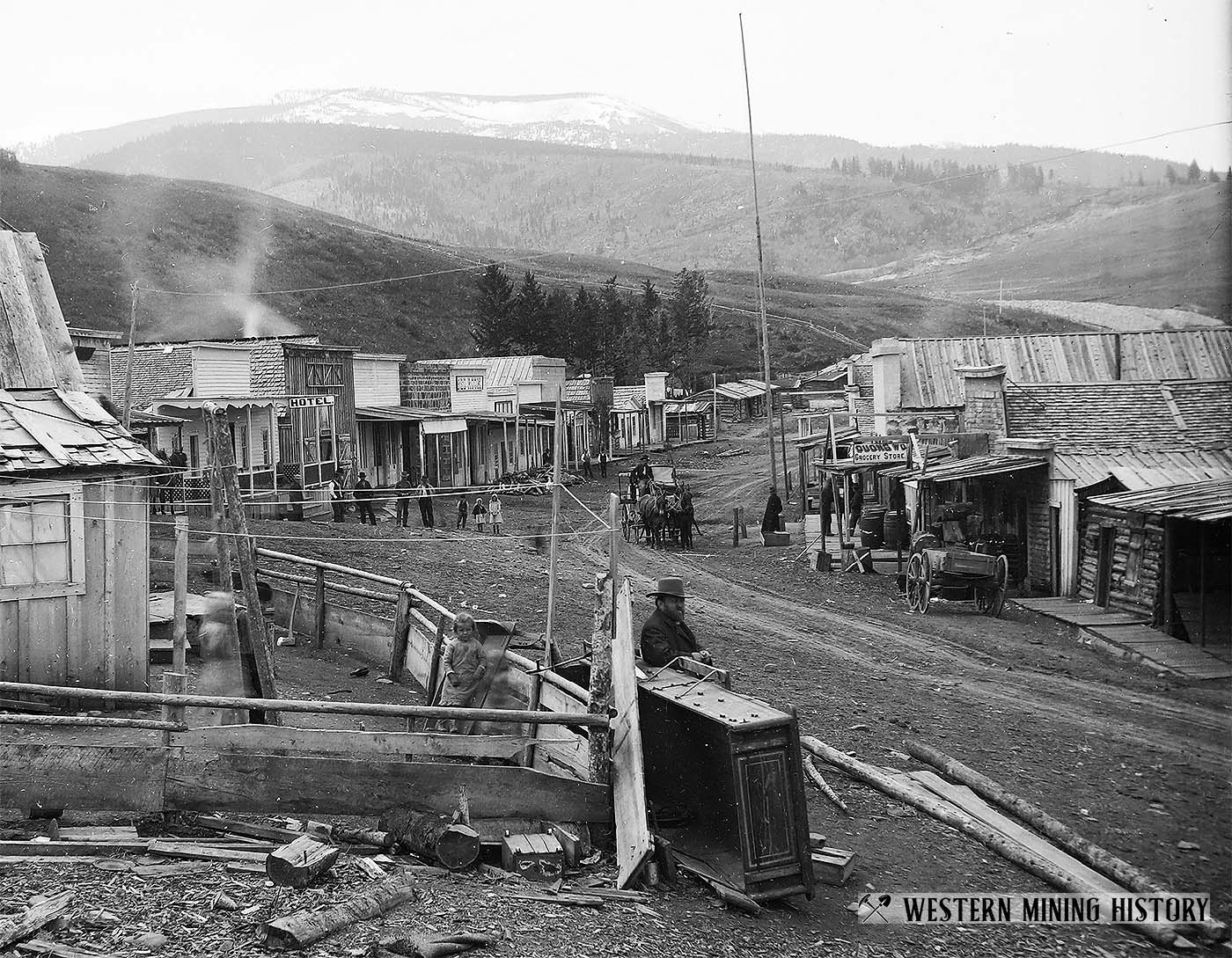
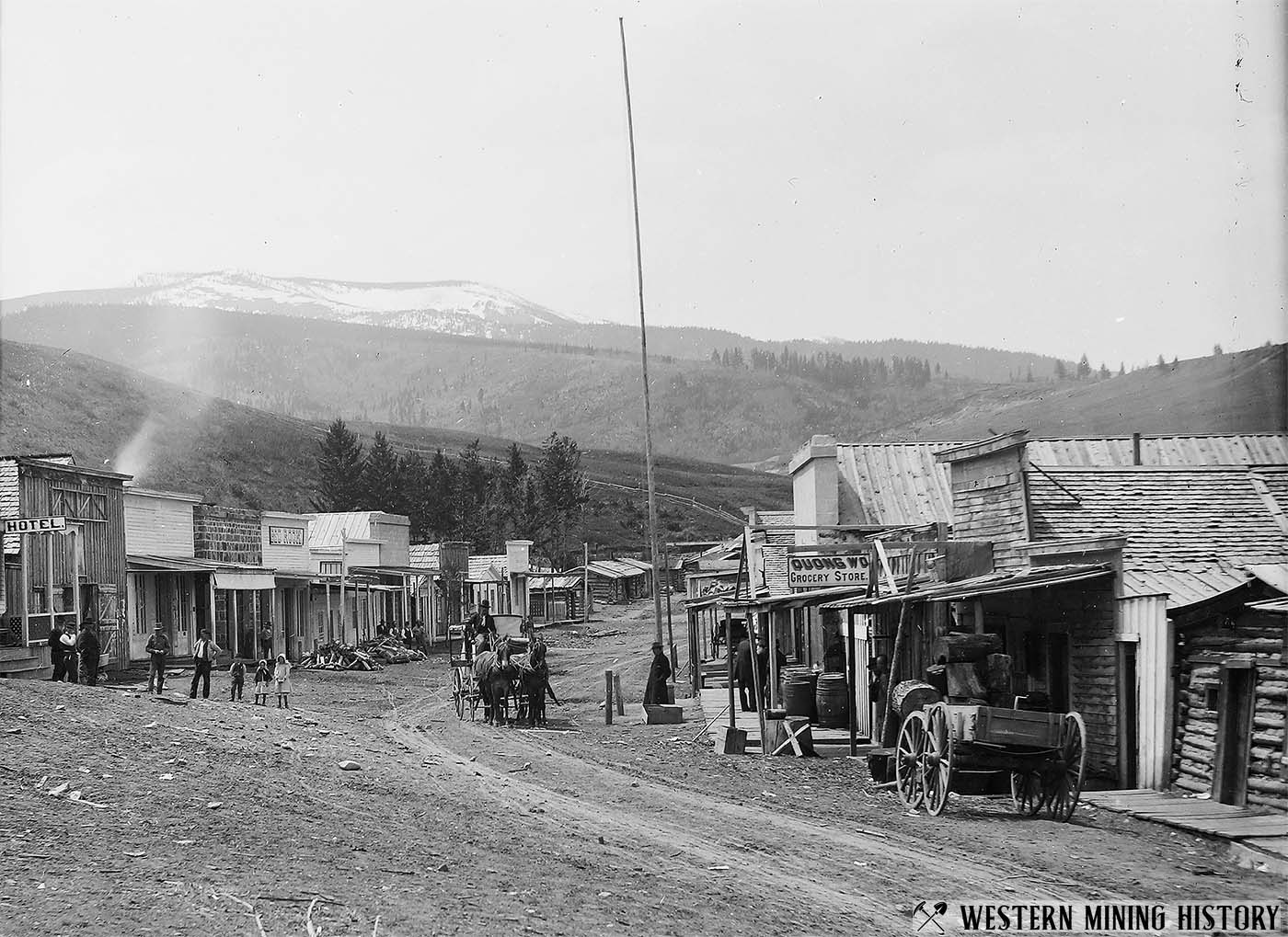
Although the most accessible placer deposits had largely been exhausted by the 1880s, a substantial Chinese workforce moved into the area and continued to profitably rework the remaining ground. Photographs taken by photographer Frank J. Haynes in 1883 depict town with numerous wood-frame commercial buildings lining its main street.
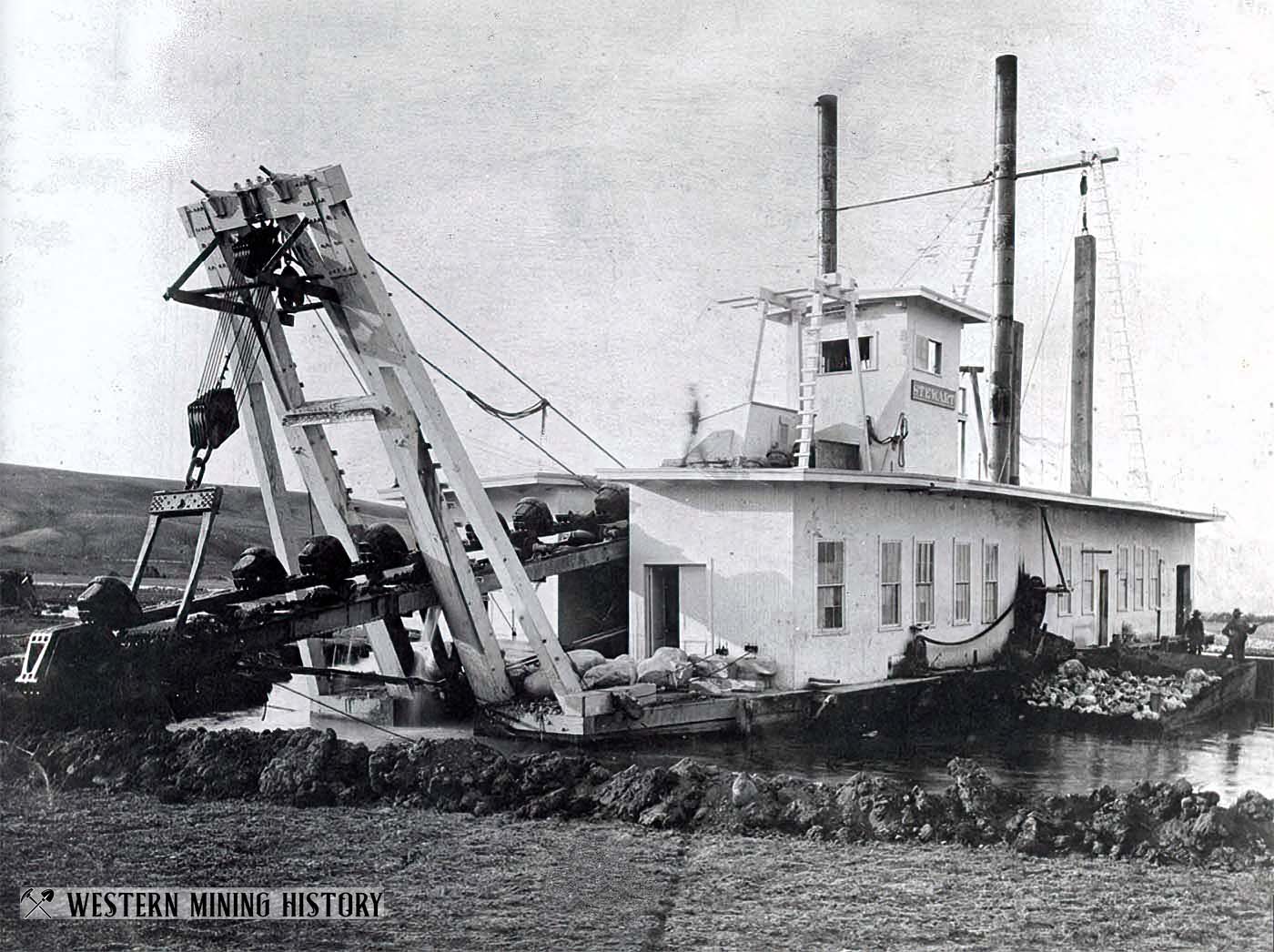
Gold dredging was attempted in the district in 1905 and 1906, but these early efforts met with only limited success. The extensive placer deposits required large-scale dredging to be mined profitably, yet decades of litigation over land ownership and water rights delayed development. It was not until 1927 that these legal disputes were largely resolved and large-scale dredging operations finally commenced.
The dredging boom came too late to save the town of Pioneer. By the time the dredges arrived, the once-thriving mining camp had dwindled to only a handful of residents. After serving the district for nearly fifty years, Pioneer's post office closed in 1918, and the town soon passed into history as a ghost town.
Principal Gold Districts of Montana
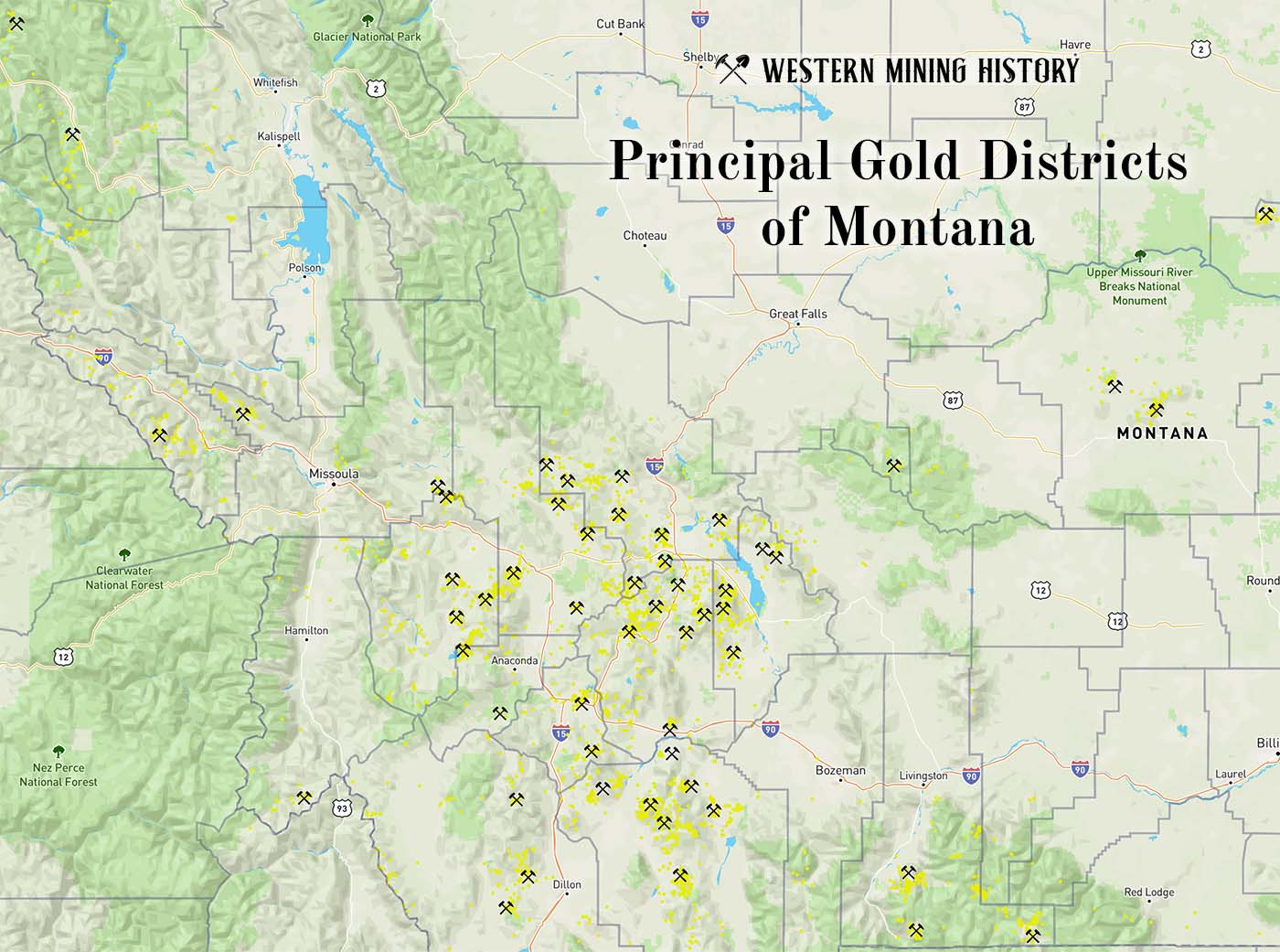
In Montana, 54 mining districts have each have produced more than 10,000 ounces of gold. The largest producers are Butte, Helena, Marysville, and Virginia City, each having produced more than one million ounces. Twenty seven other districts are each credited with between 100,000 and one million ounces of gold production. Read more: Principal Gold Districts of Montana.