Hot Creek History
Silver was first discovered at Hot Creek in early 1865. The Hot Creek Mining District was organized in February 1866, and by September approximately one hundred people had settled in the area, with work underway on a toll road to Austin. The district received an early boost when the Indian Jim Mine sold to investors for $50,000, prompting the construction of its first stamp mill. A post office was established in 1867.
Little is known about the daily lives of mining camp residents in central Nevada during the 1860s, but valuable details survive in the diaries of Martha Gally, who moved to Hot Creek with her husband, Dr. Gally, and their two children in December 1866. Formerly a dentist, Dr. Gally had abandoned his profession to pursue a prospector’s life. Martha’s diaries later became the basis for the 1977 book Martha and the Doctor: A Frontier Family in Central Nevada.
The Gally family arrived at Hot Creek during an early period of excitement, but the district soon declined. Low assay values from the mines, inadequate milling facilities, and a shortage of investment capital hindered the growth of the local mining economy. Despite these challenges, the Gallys stayed on, both in hopes that their claims would eventually yield returns and because Hot Creek's favorable climate, relative to other camps in the region, sustained their modest homestead.
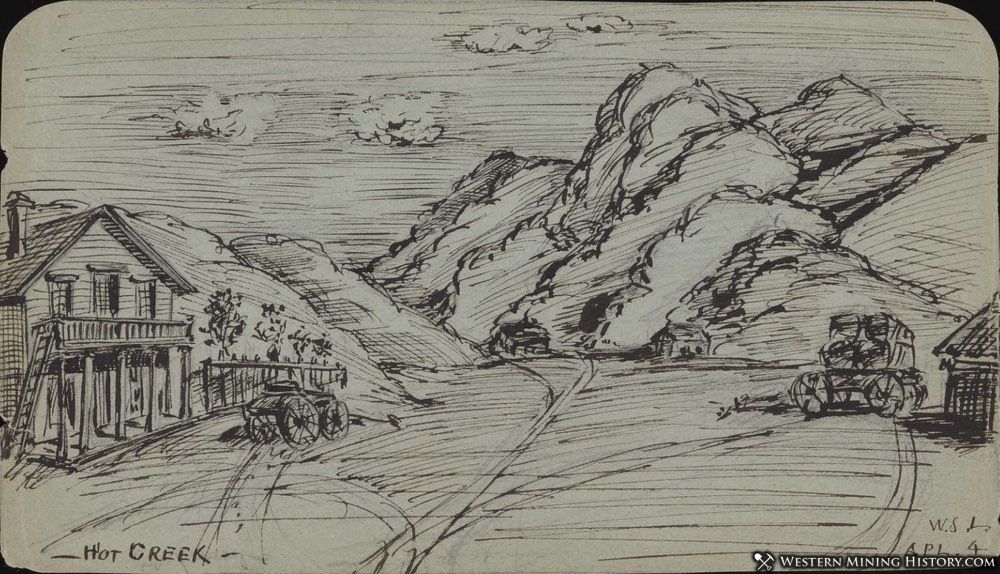
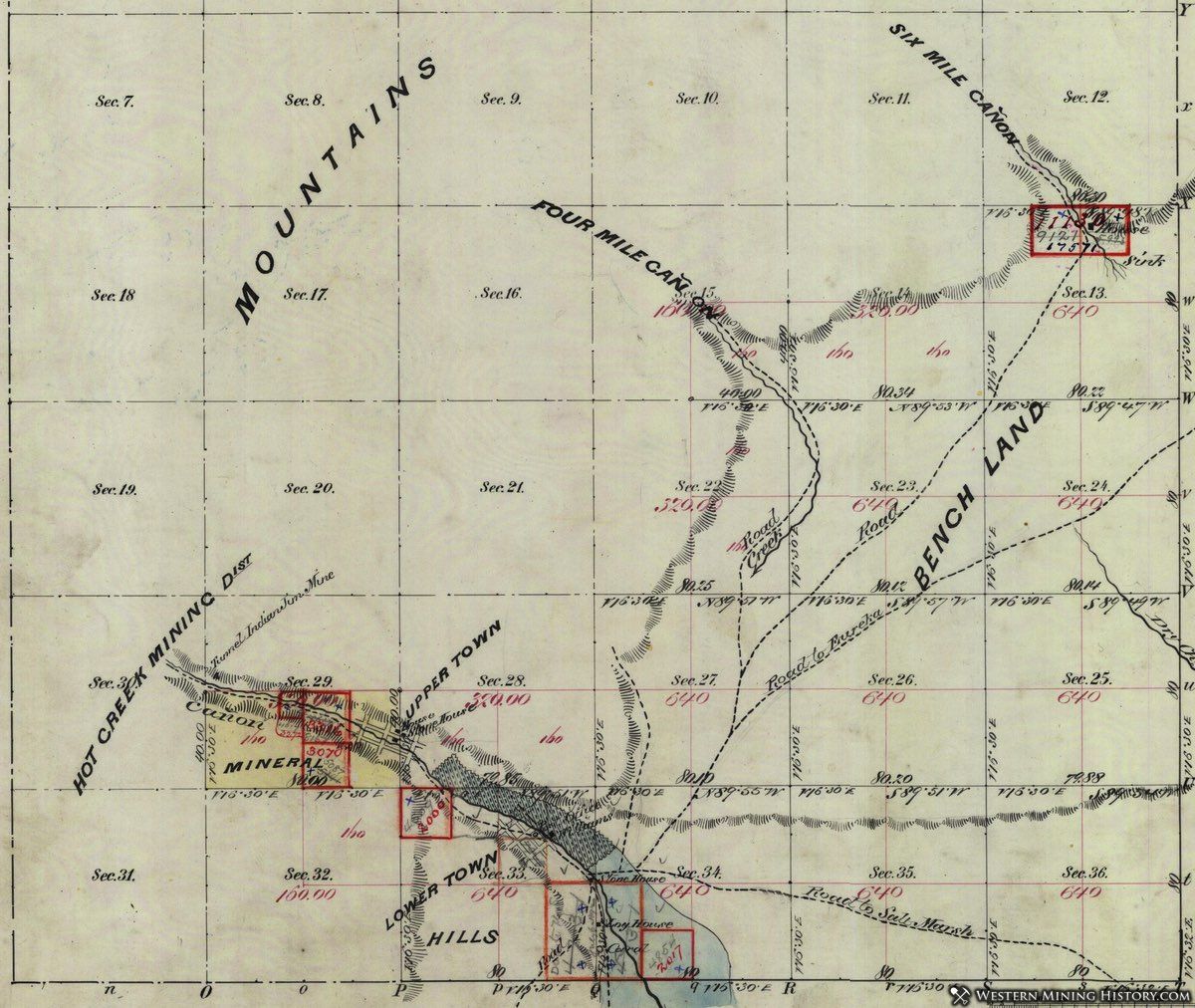
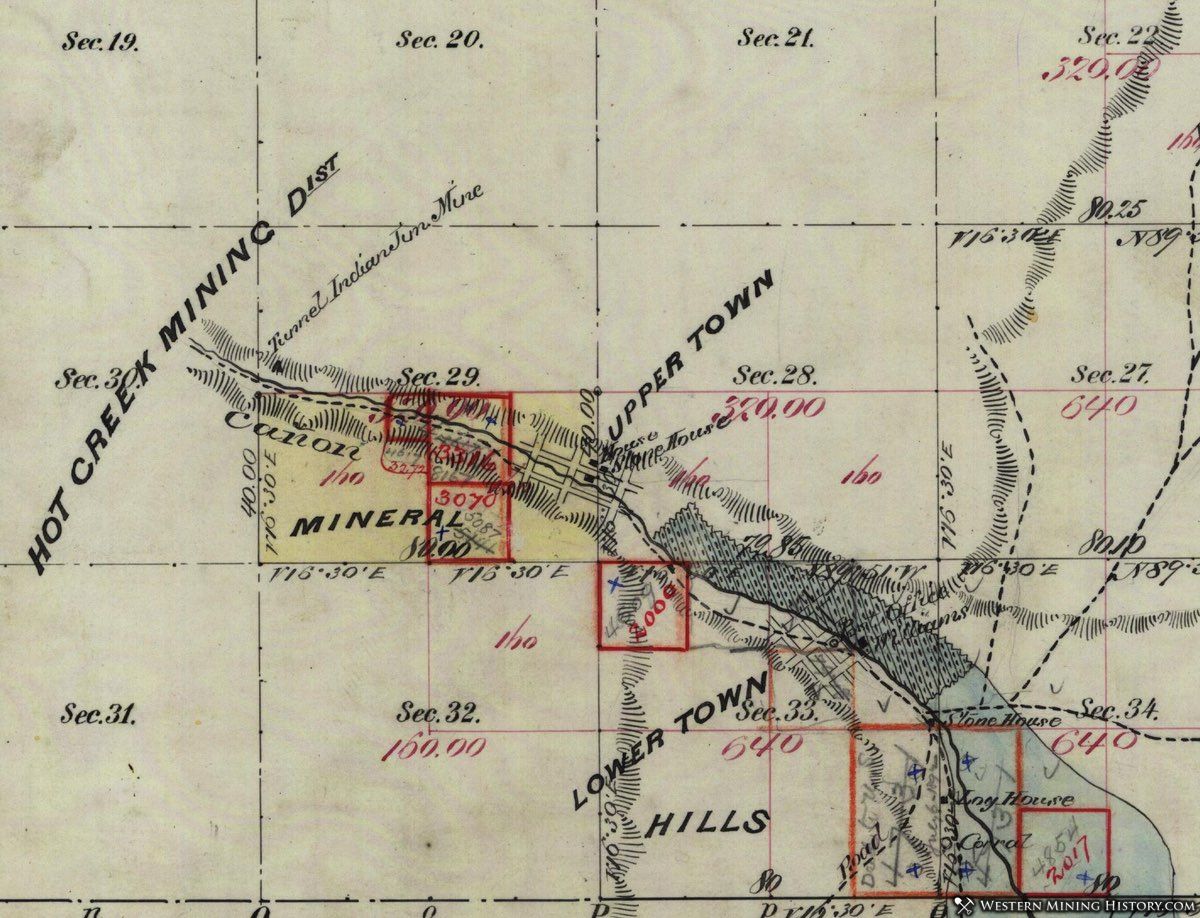
The town had three distinct sections as it wound up the canyon: Lower Town, Middle Town, and Upper Town. Martha and the Doctor contains the following description of the settlement:
Up and down the canyon were the log, stone, and canvas shelters of the bachelor miners who made the hills resound with their boisterous shouts. The road through the canyon was Main Street, a meeting place for men coming in and going out. In a small community such as Hot Creek, which boasted a store, two saloons, and a blacksmith’s shop, inhabitants were well acquainted with one another. Men congregated in the middle village, known as Carrollton, for socializing, some of them in the streets and others in the local store or the saloons reading, playing cards, or philosophizing. The friendly atmosphere of the store and saloon, heightened by the warmth of a glowing stove on cold days, stimulated conversation.
Shortly after the Gallys arrived, a new stamp mill was completed at the Old Dominion mine. The pounding of the stamps was described by Dr. Gally: “To a stranger’s ear, this ceaseless rhythmic roar in the otherwise silent land becomes at first a sort of grand, loud, yet muffled harmony; then a painful, thundering discord; still later a bearable monotony; and, finally, the agreeable pulsating music of prosperity.”
The men in the camp often left for days or even weeks at a time on prospecting trips or to take outside work to make ends meet. The women were left to fend for themselves, forming a close-knit community that offered mutual support during their husbands’ absences. Despite this companionship, Martha Gally frequently wrote about the deep loneliness of life in the camp.
Although the community was largely close-knit, disputes were not uncommon. Martha Gally wrote of troublesome dogs in the area, including one that attacked her child while he was walking between Lower and Middle Camp. The Gallys’ pigs were repeatedly bitten by dogs, and tempers rose when the pigs foraged in neighbors’ gardens. Resentment also developed as struggling prospectors borrowed food and money from their fellow settlers.
By January 1868, the camp had begun to decline. The easily worked surface ore was depleted, leaving most of the mines idle. An exceptionally harsh winter compounded these troubles: the Sierra passes were impassable, no freight could reach Nevada from California, and heavy snow kept the Gallys confined to their cabin for weeks at a time. As supplies ran out, hunger and disease took hold. Not until late March did pack trains arrive with desperately needed food and supplies.
The leading mine in the district, the Old Dominion, suffered a series of serious setbacks. In February, its mill burned down, and the company, already deep in debt, was unable to rebuild. When the town finally emerged from the harsh winter, it found itself without an economic base. Many residents left, while those who stayed lived in deepening poverty. As the year wore on, excitement over new discoveries at White Pine drew people from across the state, and Hot Creek’s population plummeted. By December, just ten people remained.
Ultimately, the excitement surrounding White Pine proved too strong to resist. In January 1869, the Gallys packed their belongings into a wagon and set out for the new district. They settled in Shermantown but soon discovered that conditions there were even worse than at Hot Creek. More than ten thousand people had flooded into the area in a short time, and there was neither enough work nor food for the influx of newcomers. Unlike Hot Creek, which had been relatively safe and orderly, the towns of White Pine were chaotic and often violent. The Gallys once again found themselves in poverty, this time without the support of their homestead.
The late 1860s were difficult years for most mining settlements in central Nevada. The White Pine rush had drawn thousands from out of state, but when the excitement faded, disillusioned miners found themselves with nowhere to go, as neighboring camps were struggling just as badly.
The Gallys endured considerable hardship in Shermantown and decided to return to Hot Creek that October. The town had changed little over the summer, though its population had risen slightly as people drifted back from White Pine. Many of their former friends and neighbors had died from smallpox or other illnesses. The mines remained idle, and unemployed men spent their days drinking or wandering the streets—much to the frustration of their wives. Martha Gally wrote of long stretches when the family survived on little more than bread and coffee, with the occasional bit of bacon or stewed apples. During these lean months, Joslyn’s store kept many families fed, often on credit.
A newspaper article from 1869 mentions renewed interest in the mines near Hot Creek:
A letter from Hot Creek, Nevada, published in the last number of the Mountain Champion, Belmont (Nev.), states that some of the miners of that place who had migrated to White Pine, are returning to their claims at Hot Creek, after having verified the old adage of "going further and faring worse."
The Gallys’ fortunes turned in the summer of 1870 when Dr. Gally and a partner discovered the Two-G Mine south of Hot Creek. Following the discovery, Dr. Gally and others organized the Tybo Mining District. In 1874, the Two-G and adjoining claims sold for $97,000, with Gally’s share amounting to about $30,000.
Mining conditions at Hot Creek improved, peaking in 1880 with one million dollars in production. Most of the mines closed soon after however, and by 1881 the camp was nearly abandoned and the post office closed.
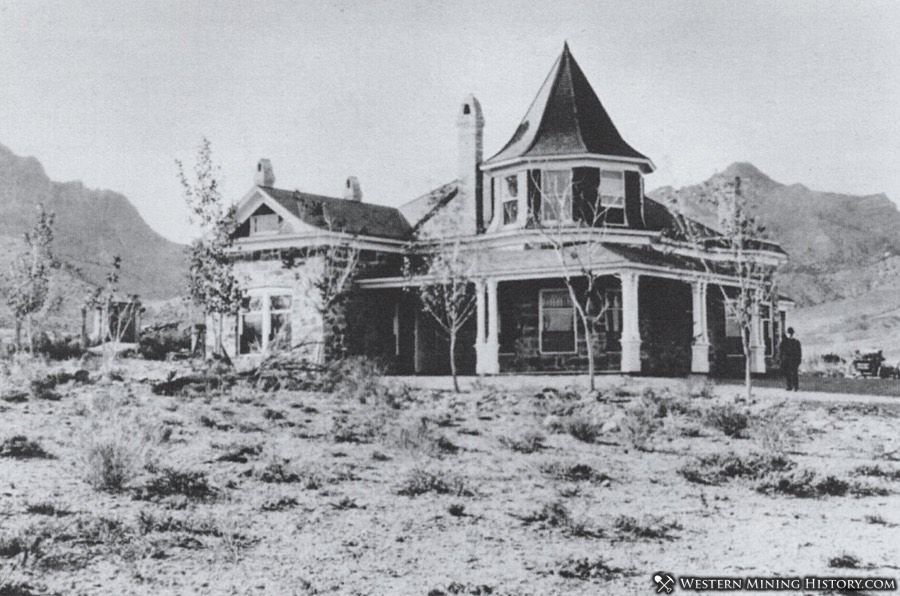
Due to its proximity to hot springs, Hot Creek was a popular retreat for residents of nearby mining camps. An unusually ornate hotel was built in the town to serve tourists visiting the area. The 1951 publication Mineral Resources of Nye County, Nevada by the Nevada State Bureau of Mines includes the following description of Hot Creek:
The town of Hot Creek was apparently quite active in the early days. Thompson and West state that it was divided into an upper and lower camp and each had a stamp mill, although neither mill operated much. The town was the property of J. T. Williams and was the site of a very elaborate stone building. This building, later gutted by fire, was restored in the early 1900's; it still stands at Hot Creek. It is said that Williams made a sizeable stake from an early discovery in the Danville district, with which he purchased and improved the Hot Creek site. The town is reported to have had a population of 300 in 1868, but is said to have dropped to 25 in 1881.
Although the exact date when the town became a ranch is unknown, a December 1909 issue of the Los Angeles Herald featured an article titled “Hot Creek Ranch House, A Famous Nevada Home,” confirming that it was operating as a ranch by that time. Interestingly, the article’s title also suggests that the old Hot Creek hotel had become a well-known landmark. Unfortunately, the piece says little about the structure itself, focusing instead on the ranch owner’s connections to Nevada’s mining industry:
Mr. Williams was an associate of Fair and Mackay in the palmy days of the Comstock, going to Nye county to reside in 1866. With Mrs. Williams, who is a fitting helpmate for a man who spends his life on the frontier, and one of the most lovable women in the world, he has reared a family on his beautiful home ranch, which is the stopping place for every wayfarer who travels the road. He is familiar with all of the well known mines in that region, and knows every prominent mining man in the state, including Jim Butler, who discovered Tonopah.
Today, the former townsite lies within the boundaries of the ranch and remains private property. The old stone hotel, once known as the “Hot Creek Ranch House,” has been carefully restored and converted into a private home.
Nevada Mining Photos
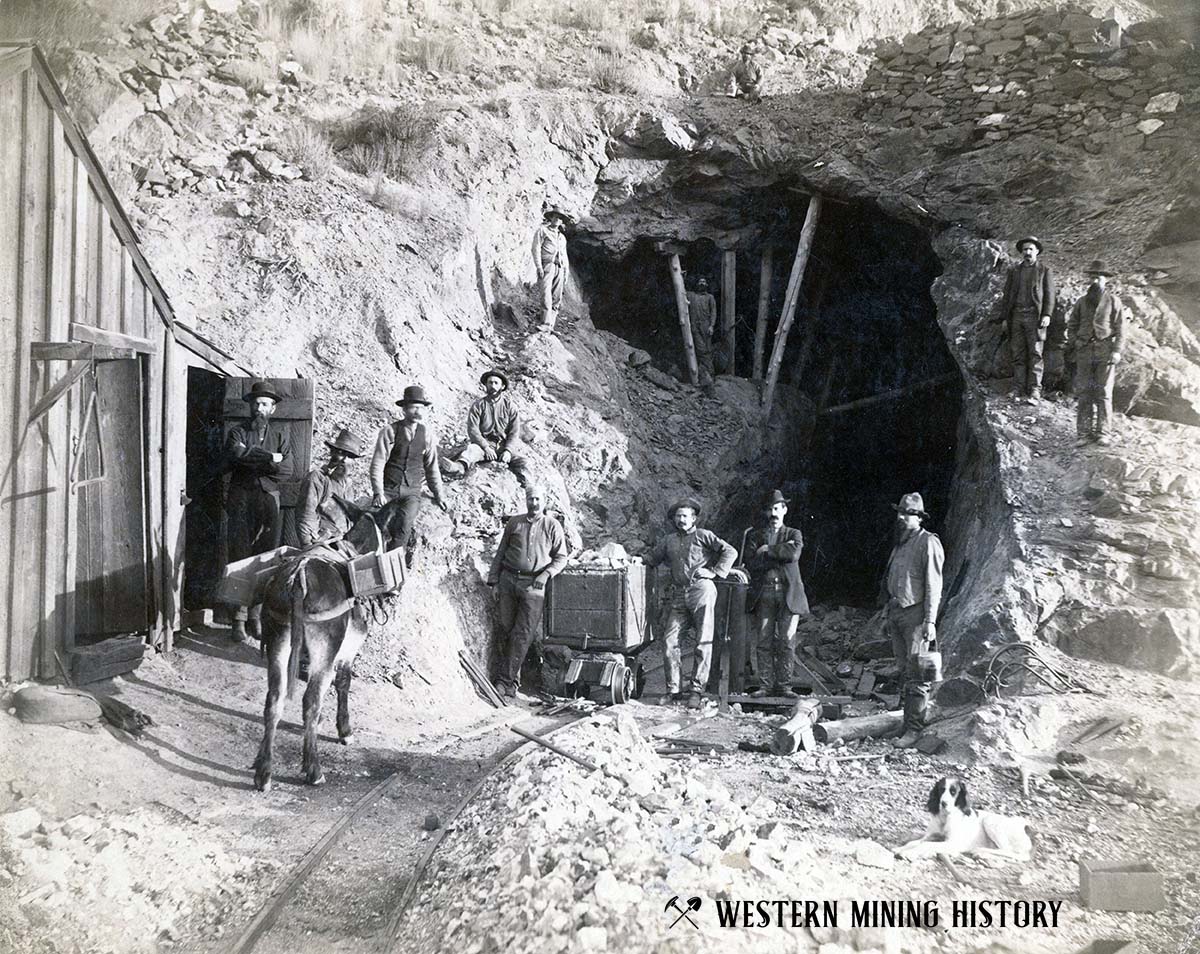
A Collection of Nevada Mining Photos contains numerous examples of Nevada's best historic mining scenes.
Nevada Gold
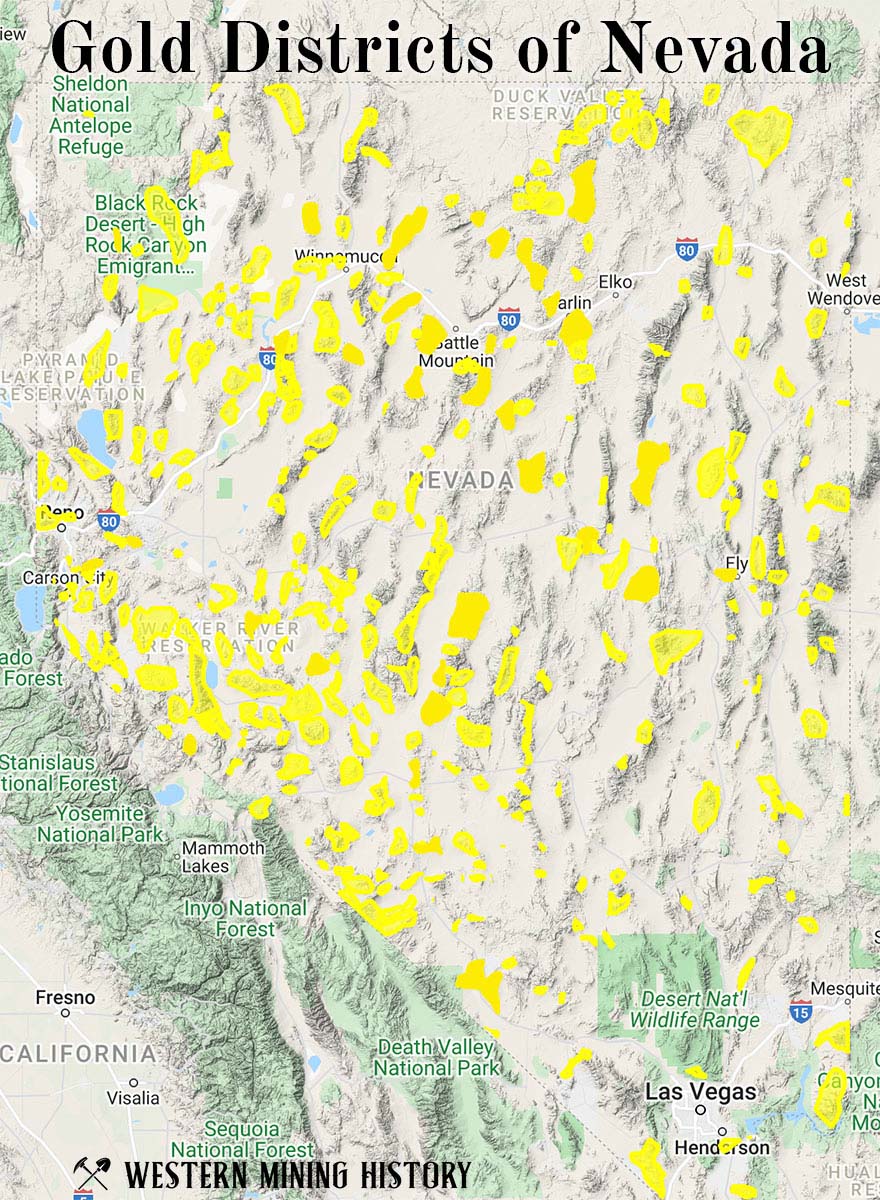
Nevada has a total of 368 distinct gold districts. Of the of those, just 36 are major producers with production and/or reserves of over 1,000,000 ounces, 49 have production and/or reserves of over 100,000 ounces, with the rest having less than 100,000 ounces. Read more: Gold Districts of Nevada.