Terraville History
Terraville was named after the Golden Terra Mine, one of the first lode mines discovered in the area. The Golden Terra was later absorbed into the ever-expanding operations of the Homestake Mine. Terraville also served as the original headquarters of the Homestake Mining Company before the company's offices were relocated to nearby Lead.
By 1880, lode mining had surpassed placer mining in the district, and Terraville had developed into a permanent community with a post office, a school, and hundreds of homes. With more than 700 residents, it was the district's third-largest town. Although Terraville had a small commercial district of its own, residents relied heavily on the businesses in nearby Lead and Central City.
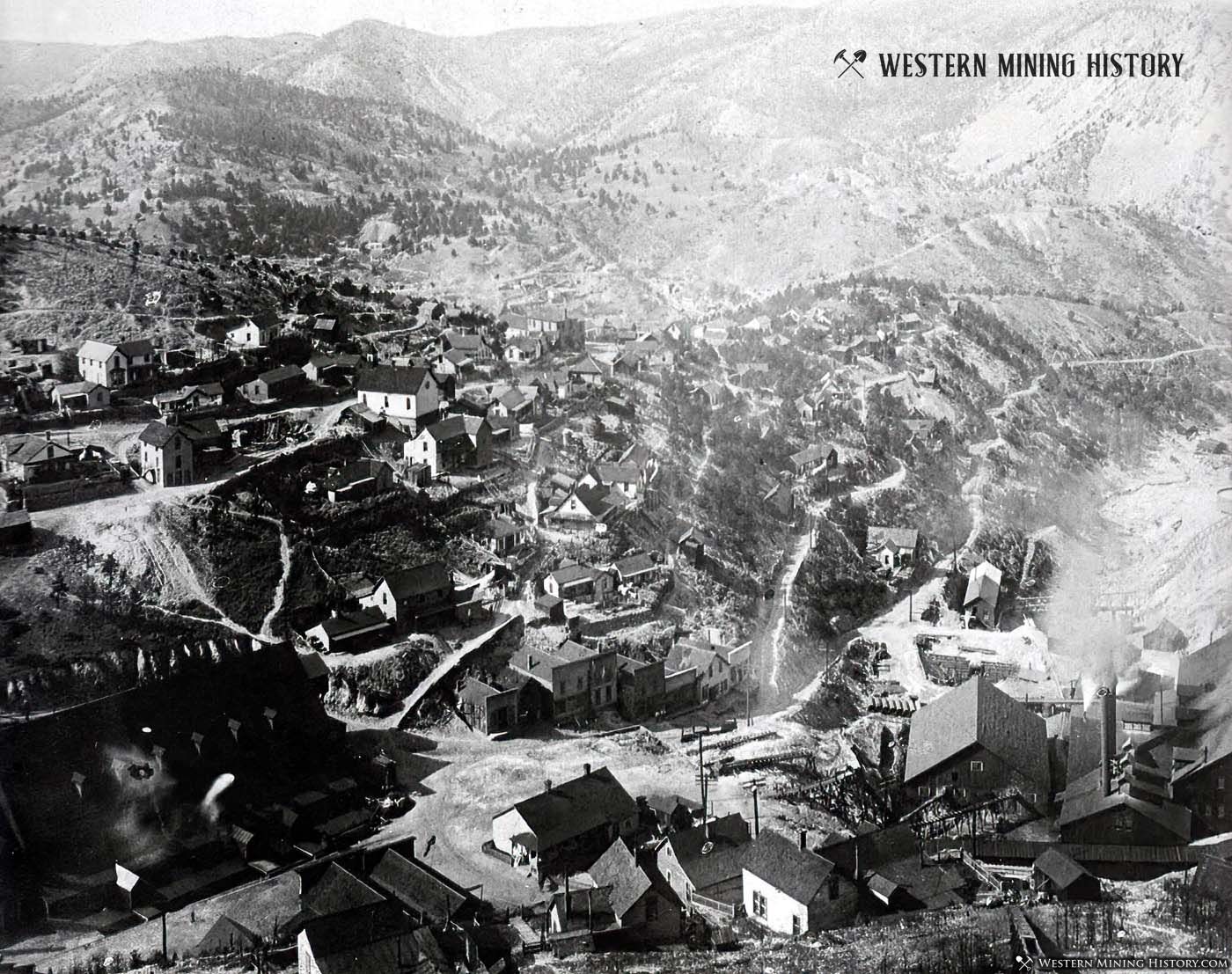
Terraville was built high on a mountain between Lead and Central City, as shown in the following image.
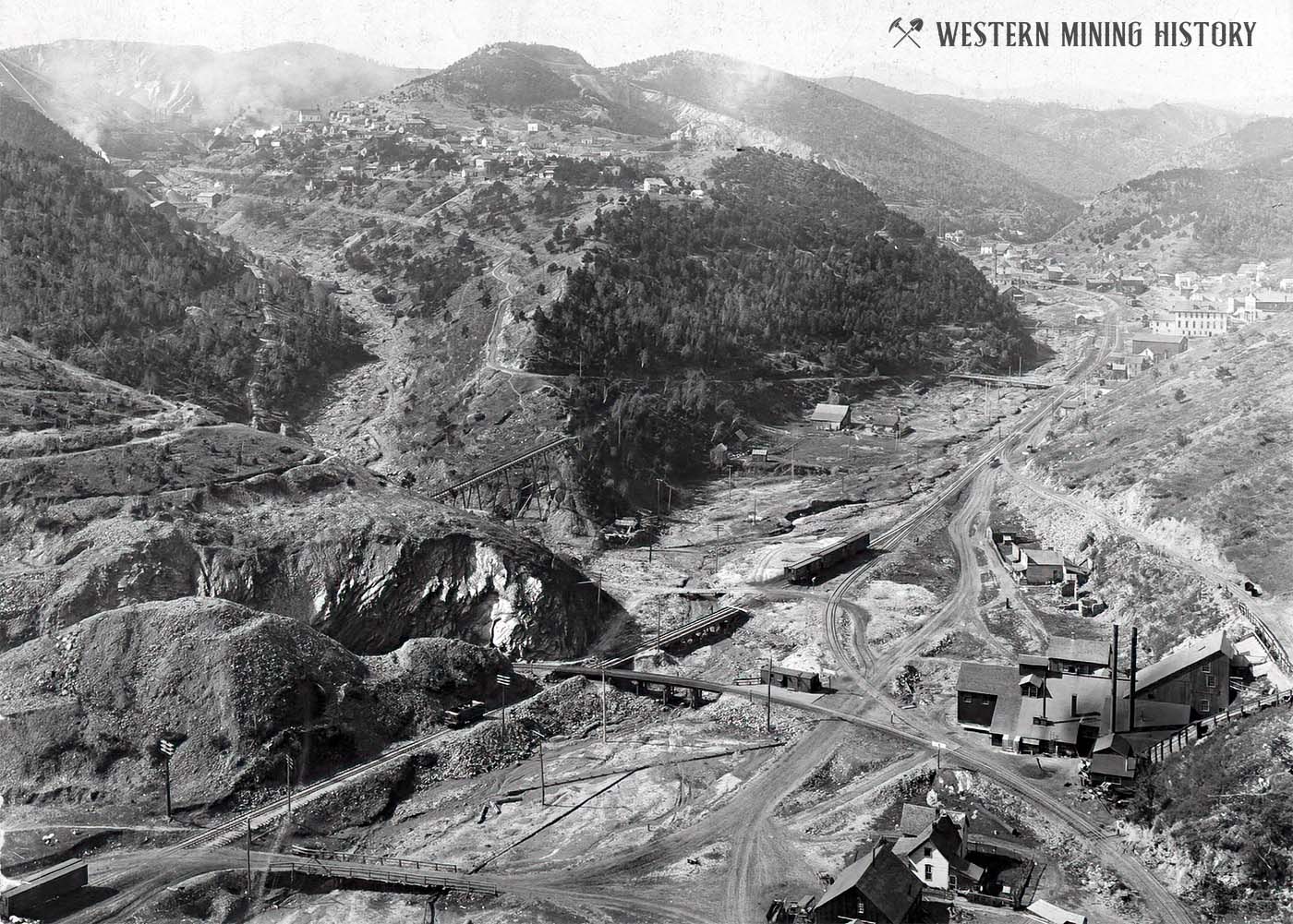
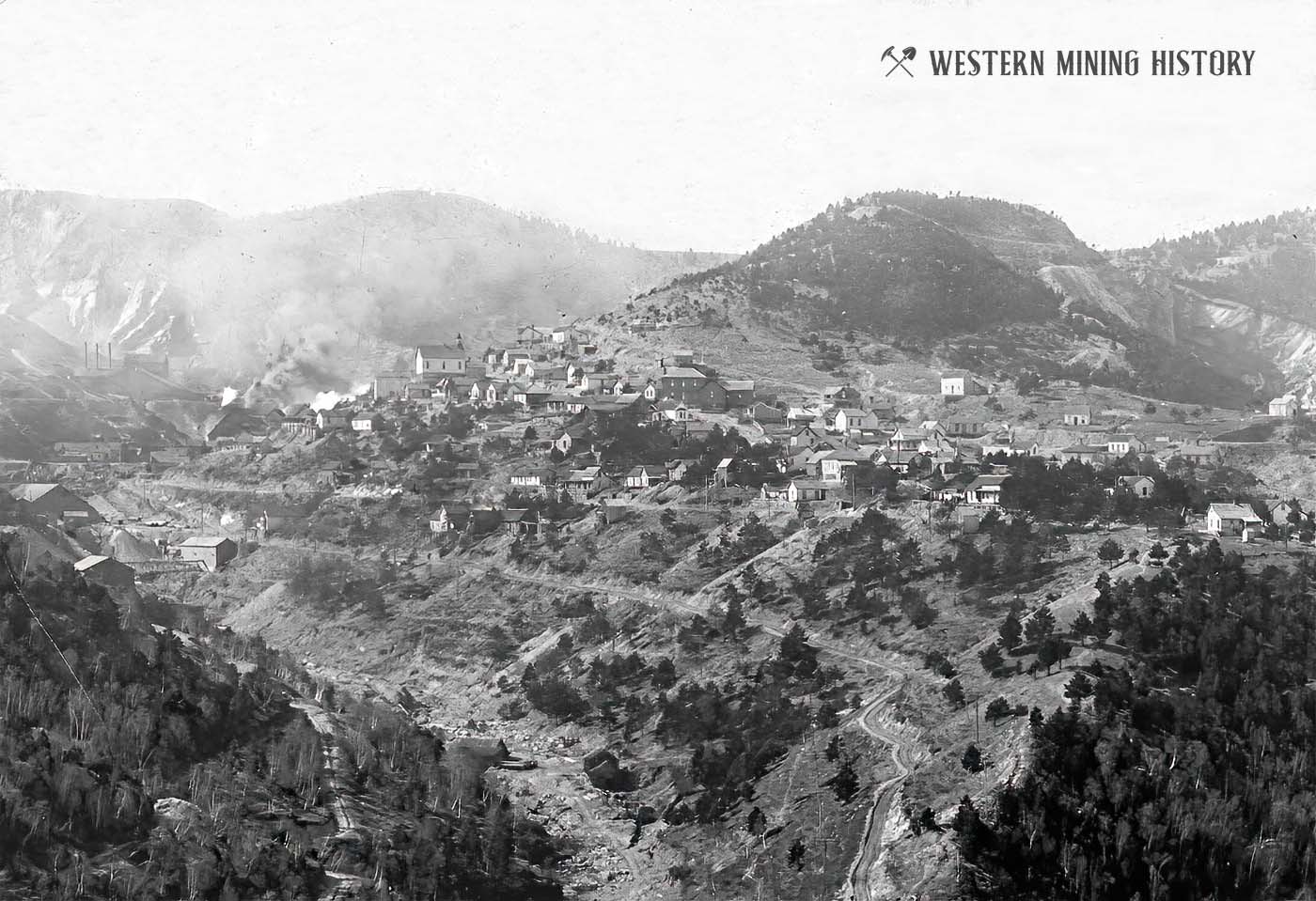
Looking closer at the image reveals the town of Terraville and the stamp mills that made it famous. It is said that a flight of stairs with 280 steps connected Terraville with Central City in the gulch below.
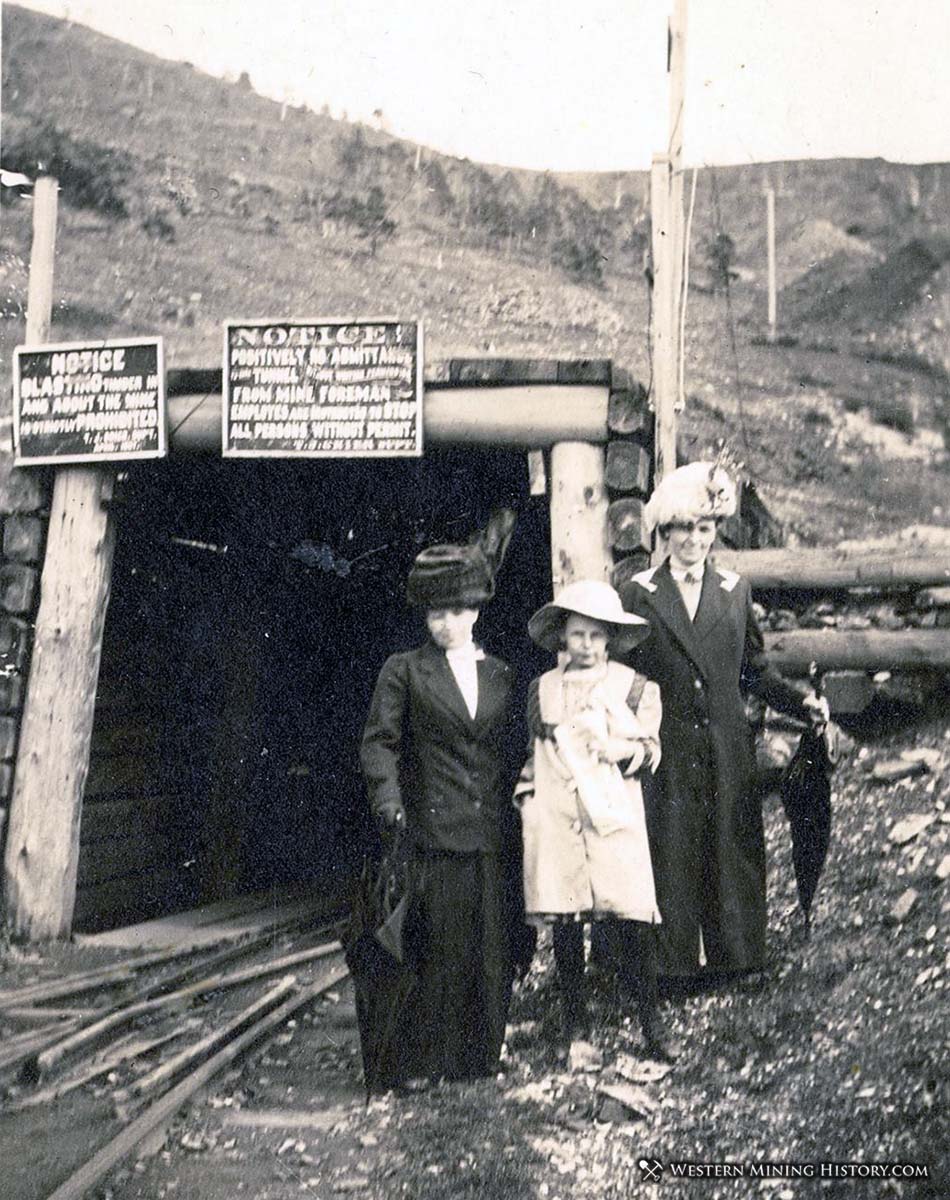
A tunnel nearly a mile long connected Terraville with Lead. The purpose of the tunnel was to haul ore to the mills at Lead, but residents used it as a shortcut when traveling by foot between the towns. In the photo below, two brave women and a child pose at the tunnel before walking through it.
A March 1890 edition of The Black Hills Daily Times reported on an upgrade to one of the mills: "The new Deadwood Terra mill, 160 stamps, is the largest in the world with the exception of one of 240 stamps on the Treadwell, in Alaska. The latter however, reduces a less number of tons of ore daily than does the Deadwood Terra - about 700 tons."
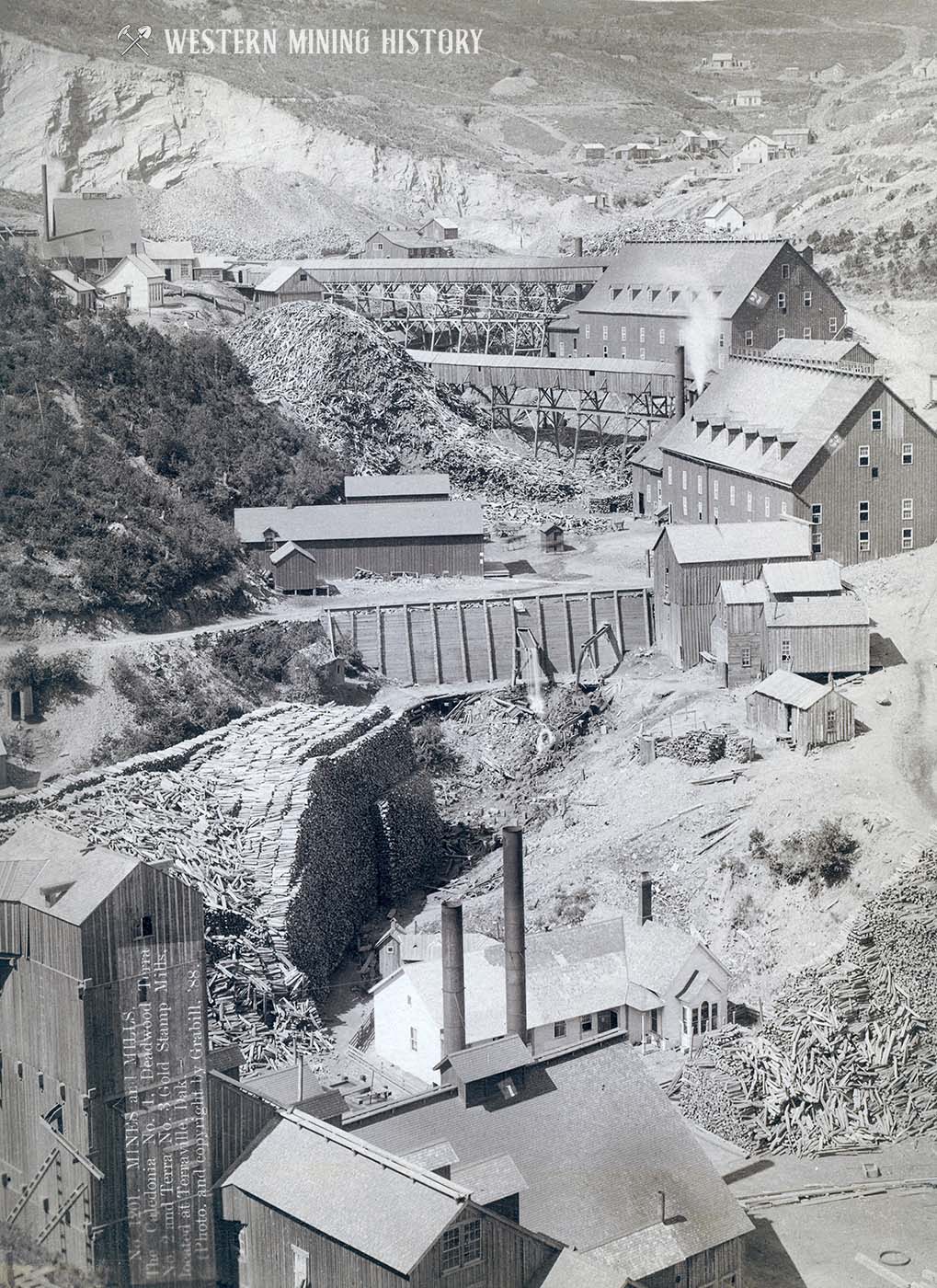
Terraville reached its peak during the 1890s as ore milling became one of the area's largest industries. The Homestake Mining Company eventually acquired all of the mills shown in the photograph above, and at their height they operated a combined total of 700 stamps crushing ore from the Homestake Mine. By 1900, the town's population had declined to 635, including a substantial community of Finnish laborers.
Despite the drop in population, combined milling capacity at Terraville peaked in 1901, with 900 stamps crushing ore.
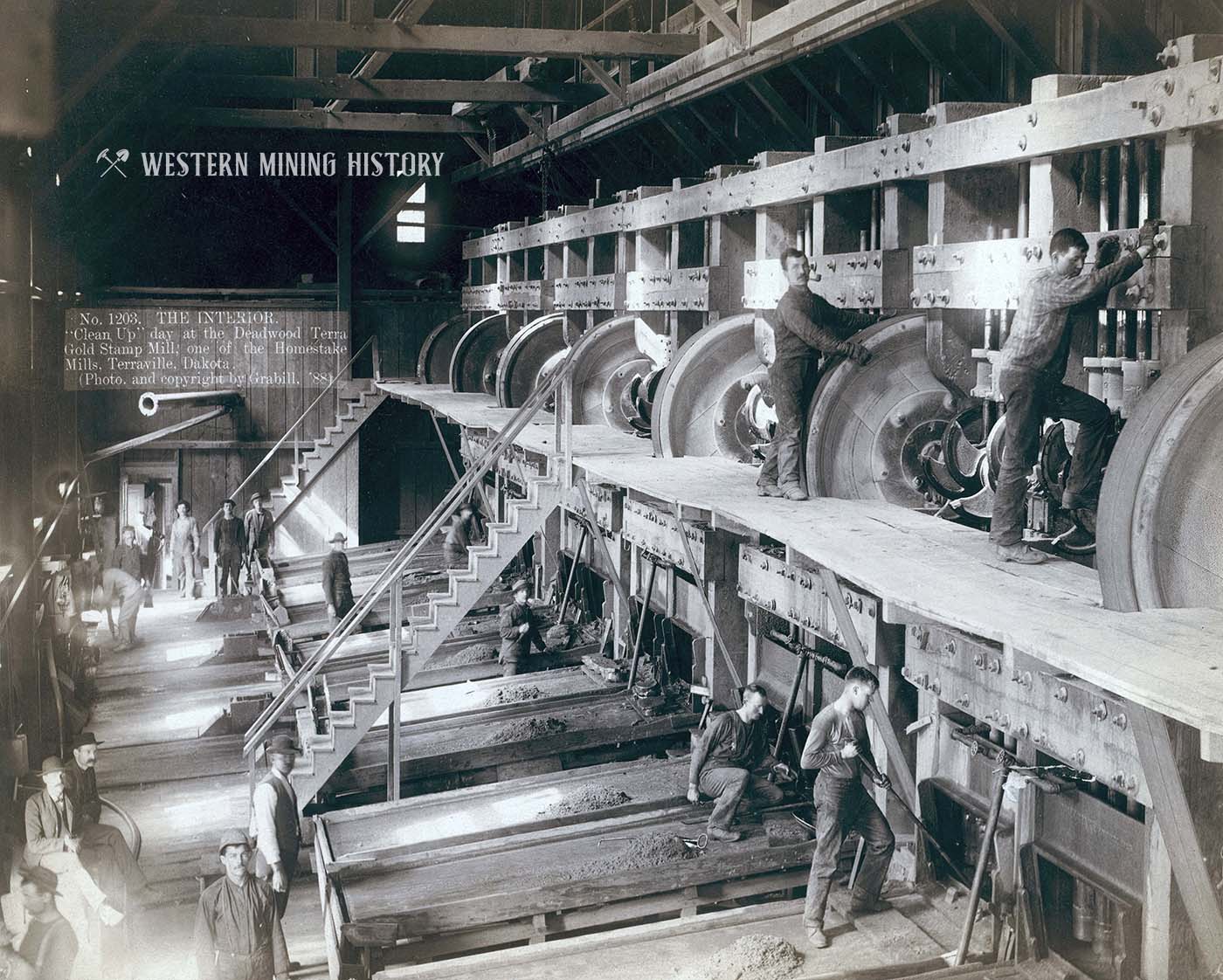
Over time, the mills were closed as the Homestake Mining Company consolidated most of its ore-processing facilities in Lead, adjacent to the principal workings of the Homestake Mine. Terraville survived as a small company community of a few hundred residents, most employed by Homestake, until the early 1980s, when the expanding Homestake Open Cut engulfed the townsite.
Terraville's post office operated 1880-1985.
Nearby Mining Towns
These are a selection of notable mining towns near Terry.
Central City
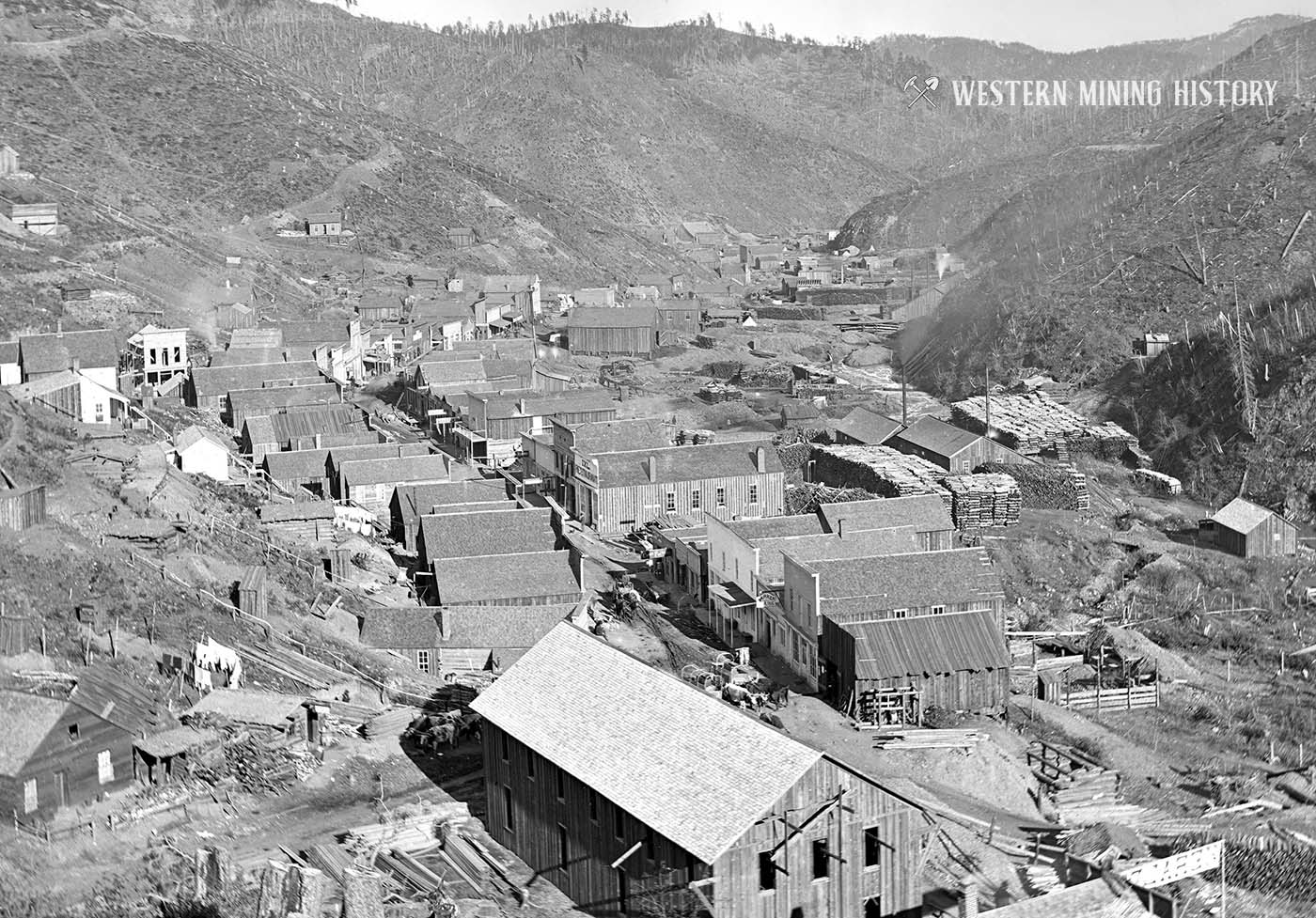
Central City, South Dakota was one of the Black Hills earliest, and most important mining settlements. In 1877, a conflict between the neighboring Aurora and Keets mines resulted in the death of one of the mine owners, and later the same year a strike at the Keets required intervention by Sheriff Seth Bullock and federal troops.
Deadwood
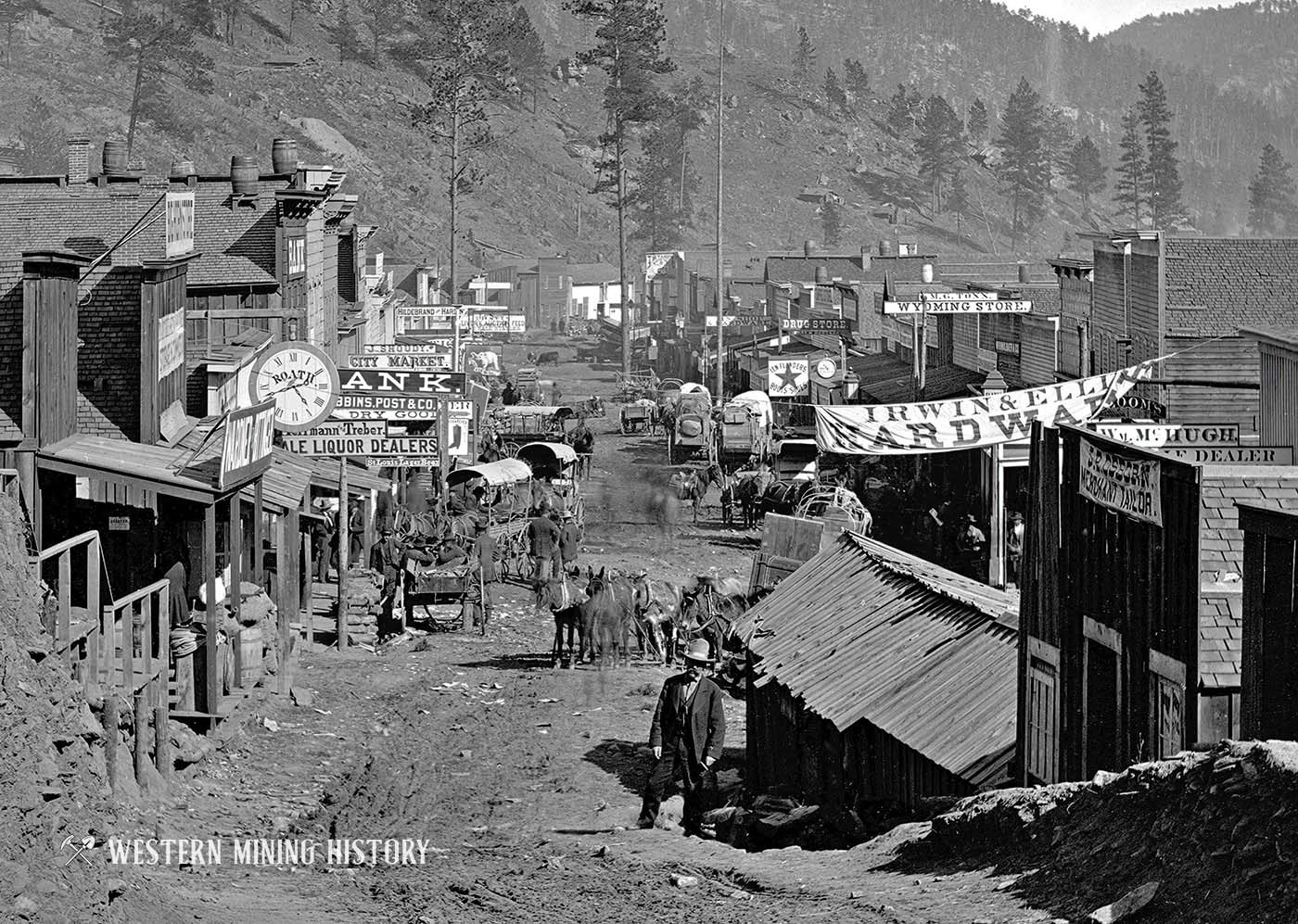
Deadwood, South Dakota is one of the West's most historically significant mining cities, and the location of some of the Wild West's most notable events. Deadwood has seen extensive preservation of its historical buildings, and is a popular tourist center.
Lead
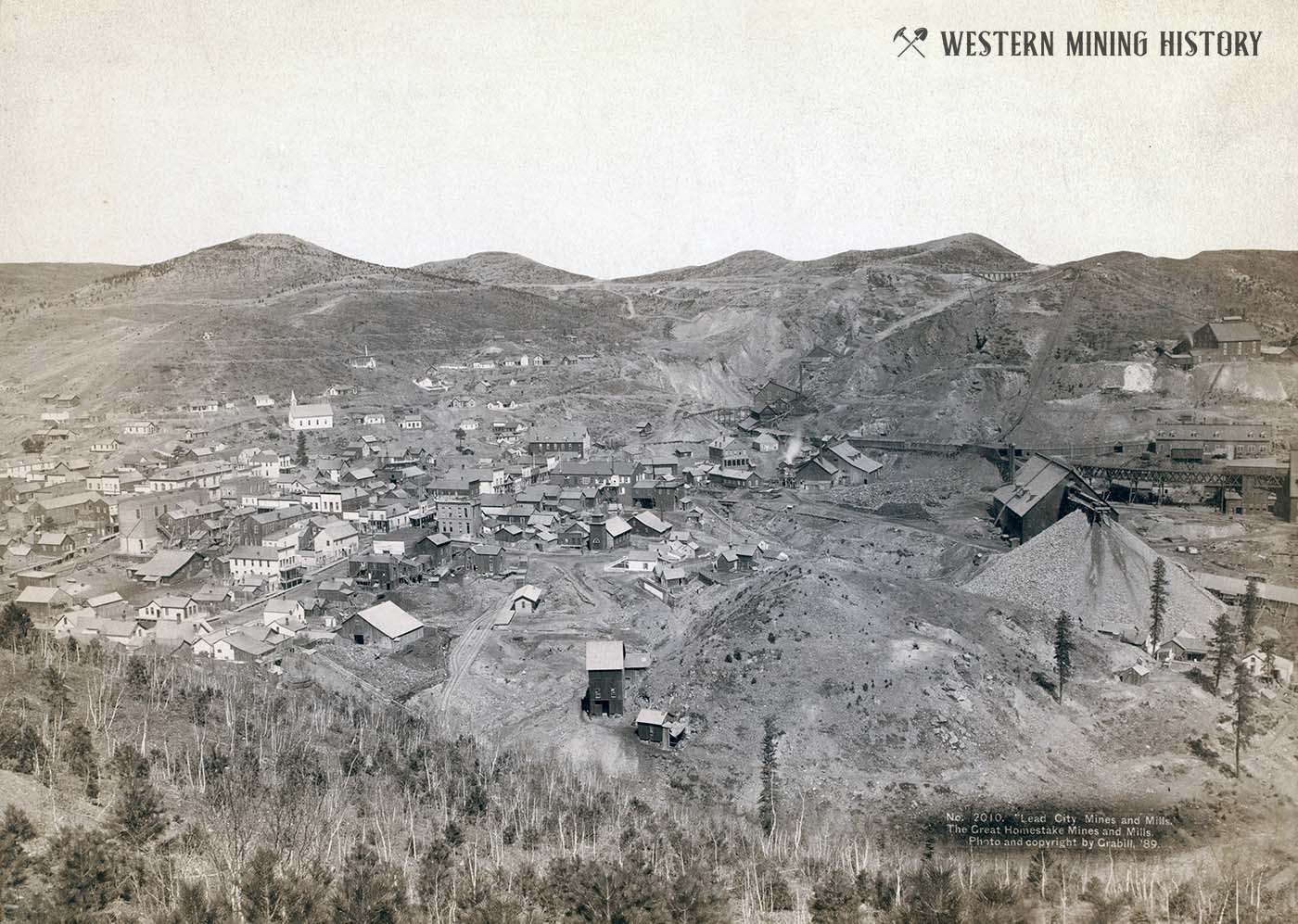
Lead, South Dakota is the location of the Homestake - the nation's greatest gold mine. This mine operated for 125 years and produced over 40 million ounces of gold. As the mine grew, so did Lead, becoming one of the West's most important mining cities.
Mining in the Black Hills
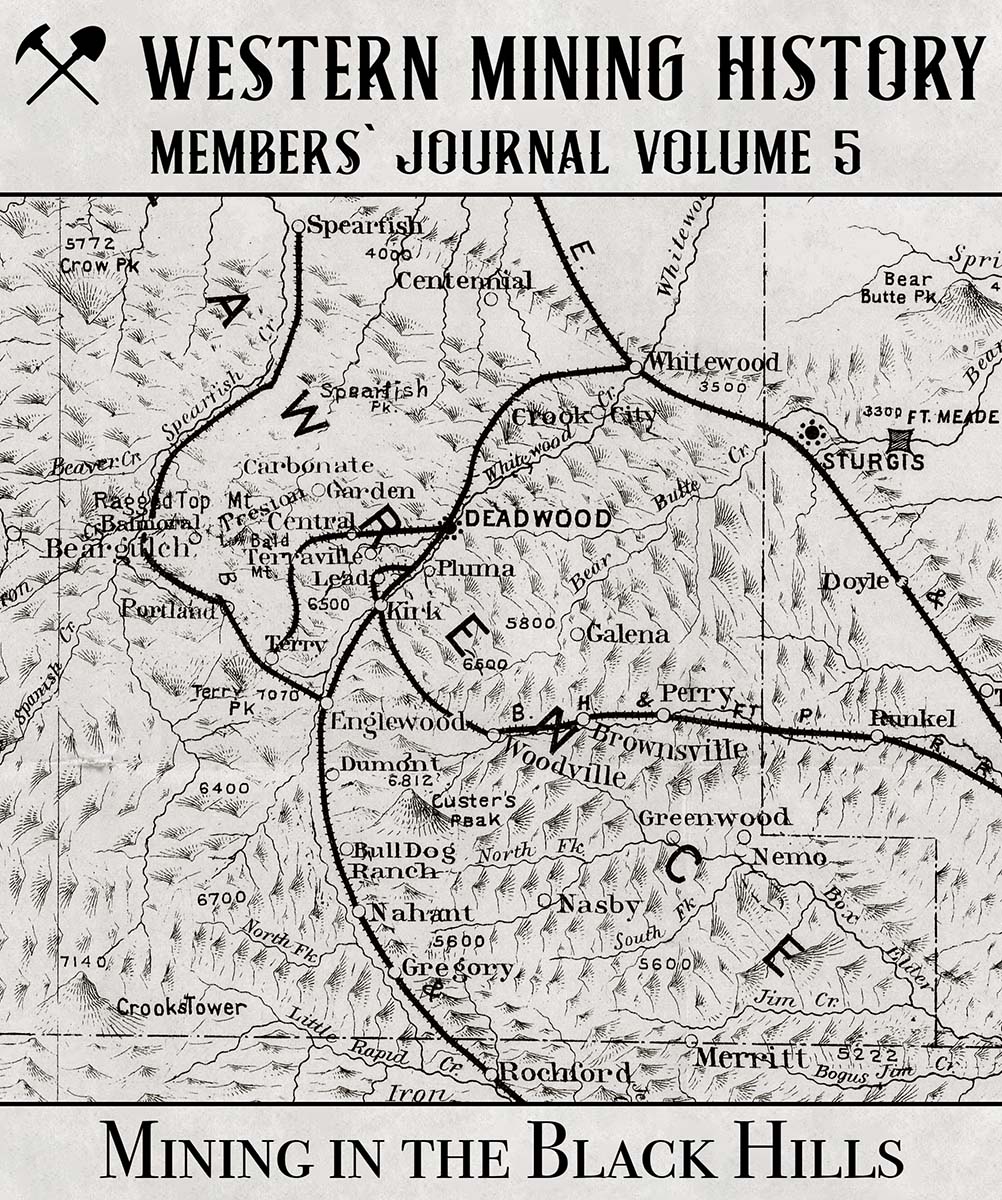
Western Mining History Member's Journal Volume 5: "Mining in the Black Hills", takes a closer look at the distribution of mining districts and towns the Black Hills of South Dakota.
Deadwood: The Ultimate Photo Collection
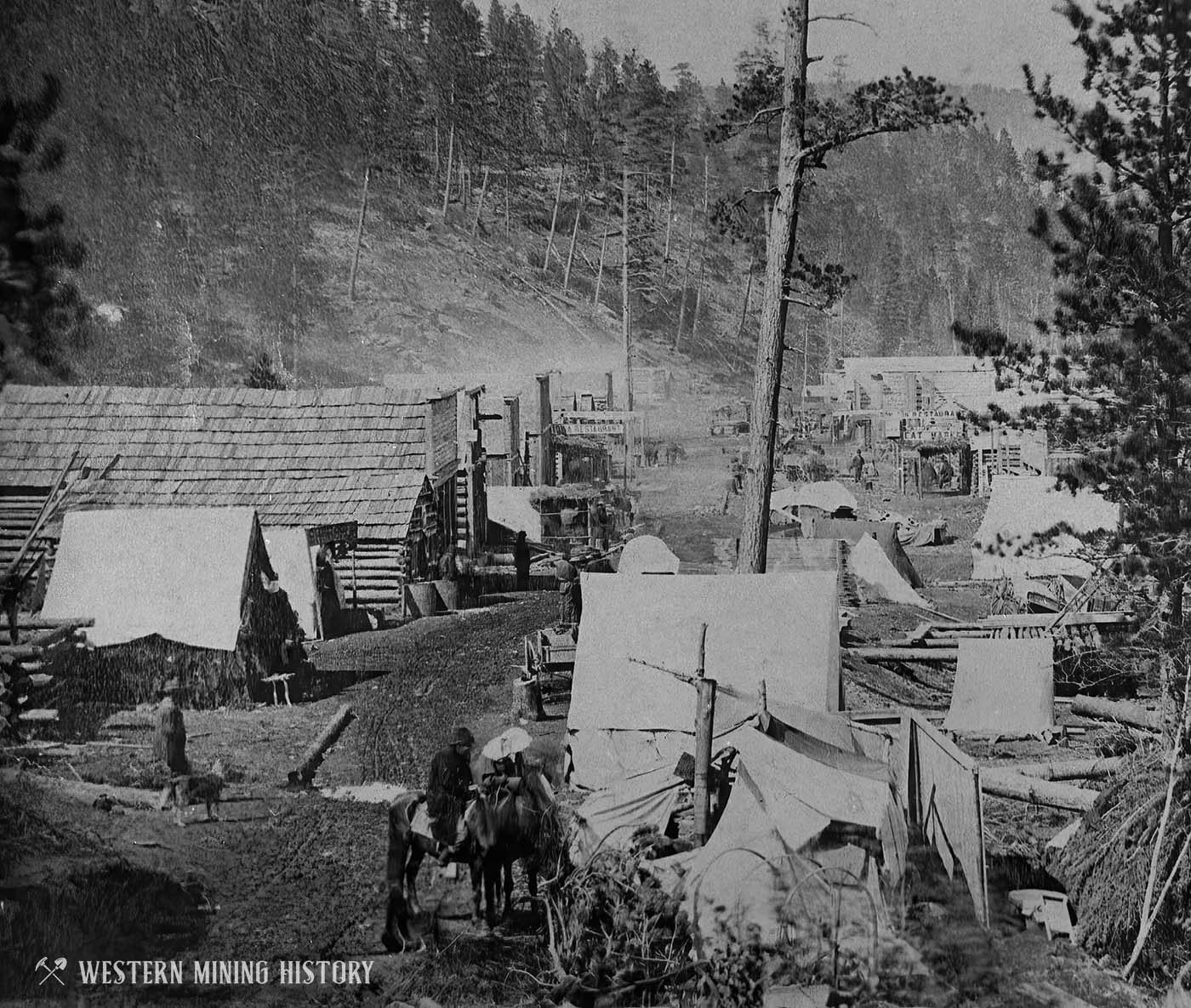
The Black Hills Gold Rush was one of the most significant historical events in the western United States. Deadwood: The Ultimate Photo Collection contains over 50 images capturing the early history of this famous gold region.