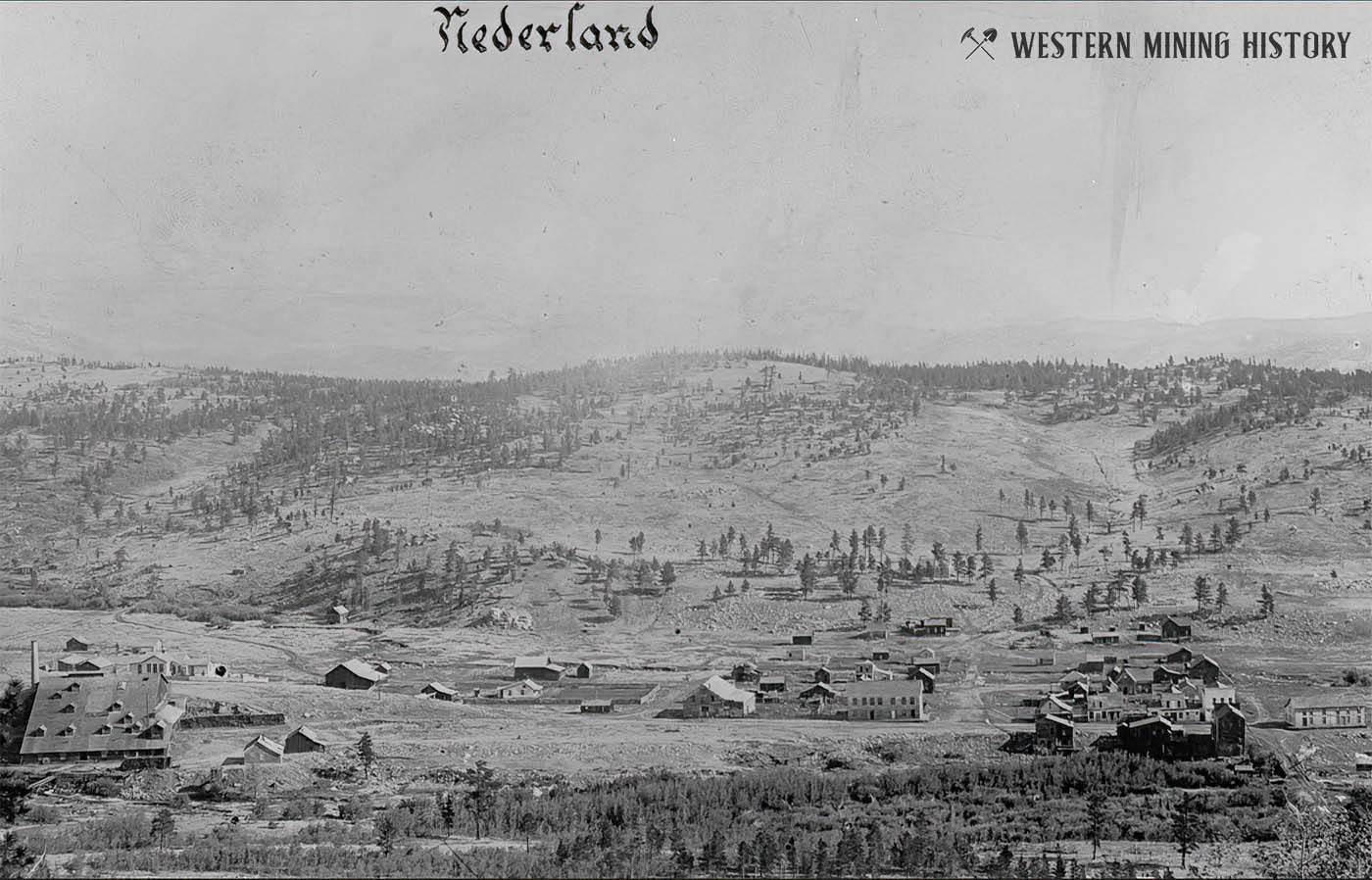
Nederland History
Prospecting in the mountains west of Boulder began during the Colorado gold rush of 1859. Gold discoveries at Gold Hill and elsewhere brought prospectors into the surrounding mountains, and trails gradually developed between Boulder, Black Hawk, Ward, and the scattered mining camps of western Boulder County.
The site of present-day Nederland began to develop around 1861 as a small collection of cabins along Middle Boulder Creek. Early names for the settlement included Dayton and Brown's Crossing. By 1871 it was known as Middle Boulder, after the stream that passed through the settlement.
The event that transformed Middle Boulder was the discovery of rich silver ore several miles to the northwest at Caribou. Silver was discovered there in 1869, and the Caribou district became the scene of an intense rush the following year. The high-elevation town of Caribou developed near the mines at approximately 10,000 feet, while Middle Boulder, nearly 2,000 feet lower, occupied a more favorable location for milling ore and supplying the district.
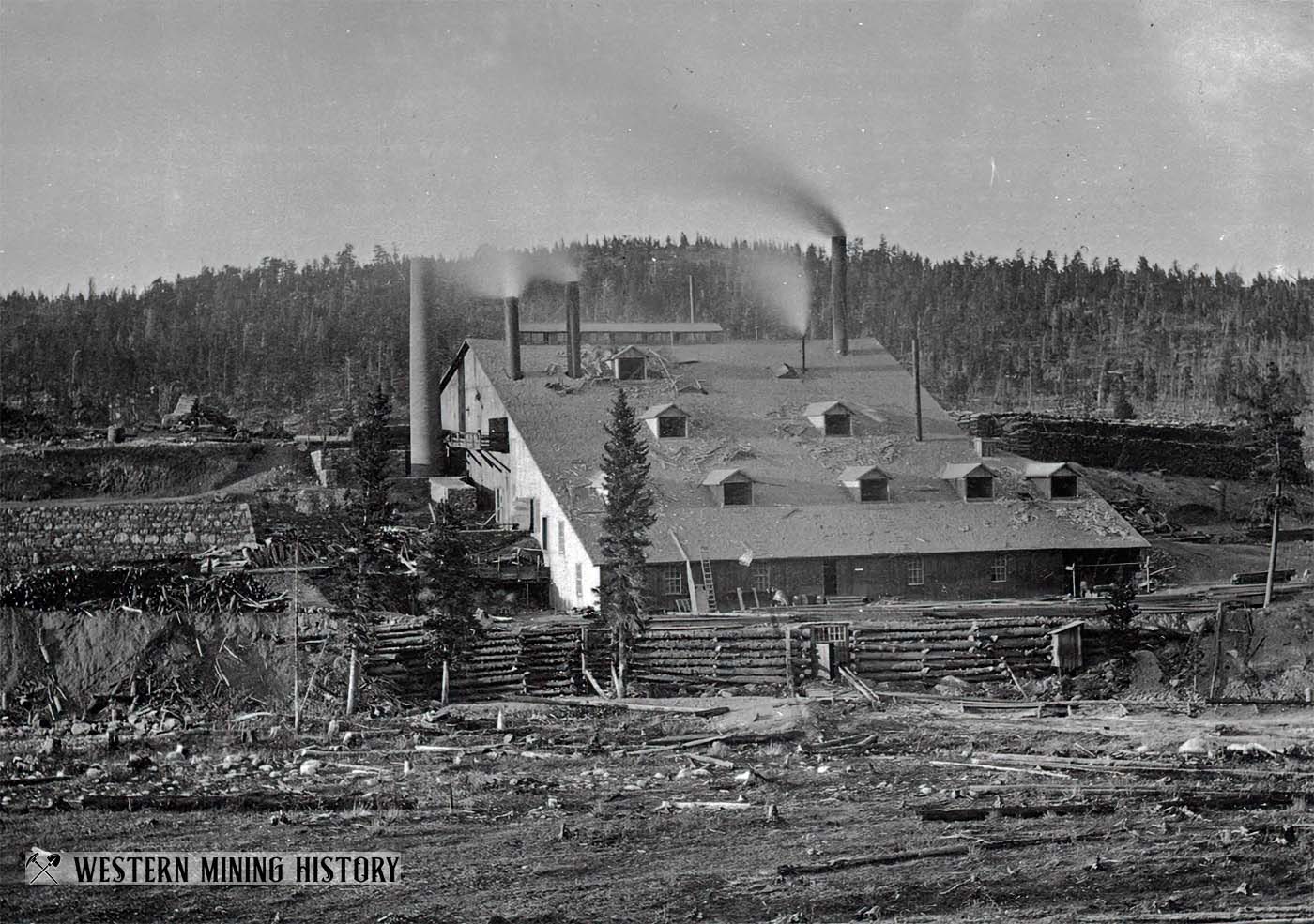
A mill was initially constructed at Caribou, but the severe winter conditions at that elevation made milling difficult. In 1871, a second Caribou mill was built at Middle Boulder. In 1873, the Caribou property was acquired by Dutch investors associated with the Mining Company Nederland. The company's operations at Middle Boulder soon provided the settlement with its permanent name. Compared with the mines and town of Caribou high above it, the mill site occupied the "low lands," and in 1874 the community took the name Nederland, the Dutch name for the Netherlands, meaning "low country."
An April 8, 1874, edition of The Rocky Mountain News reported an incident at the Mining Company Nederland's facilities that illustrates the hostility and discrimination faced by Chinese laborers in Colorado and throughout the West:
Whereas, On the night of the 29th instant a mob forcibly entered a building owned by the Mining Company Nederland, in which was quartered Chinamen about to be employed by said company in their mill at Nederland, and by threats and intimidation compelled said laborers to leave the employ of said company
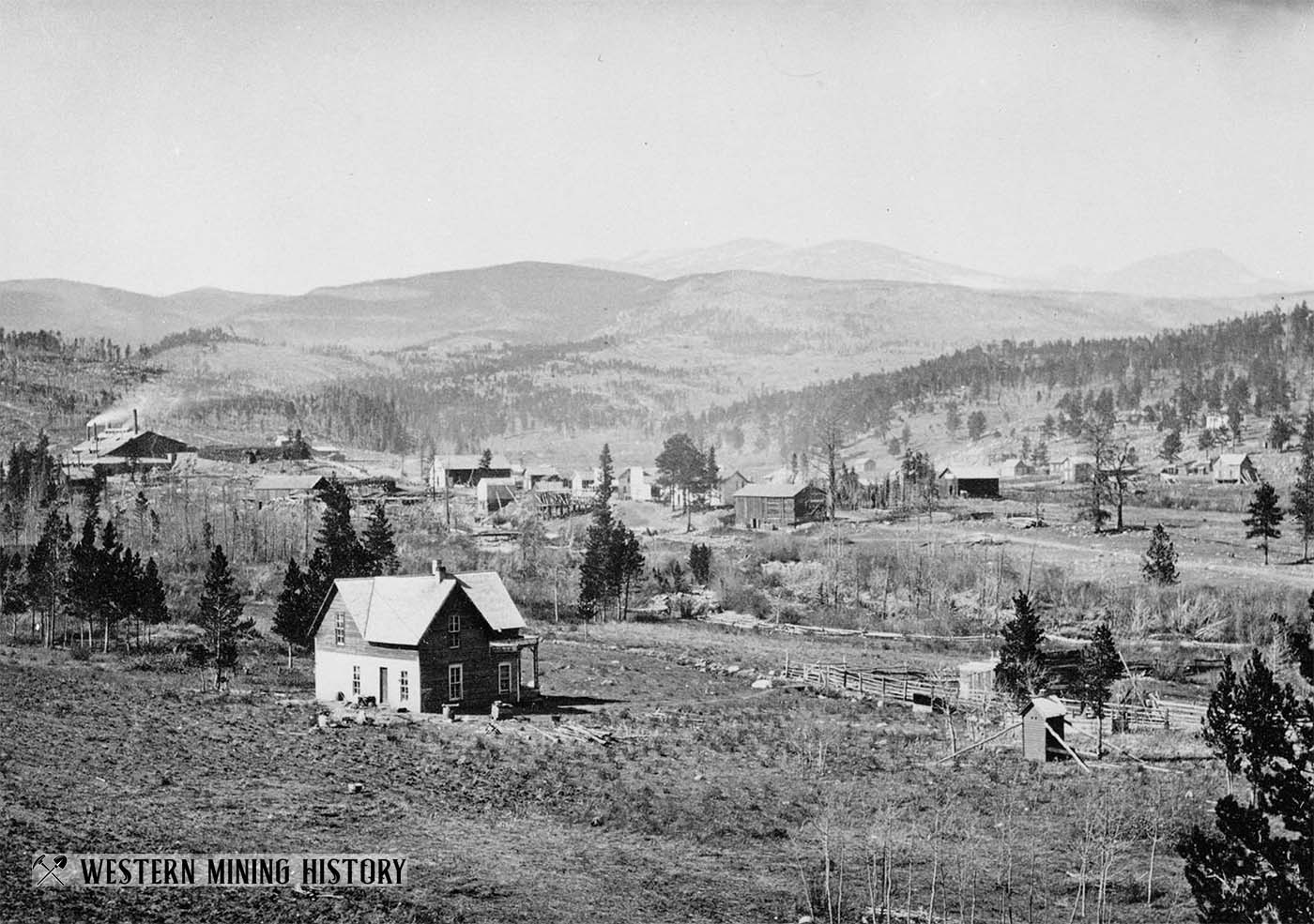
Nederland declined along with the Caribou district in the late 1870s, but the town endured by continuing to serve as a milling and supply center for the surrounding high-elevation mining districts.
The discovery and development of gold deposits around Eldora during the 1890s provided some renewed activity west of Nederland. The revival helped sustain the local mining economy, but it did not immediately restore Nederland to its former importance. A much more significant mineral discovery was already emerging in the hills around town.
The Tungsten Boom
For years, prospectors in western Boulder County had encountered a heavy black mineral that was generally considered worthless. Often dismissed as "black iron," the material interfered with conventional gold and silver mining and was sometimes discarded. Around the turn of the twentieth century, however, the mineral was recognized as tungsten-bearing ore. Tungsten was increasingly valuable because of its ability to produce exceptionally hard and heat-resistant steel alloys.
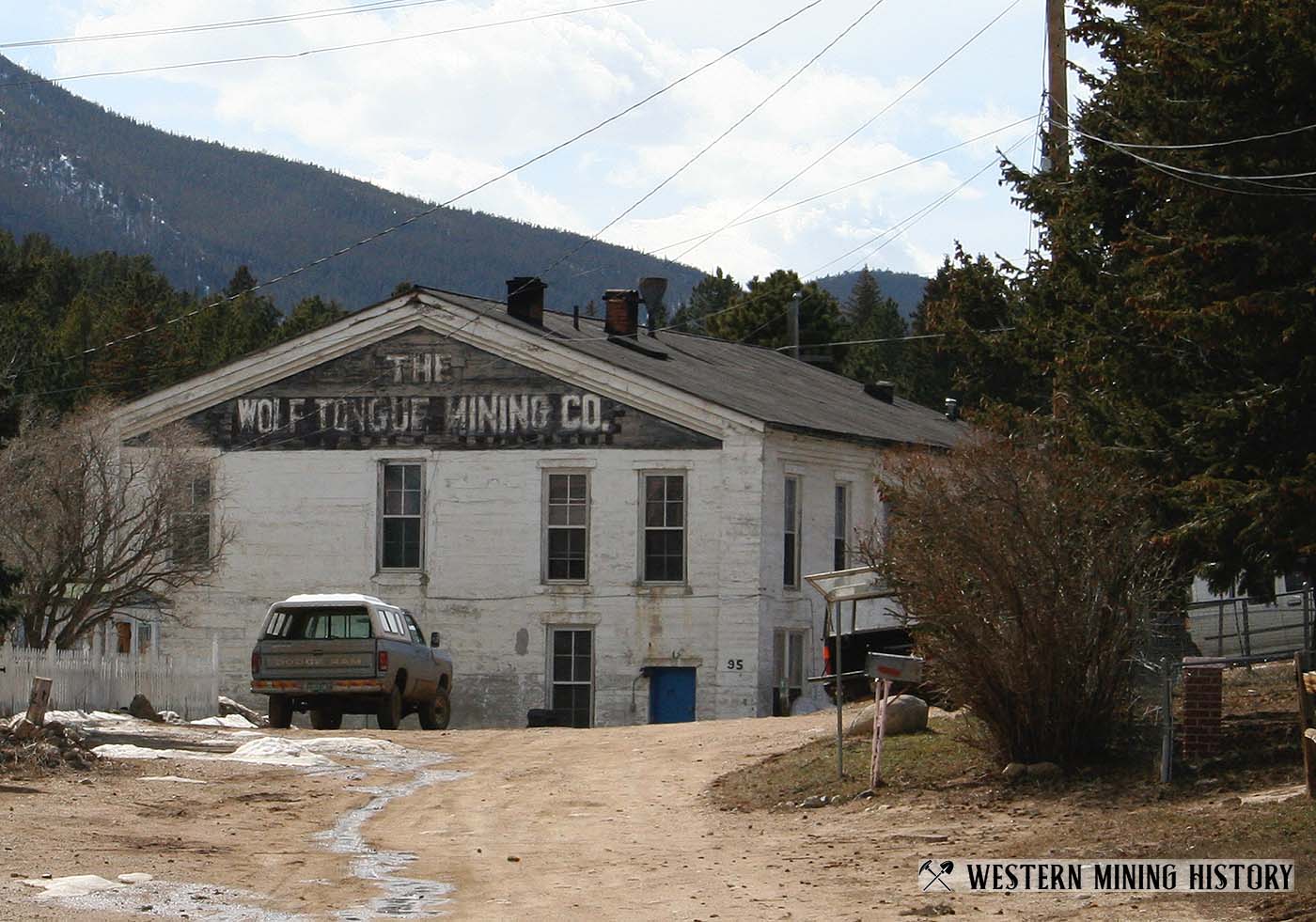
The discovery transformed Nederland. Numerous tungsten mines were developed throughout the surrounding district, which became one of the most important tungsten-producing regions in the United States. The old Caribou silver mill at Nederland was converted to process tungsten and eventually became associated with the Wolf Tongue Mining Company.
By 1904, larger mining and milling companies were replacing many of the small operators who had pioneered the tungsten district. New mines, mills, roads, camps, and other facilities appeared throughout the hills surrounding Nederland. The settlement of Lakewood developed north of town, while another mining community known as Tungsten grew near the site of present-day Barker Reservoir.
The Colorado & Northwestern Railway, which had rebuilt the old mountain railroad west from Boulder during the late 1890s, extended a branch south to Nederland in 1905. The railroad provided a much more efficient means of moving machinery, supplies, ore concentrates, and passengers between the mountain districts and Boulder.
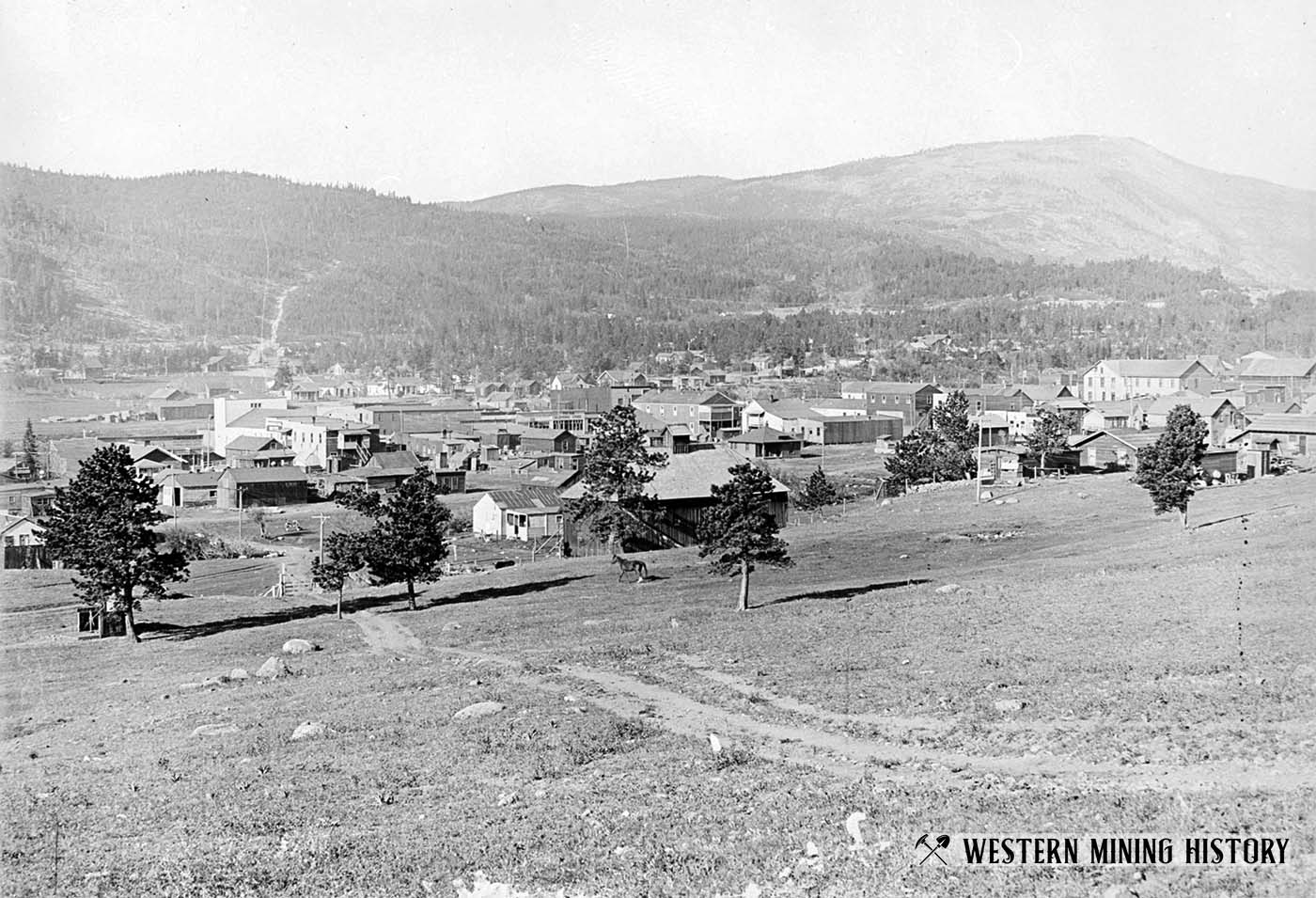
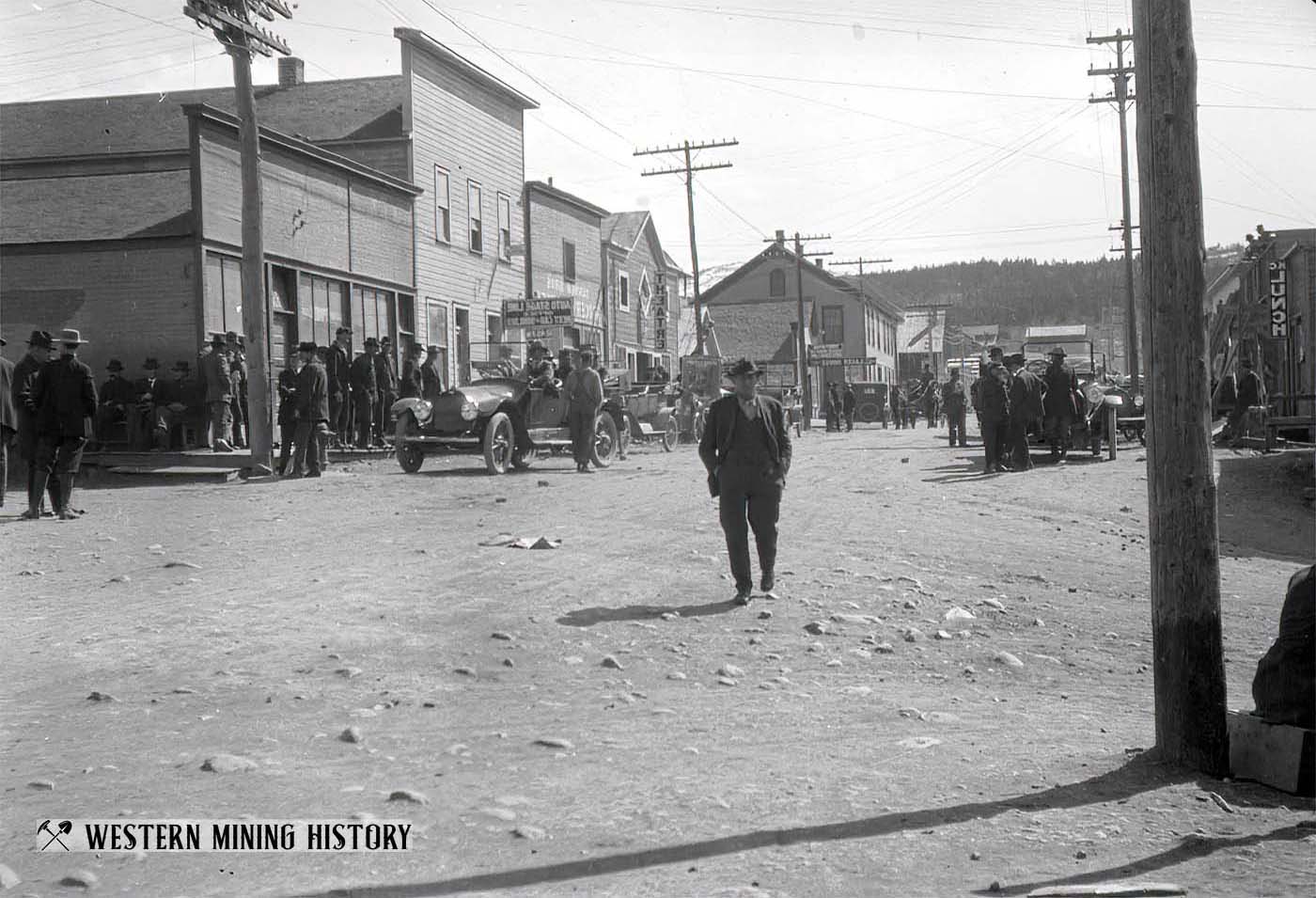
Nederland's greatest period of prosperity began in 1916. Tungsten had been mined in the surrounding district for years, but low prices often made production unprofitable, and by the mid-1910s both tungsten mining and activity in Nederland had nearly ground to a halt. World War I changed the situation dramatically. Demand and prices soared as tungsten became increasingly valuable for hardening the steel used in the manufacture of weapons, machinery, and other military equipment.
Nederland's population reportedly approached 3,000 by 1916, making the town considerably larger than it is today. Hotels, stores, saloons, boarding houses, transportation companies, and other businesses prospered from the mining trade. Trains connected the town with Boulder, while automobiles and trucks increasingly appeared on the mountain roads.
The May 13, 1916 edition of the Denver Labor Bulletin reported on the growth of the town:
The town itself was deserted eighteen months ago, but is now growing with with leaps and bounds. Store buildings are being rented at unheard of prices as fast as they can built and nearly 300 carpenters are at work in Nederland alone, while in the smaller settlements scattered over the district many more are finding employment at good wages. Many large stamp mills are being erected as fast as men and materials can get on the ground.
Read the full article: The World's Greatest Tungsten District
Post Boom Years
With the end of World War I, the boom ended almost as quickly as it had begun, and by 1920 Nederland had just 200 residents. Tungsten mining revived during World War II, when the metal again became strategically important, but the district never regained the prosperity of the earlier wartime period. Production declined through the 1950s, although mining and milling continued intermittently in the broader Nederland-Ward district for many years afterward.
During the decades after World War II, Nederland gradually evolved from an industrial mining community into a residential and recreational town. Its proximity to Boulder, the Peak to Peak Highway, Roosevelt National Forest, and the high mountains of the Continental Divide brought increasing numbers of tourists and new residents. The development of the nearby Eldora ski area beginning in the early 1960s further strengthened recreation as a foundation of the local economy.
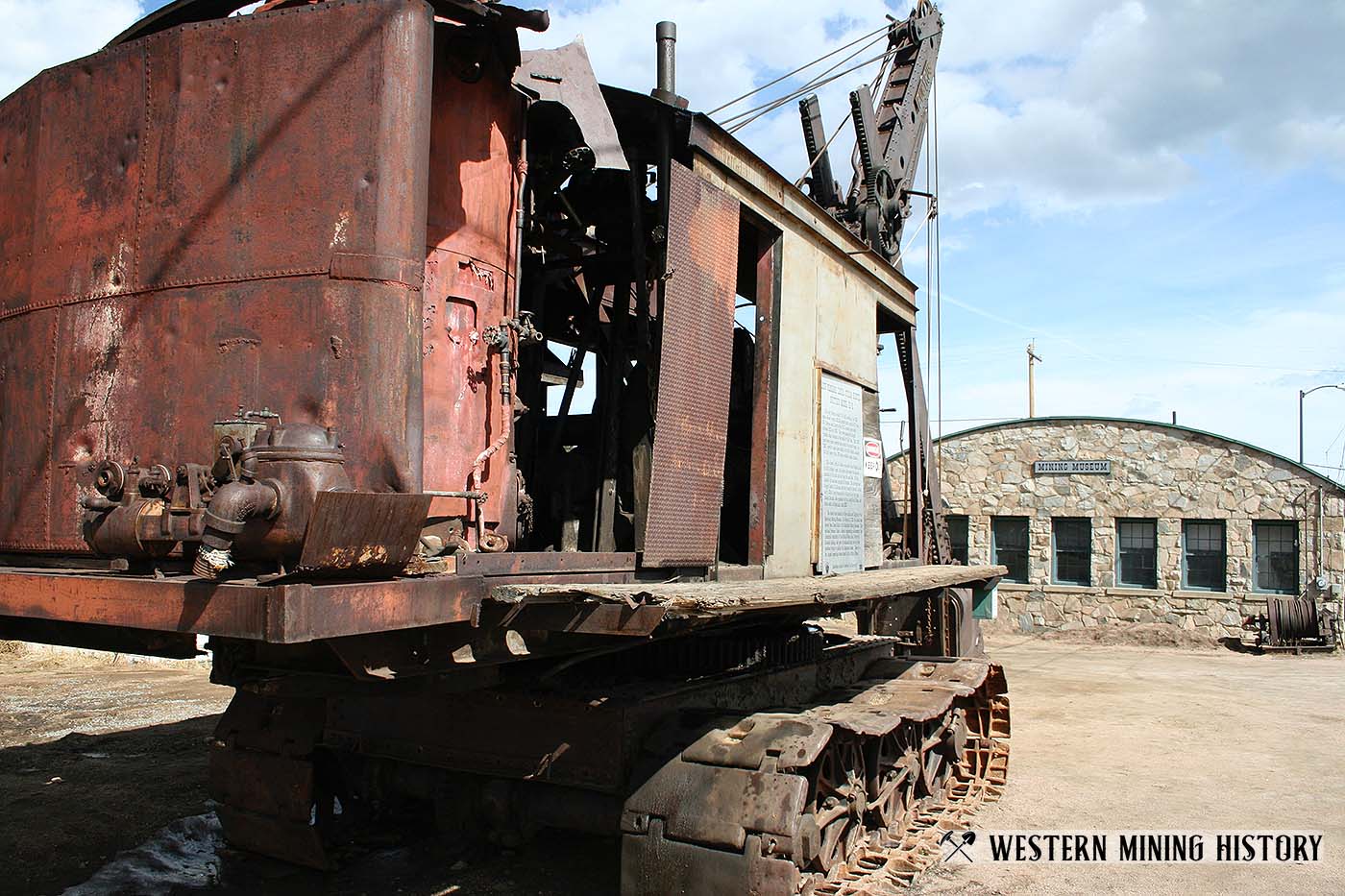
Today Nederland it is a recreation and tourist hub, known as a gateway to outdoor recreation in the nearby Indian Peaks and the James Peak Wilderness Areas. Nederland is located 15 miles west of Boulder.
A Tour of Colorado Mining Towns
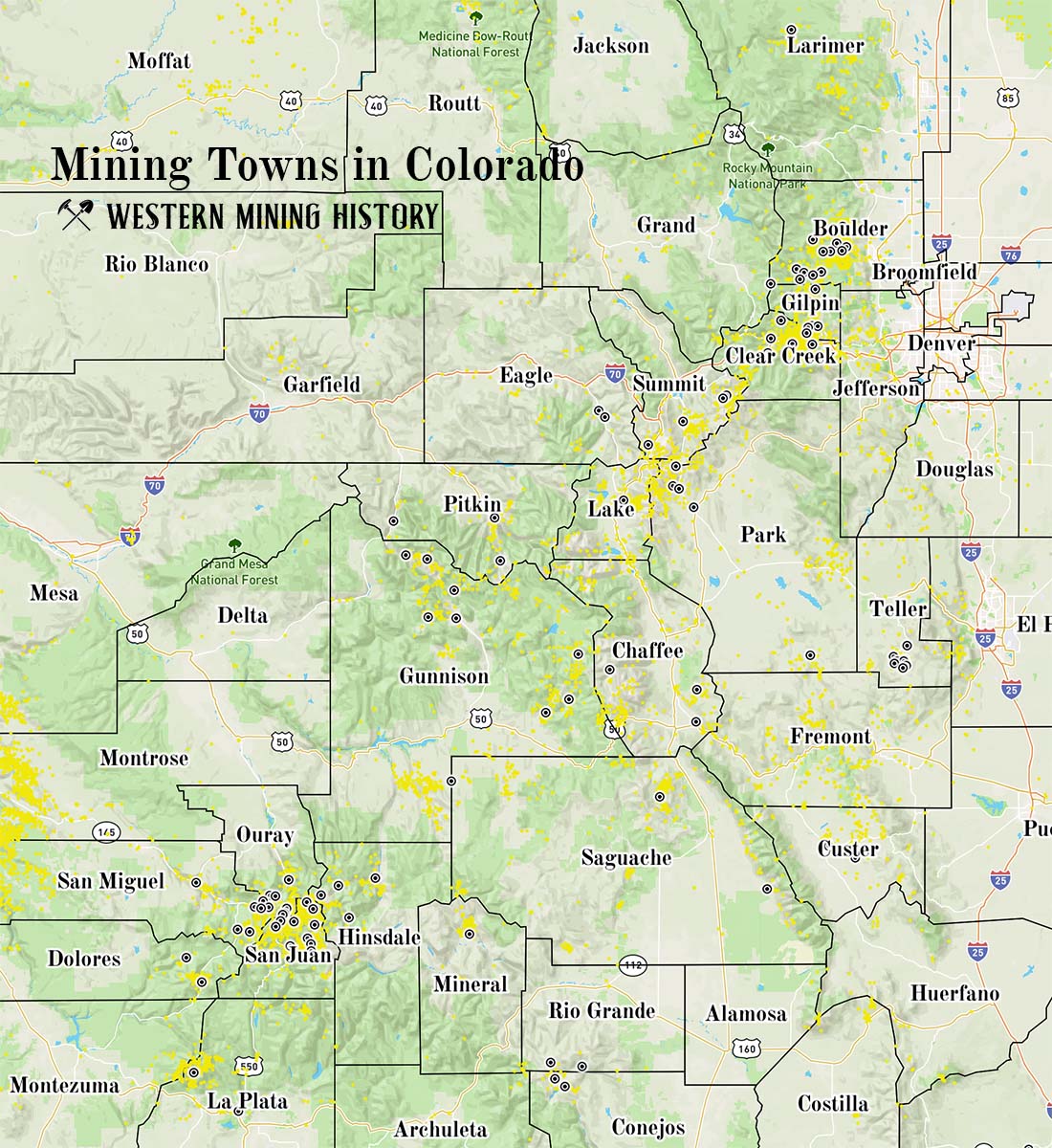
Explore over 100 Colorado mining towns: A tour of Colorado Mining Towns.
Colorado Mining Photos
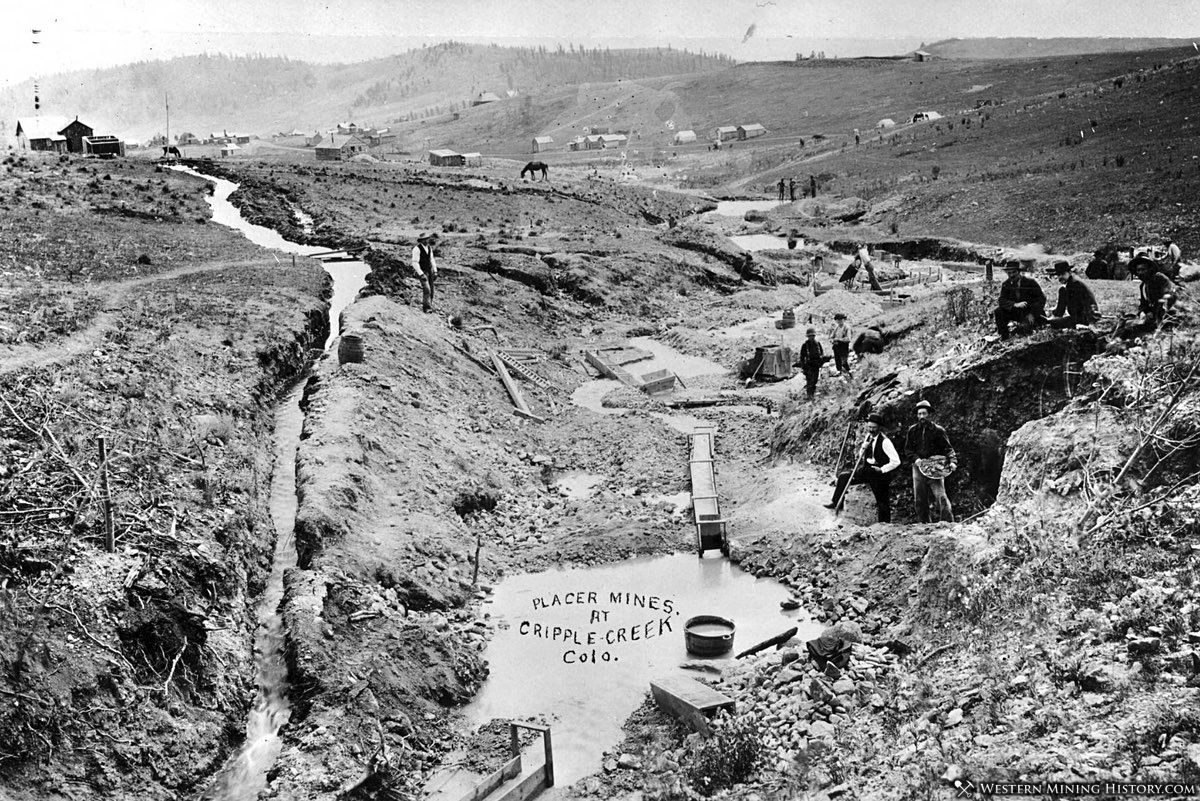
More of Colorado's best historic mining photos: Incredible Photos of Colorado Mining Scenes.