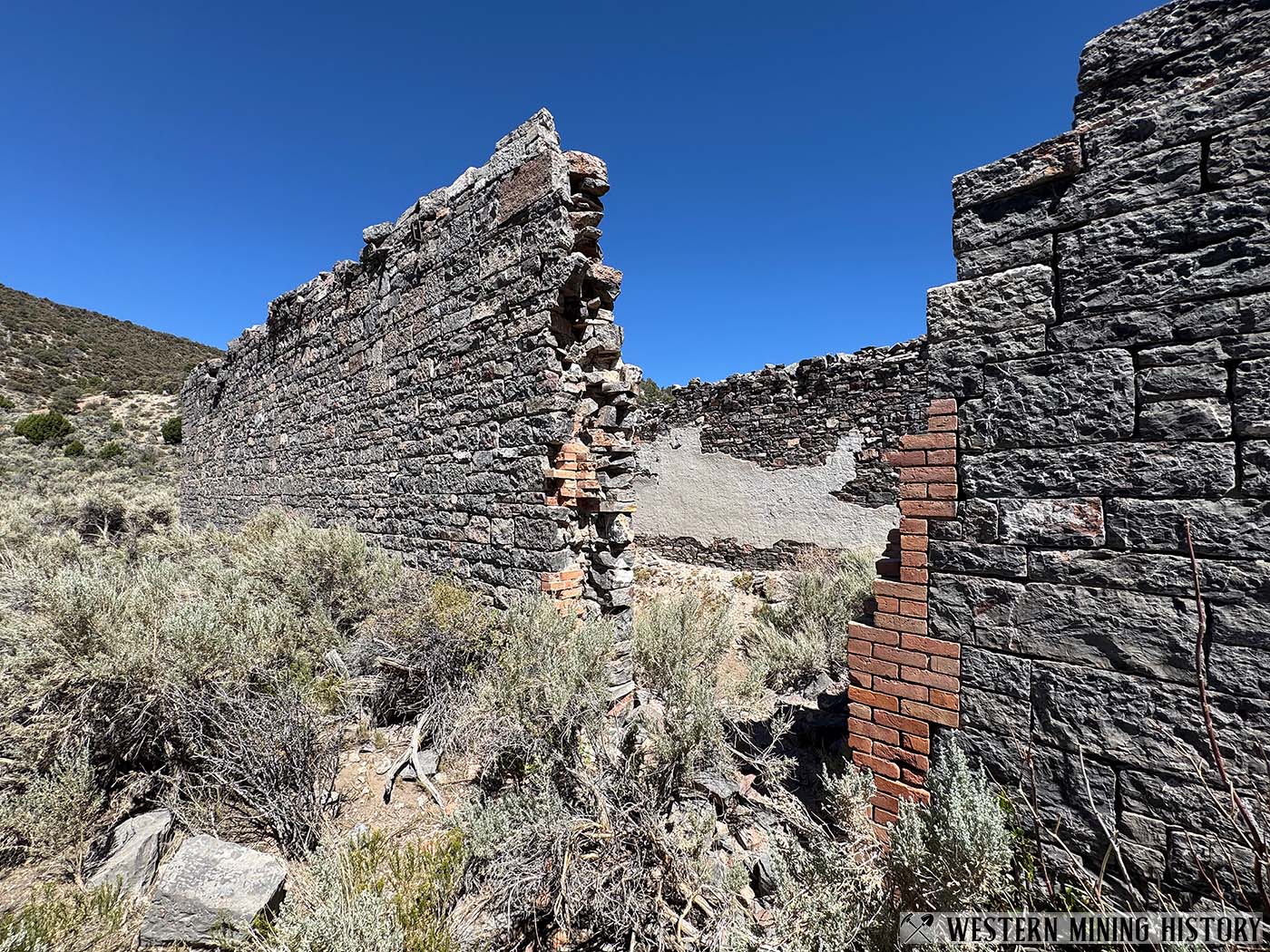
Shermantown History
Shermantown was one of the first three settlements founded in 1868 during the White Pine silver rush. Initially known as Silver Springs, the camp appeared in newspapers as “Sherman” by October and as “Shermantown” by December. Established as a milling center for the Treasure Hill mines, its site was chosen not only for its proximity to the mining operations but also for its comparatively mild, wind-sheltered climate and dependable water supply.
Life in the camp is vividly described in the diaries of Martha Gally, who moved to Shermantown from Hot Creek with her husband, Dr. Gally, and their two children in January 1869. Formerly a dentist back East, Dr. Gally had left his profession to pursue a prospector’s life. Martha’s journals later formed the basis for the 1977 book Martha and the Doctor: A Frontier Family in Central Nevada. Of Shermantown, Dr. Gally wrote:
Shermantown is bound to be a town of importance, by virtue of natural advantages, and even now, in spite of narrow speculation, it grows steadily and somewhat rapidly. It is the most quiet town of the trio, but not altogether orderly–seems to be a chivalrous place, and has about one duel per month.
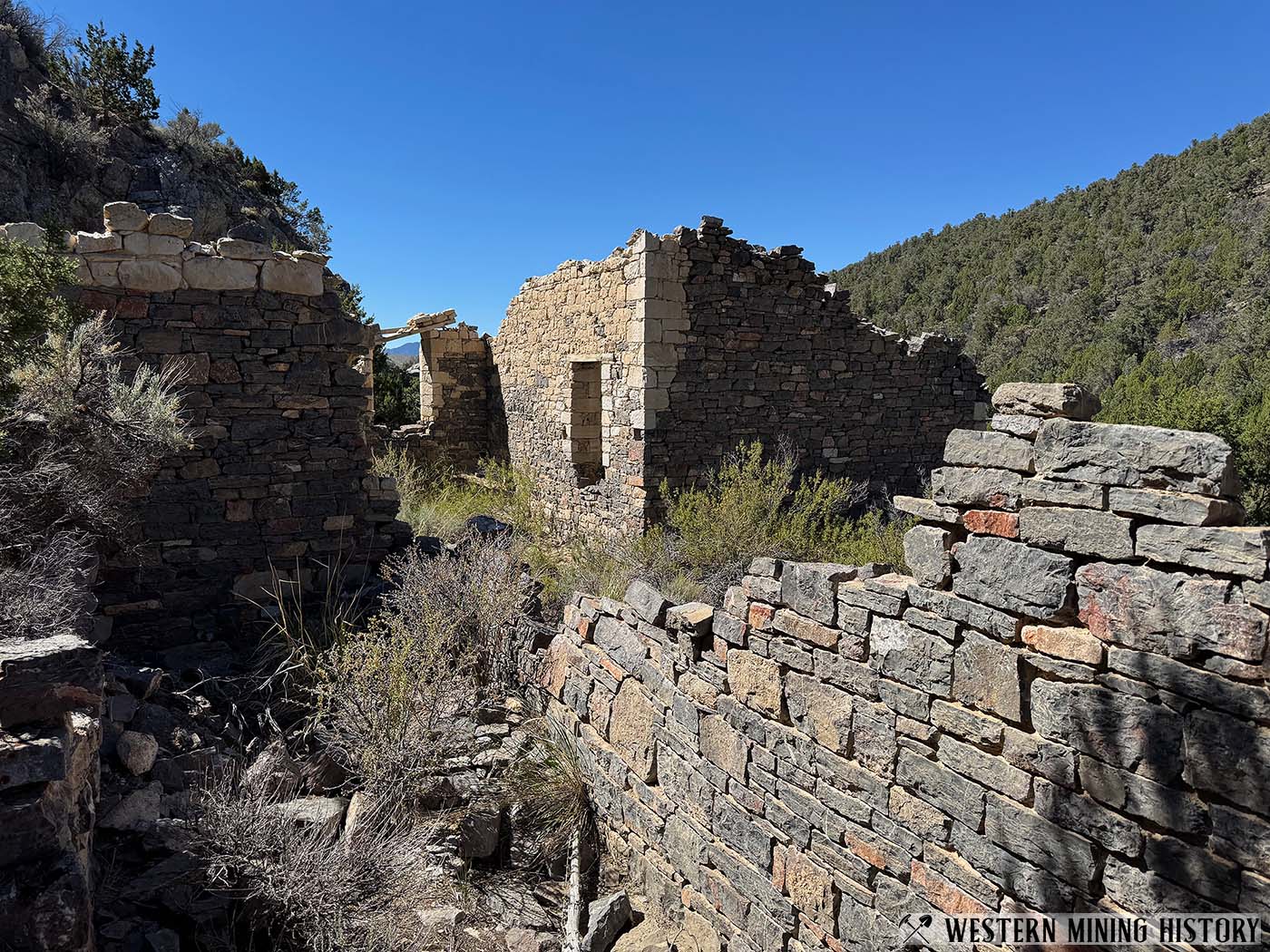
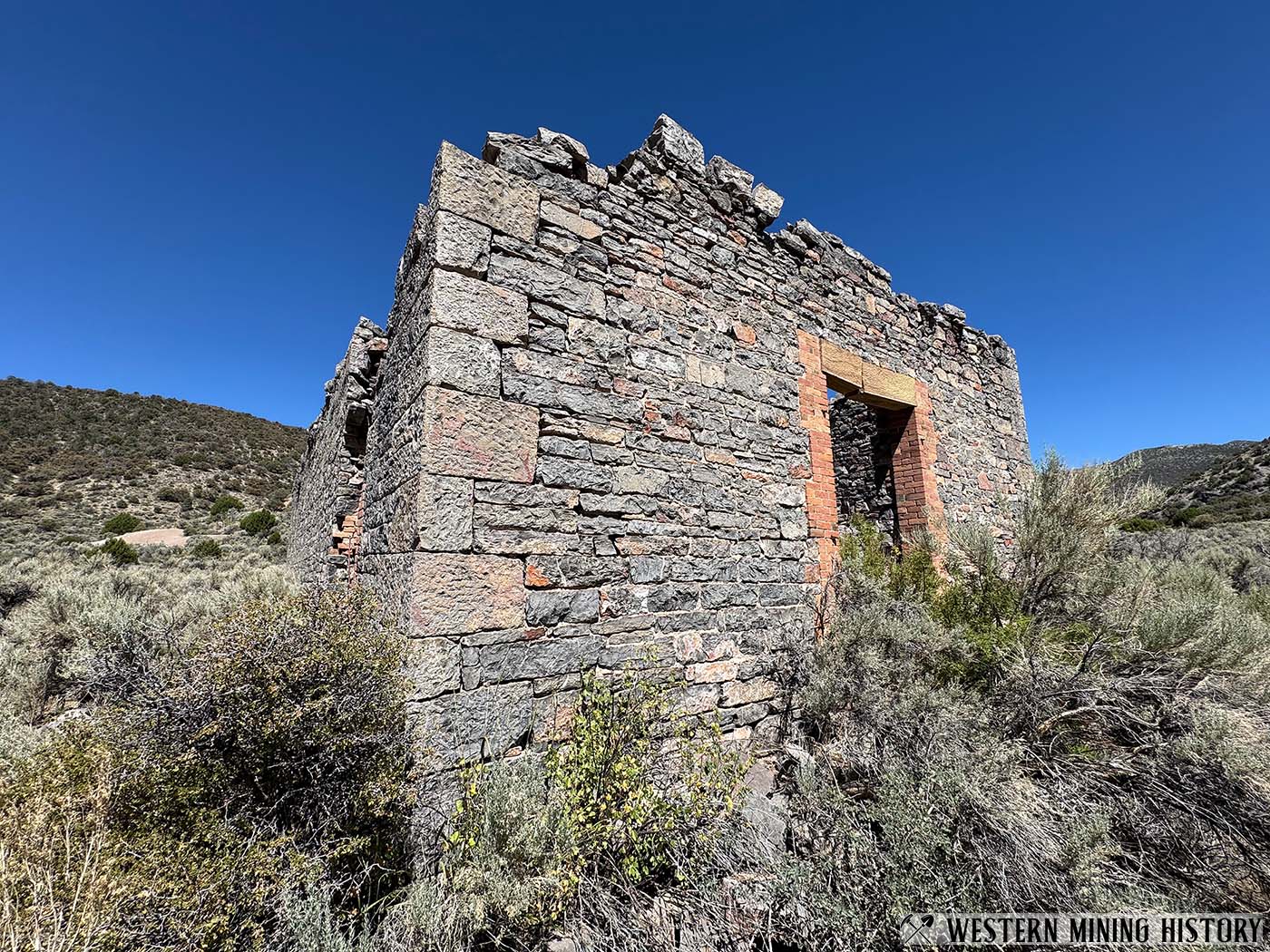
The town was incorporated in April, and by the summer of 1869 had at least three stamp mills in operation, along with a sawmill, a post office, a school, and two hospitals—one private and one public. Work had also begun on a three-story brick building constructed of local sandstone, intended to house the lodges of both the Independent Order of Odd Fellows (IOOF) and the Masons. Town lots were selling for $800 to $2,000 each. At various times, two newspapers were printed here.
To entertain its citizens, the town boasted an ice cream parlor, a theater, and many saloons, but as of July 1869, not a single church was operating for its more than 1,200 residents. Horse racing was popular; a 300- to 400-yard track was established, and bets ran as high as $500.
For all its isolation, Shermantown occasionally came alive with cultural events. A theatrical company inaugurated a new theater with a staging of The Lady of Lyons; a ballet dancer gave a performance; and a circus and gymnastics troupe entertained crowds beneath a large tent. On Independence Day, residents marked the occasion with rockets and Roman candles, the ascent of a large balloon, and an array of patriotic speeches.
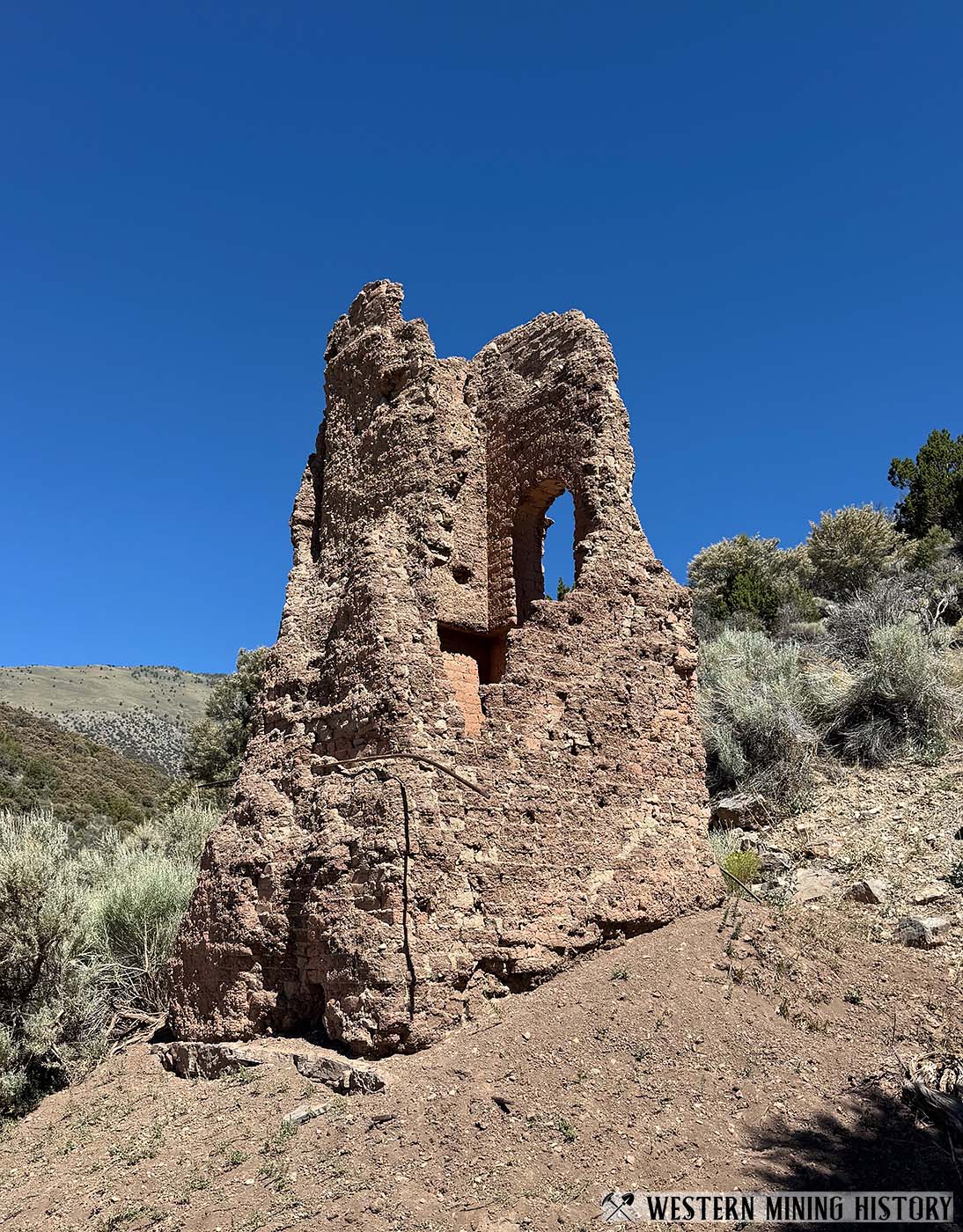
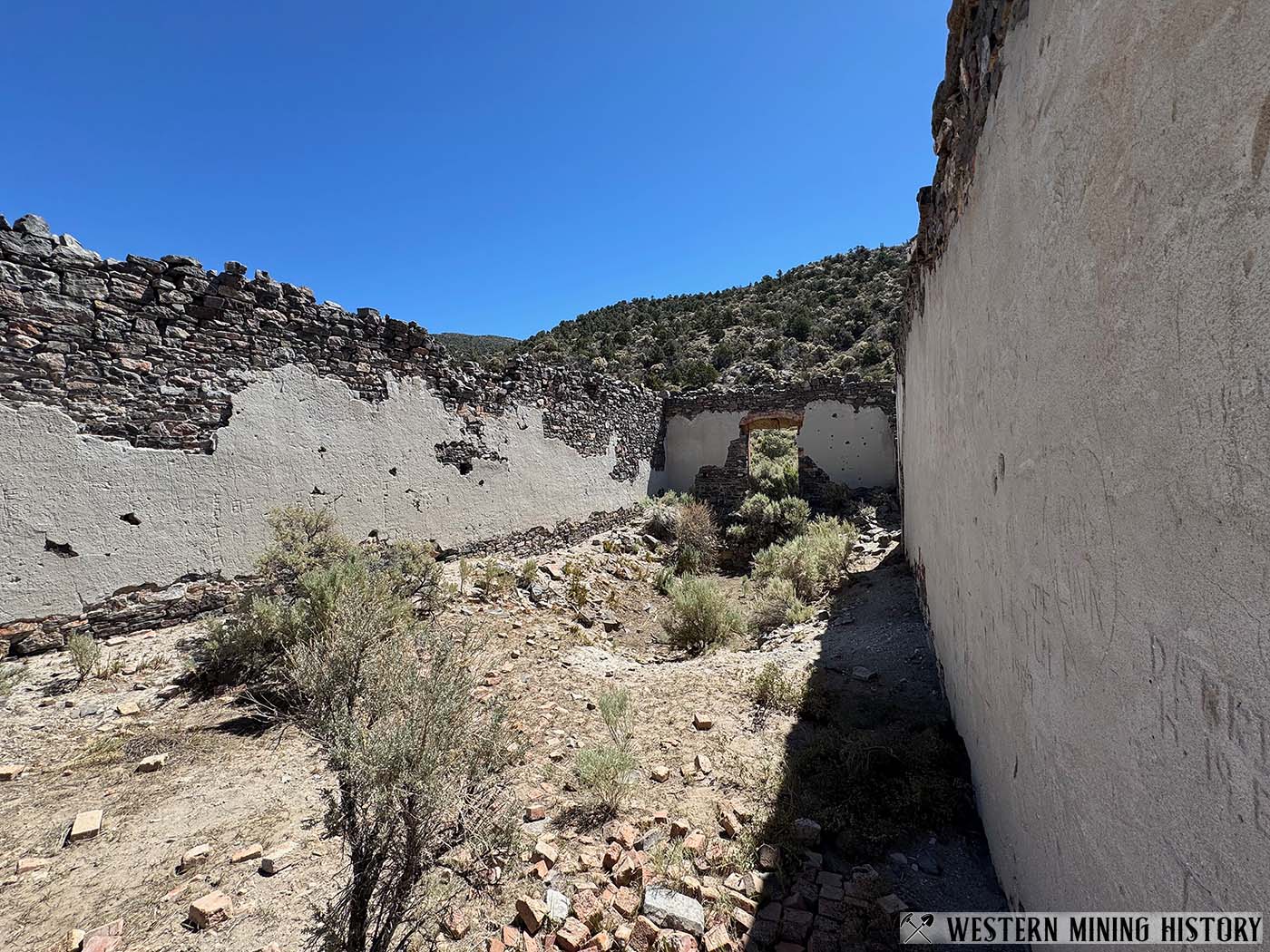
Numerous small furnaces were built in and around Shermantown to roast silver ore. One still stands today, its adobe bricks heavily weathered by more than 150 years of exposure. Scattered furnace slag can still be found along the town’s northern edge.
The White Pine boom had collapsed by the latter half of 1869. Many of the claims staked by hopeful prospectors proved worthless, and the thousands who poured into the district that year discovered that the shallow mines were already playing out, while the deeper prospects sat idle for lack of capital. Dr. Gally noted that few of the newcomers seemed to know why they had come to White Pine, or what they would do once they got there.
Life in Shermantown, as throughout most of the White Pine district, was harsh and uncertain. Skilled mill operators fared reasonably well at $60 a month with board, but for most people paid work was scarce or nonexistent. Dr. Gally’s efforts to establish an income led nowhere, and Martha chronicled the family’s growing hardships in her diary:
The truth is that the camp is so dull, so little money here, that there is no market, no demand for labor or anything else–men are working for $3.00 per day when ordinary wages have never been less than four dollars. Everyone is anxious and apprehensive. We cannot sell ledge, stone quarry, horse, lots, nor anything. I scarcely know which way to turn.
As if life in Shermantown weren’t hard enough, the weather was frequently severe—and sometimes dangerous. Martha and the Doctor recounts the family’s unending struggle with the elements. During their months in town, conditions were harsh. Winter snow and sub-zero cold made frostbite a constant threat, while violent storms in April and May cut visibility to just a few feet and drove snow straight through the cracks of the cabin. A late May blizzard buried the area under drifts seven feet deep.
The shift from winter to summer came abruptly. By the end of June, the mercury was already climbing into the high 90s, and on July 23 it reached 108 degrees in the sun—before breakfast. These were the conditions at the site considered the district’s most habitable. It is difficult to imagine what those living atop the mountain in Treasure City had to endure.
Economic conditions continued to deteriorate, and by September the district was plagued with desperation and increasing violence. Martha Gally wrote:
There is a great deal of sickness in the camp, dysentery, diarrhea, whooping cough etc; also much suffering from insufficient means. A miner, who lived in a cabin down the canyon has been staying a week or two at Mt.Ophir, yesterday he returned & after going into his house found lying upon his bed a dead man; upon examination the body was found to be in a state of partial decomposition. Some poor fellow with no home, no friends, no money, crawled in and died alone. Last night a man was robbed about dusk of $38 between this place & Treasure City. God give us patience.
By late September of 1869, the Gallys had had enough of their “White Pine disaster.” On October 1, they gathered their possessions and set out for their homestead at Hot Creek.
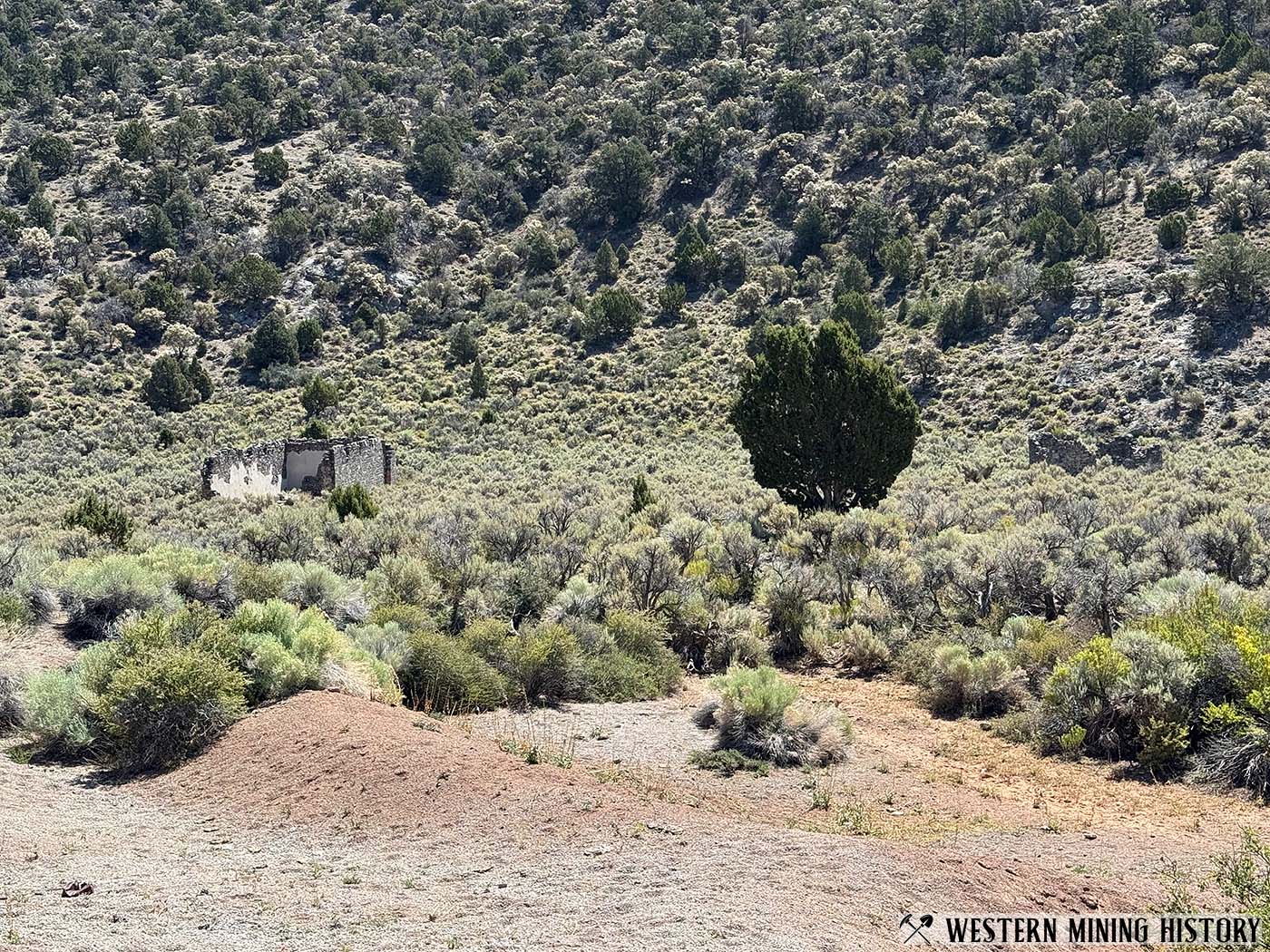
Once one of the district’s most important towns, Shermantown declined rapidly after 1869. The post office closed in 1871, and by 1873 the population had dropped to just twenty-five residents. By 1878, only a single family remained, and the town was soon abandoned altogether.
Today, a few rock walls and the ruin of an old ore furnace are all that remain of what was once the White Pine district’s third most important settlement.
The White Pine Silver Rush
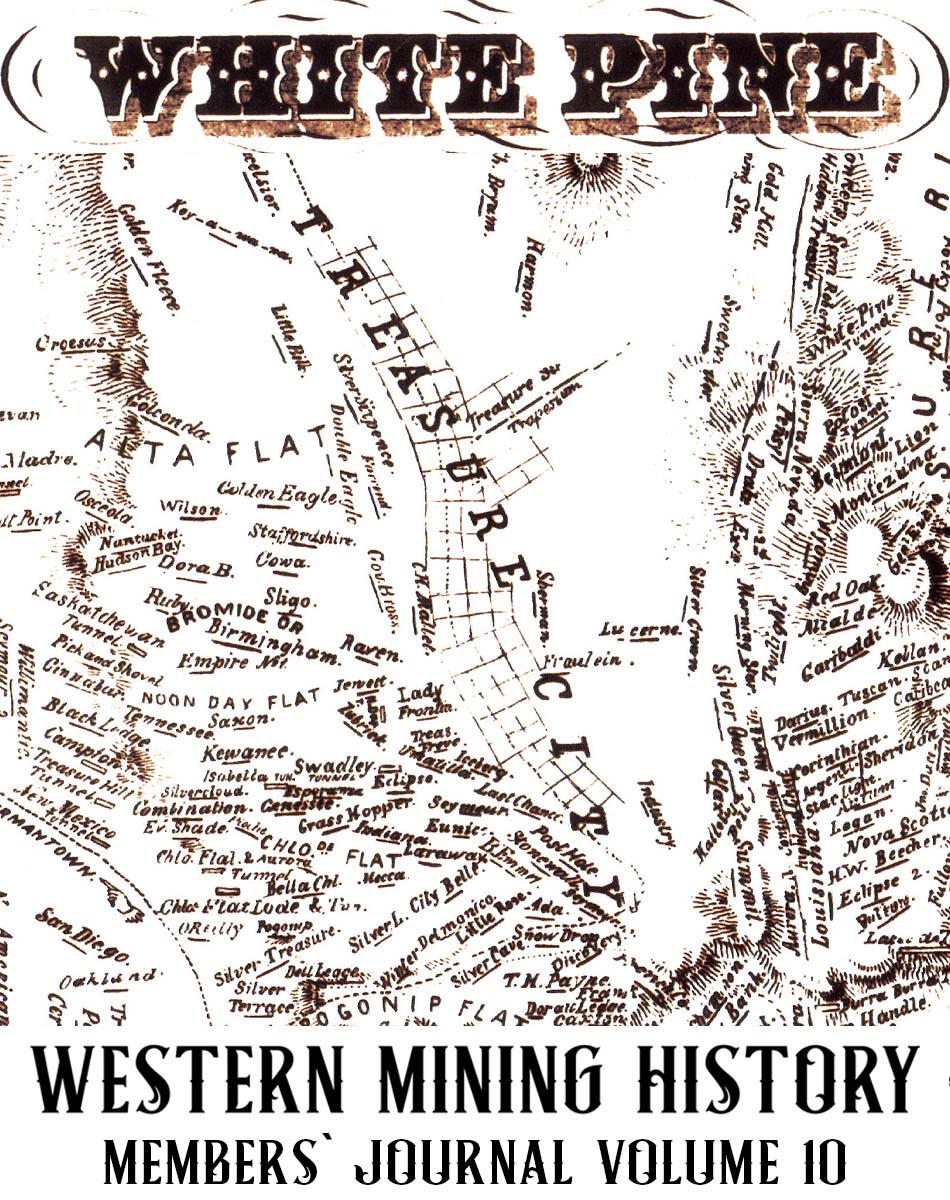
Deep in what was a vast wilderness in eastern Nevada, the White Pine district experienced one of the most intense and short-lived mining excitements in the history of the American West. What began as a modest discovery in the mid-1860s escalated into a boom that drew thousands of miners, speculators, and investors to the heights of Treasure Hill. Continue reading... (members only content)
Nevada Mining Photos
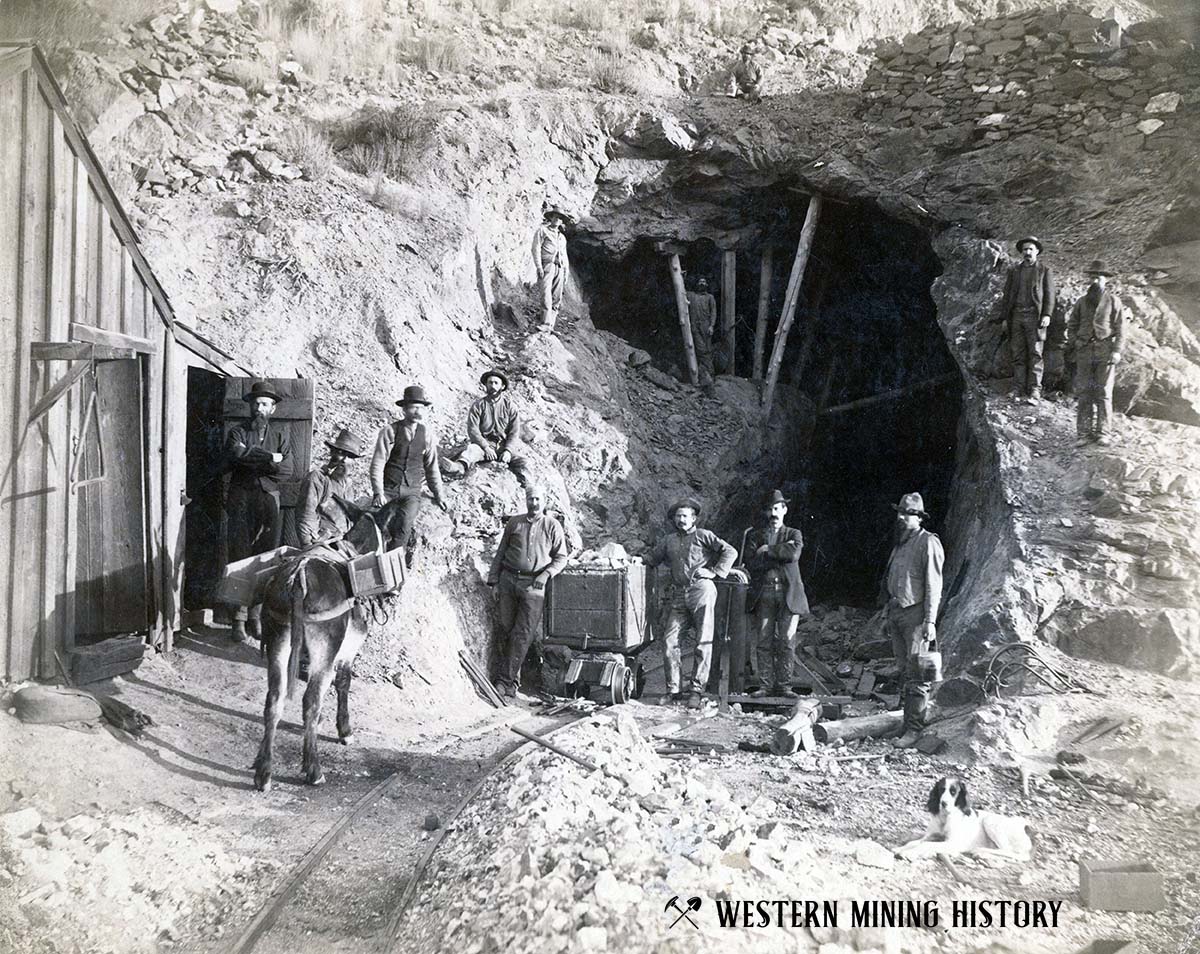
A Collection of Nevada Mining Photos contains numerous examples of Nevada's best historic mining scenes.
Nevada Gold
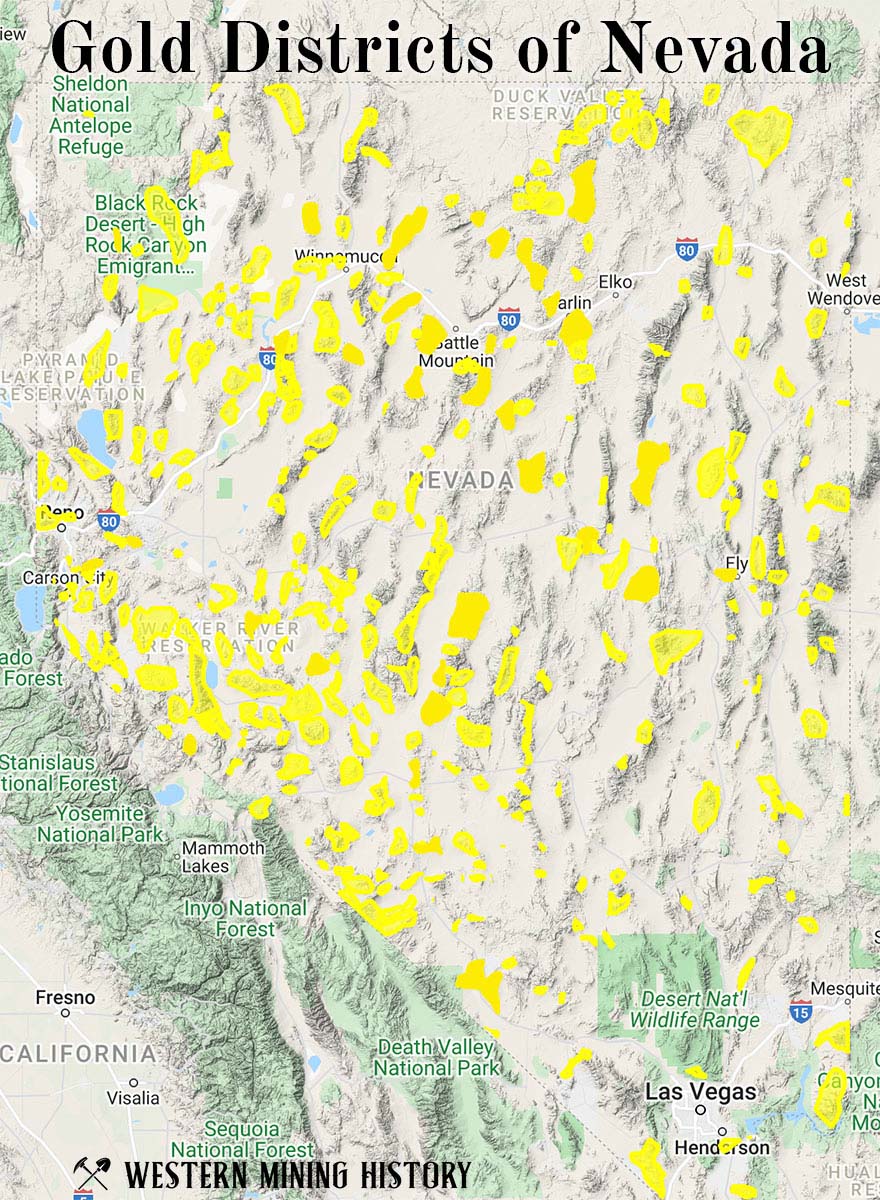
Nevada has a total of 368 distinct gold districts. Of the of those, just 36 are major producers with production and/or reserves of over 1,000,000 ounces, 49 have production and/or reserves of over 100,000 ounces, with the rest having less than 100,000 ounces. Read more: Gold Districts of Nevada.
