Treasure City History
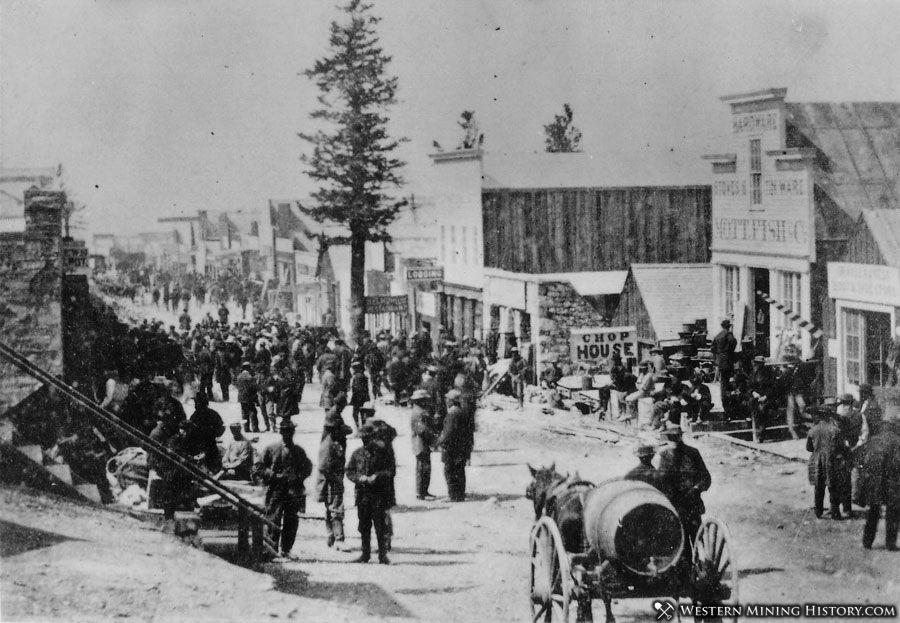
Initially settled in 1868 near the summit of Treasure Hill, amid some of the district's richest mines, Treasure City was one of three primary settlements founded during the silver rush to Nevada’s White Pine region. Many western mining camps were established in difficult locations, but Treasure City was among the few built atop a mountain, where winter conditions ranked among the harshest endured by any mining camp in the West.
Dr. Gally, a resident of nearby Shermantown, described Treasure City in an account later published in the 1977 book Martha and the Doctor: A Frontier Family in Central Nevada:
Treasure City street–there is but one–is crowded all day by a mass of male humanity, weaving in and out, tramping the slush snow underfoot, coughing up the fog, and taking a drink… Blasts are set off in a crowd, somebody cries “look out!” and everybody looks up for falling rocks. Teams struggle through the street, over the stones, hauling wood, water, goods, and lumber; teamsters curse; dogs fight in the snow-slush; men gamble heavily; houses are built on stilts, and we all–take a drink.
Dynamite was used to level streets for homes and businesses, and in the frenzy to stake claims on town lots, claim jumping was common. Some men even staked claims in the middle of the streets, as described by W. Turrentine Jackson in his 1963 publication Treasure Hill: Portrait of a Silver Mining Camp:
Several men filed claims to lots in the middle of Treasure City’s Virginia Street during February, 1869, staked off their property in this thoroughfare, and hauled in lumber to erect buildings. The constable started removing the stakes and the lumber, and when the jumpers protested he drew his six-shooter to enforce the law. They had the constable arrested. The case was tried immediately before the local judge who discharged the defendant, fined the prosecutors, and forced them to pay the cost of the suit. The local press commented, “There is hardly room enough now for a team to pass through any of the streets of our town, and we hope that no one will hereafter interfere with or obstruct the few thoroughfares that are used by the public."
Among the businesses and institutions in Treasure City were a post office; Masons and Odd Fellows lodges; two banks; a volunteer fire department known as the “Liberty Hose Company”; a bakery; two theaters—the White Pine Theater and Rain’s Hall; several hotels, including the International; and numerous saloons. Chinese residents occupied their own section of town.
The White Pine News published its first edition in Treasure City on December 26, 1868, becoming the first newspaper in the district. The weekly paper cost $1 per month or $10 per year by subscription.
By the summer of 1869, the Treasure City Wells Fargo & Co. express office had moved into a stone building on Main Street shared with the Bank of California, described as the most costly and substantial building in eastern Nevada. By September, Kelly & Co. was operating stage service between Hamilton and Treasure City every hour, with each one-way trip taking about forty minutes.
That same summer, an elaborate water system was built to supply the district’s mills as well as the towns of Hamilton and Treasure City. The White Pine Water Company spent over $400,000 constructing a system to pump water from Illipah Springs, three miles away. The system featured two pumping stations that lifted water to reservoirs, from which it flowed through a tunnel beneath the crest of Mokomoke Ridge and then down to Hamilton. A third pumping station was required to raise the water up the mountain to Treasure City.
In 1869, residents of Hamilton paid one cent per gallon for water, while those in Treasure City paid twice that amount due to the added expense of maintaining the pipeline and pumping station on Treasure Hill. The high cost of the system led to water rates doubling in 1870, prompting many residents to melt snow rather than purchase water from the company.
While the White Pine region was known for its harsh winter weather, Treasure City—perched atop the mountain—experienced the most severe conditions of all. High winds were constant, and complaints were common about storefront signs swinging dangerously; shopkeepers were urged to secure them to prevent injury to passersby. The wind also created a serious fire hazard, as stovepipes were sometimes blown down, igniting buildings. In April 1872, a snowstorm dumped 12 inches on the mountain, trapping residents in their homes, with only snowshoes providing a viable way to venture outside.
Treasure City’s population fluctuated widely during the initial silver rush and then declined sharply once the excitement subsided. The town’s peak stable population is difficult to determine but was certainly at least 2,000 to 3,000. In June 1869, 80 school-aged children were recorded among the residents.
The town’s decline was nearly as rapid as its rise. By the fall of 1869, Treasure City was already fading, and in December the White Pine News relocated down the mountain to Hamilton. By 1873, only 300 residents remained, and the business district burned in June 1874. By 1878, the town was nearly deserted, with just a single family and a handful of miners’ cabins remaining. The 1880 census recorded 14 registered voters, and the post office closed that same year.
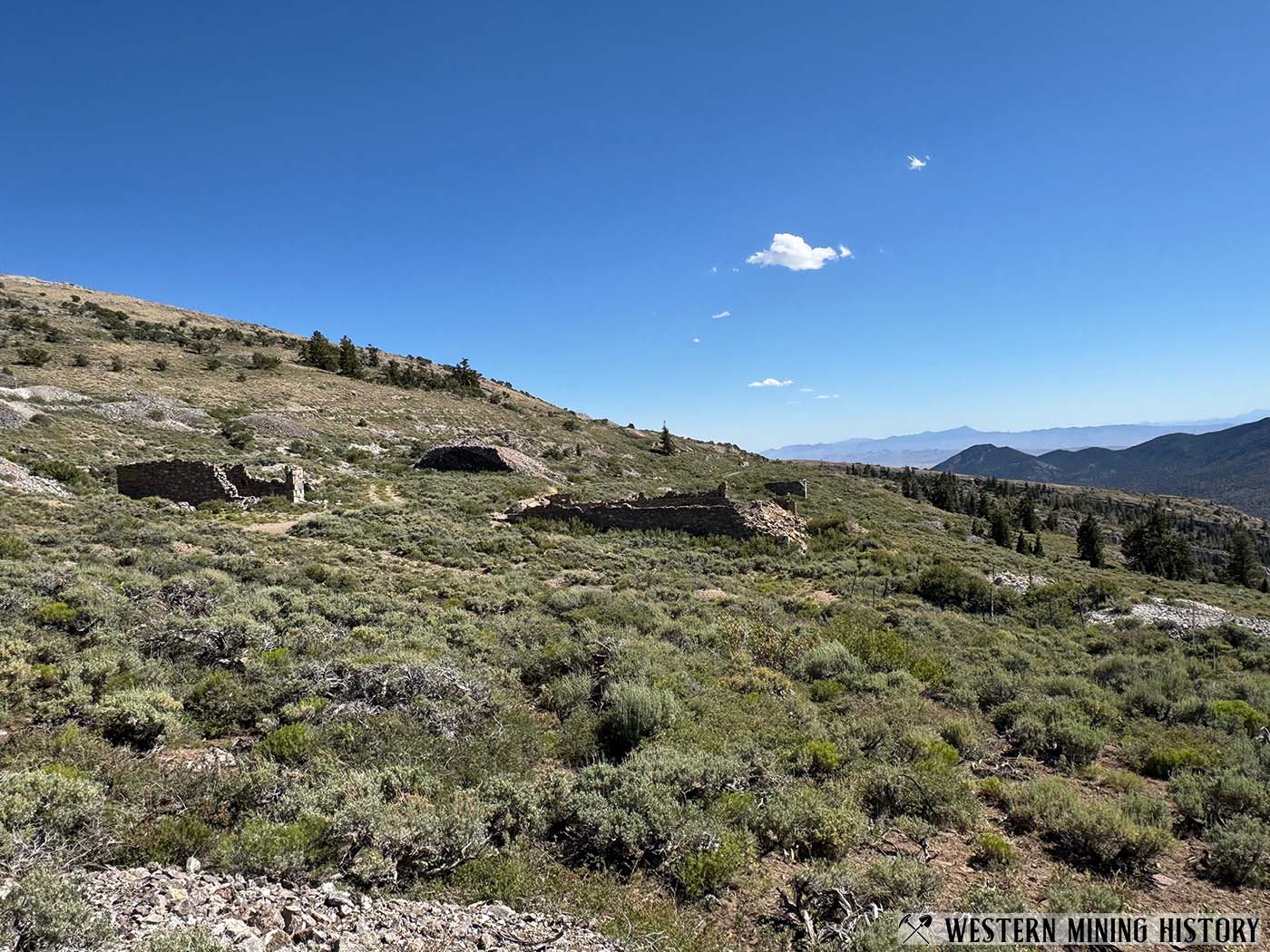
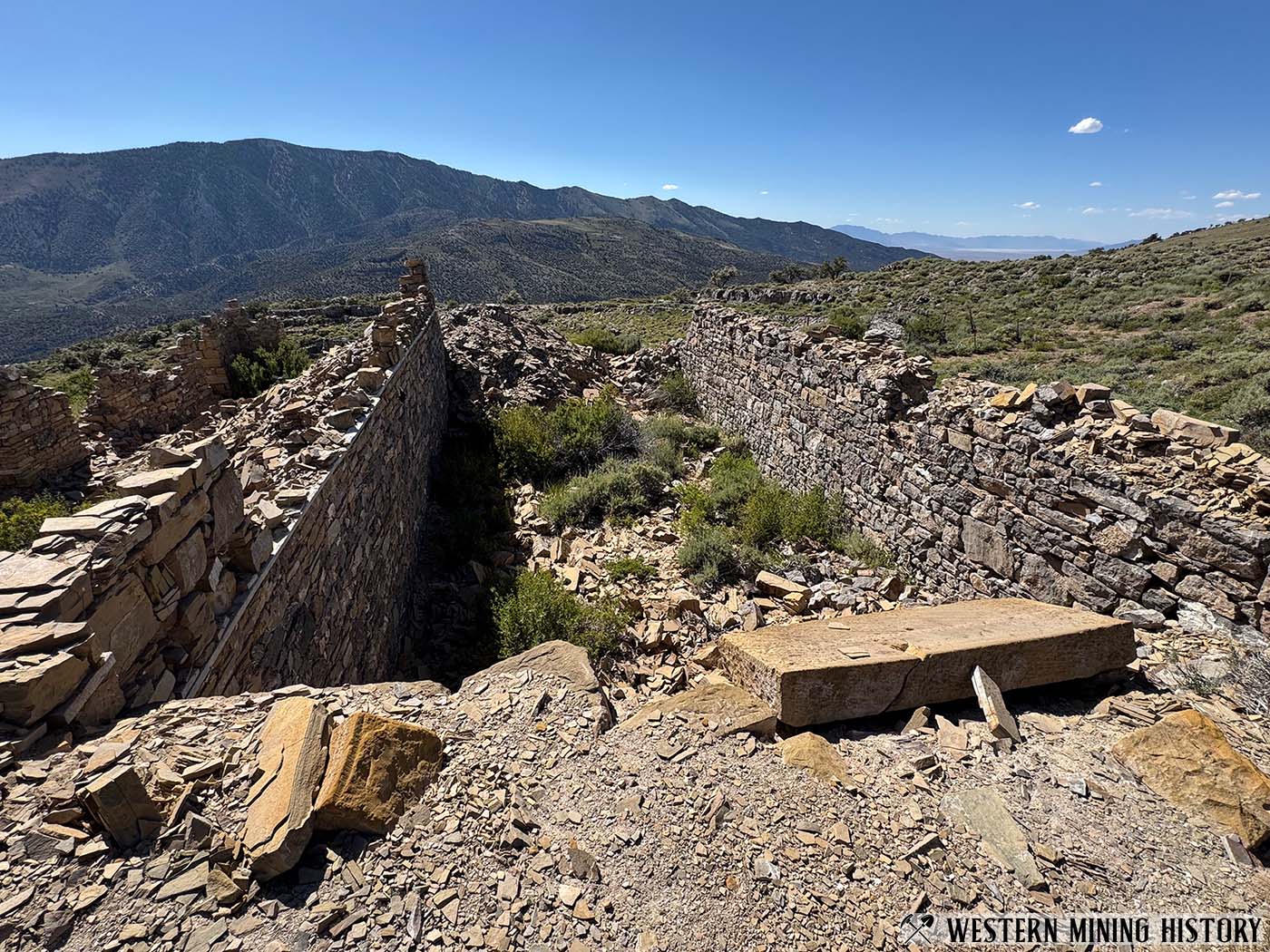
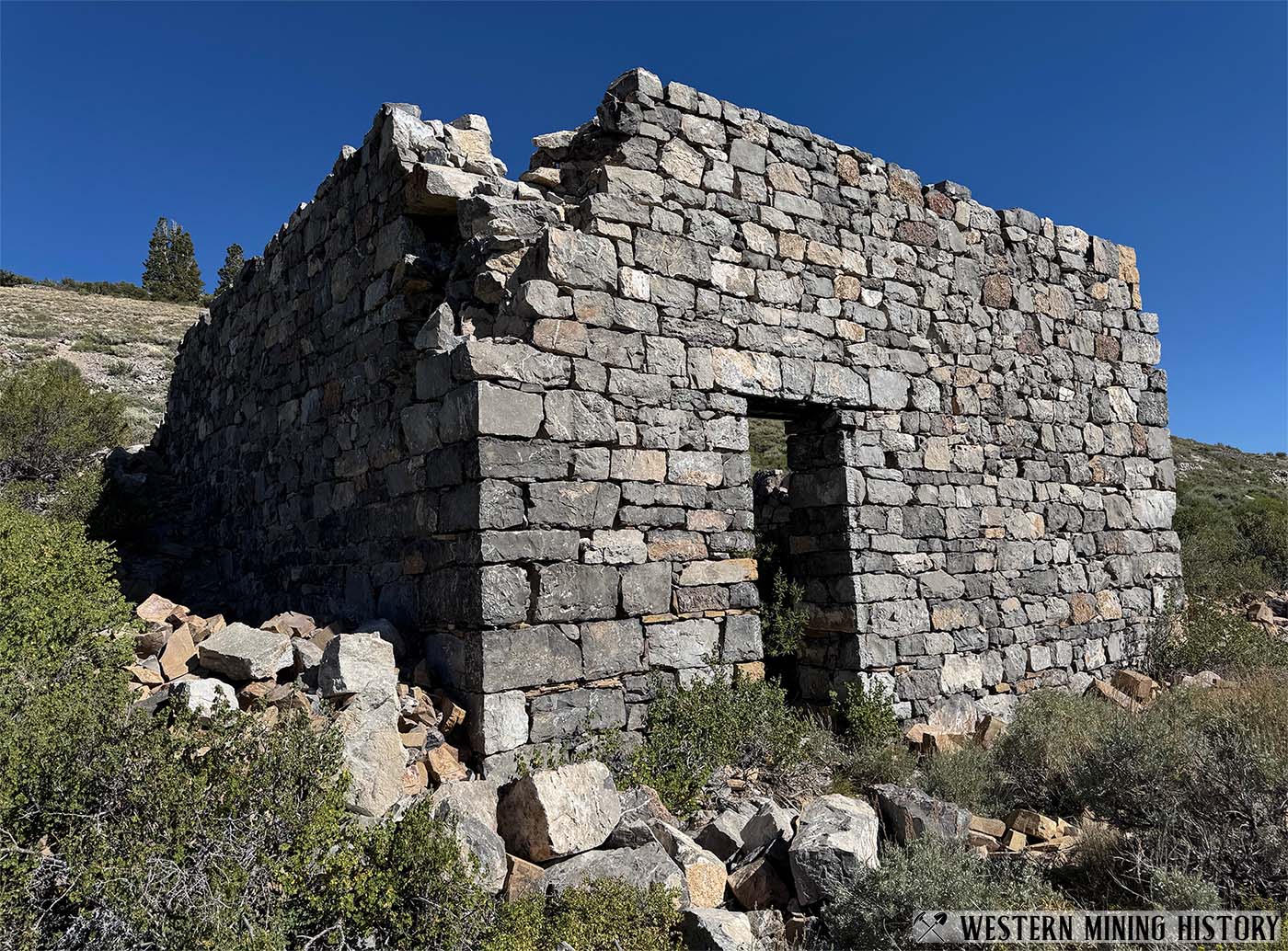
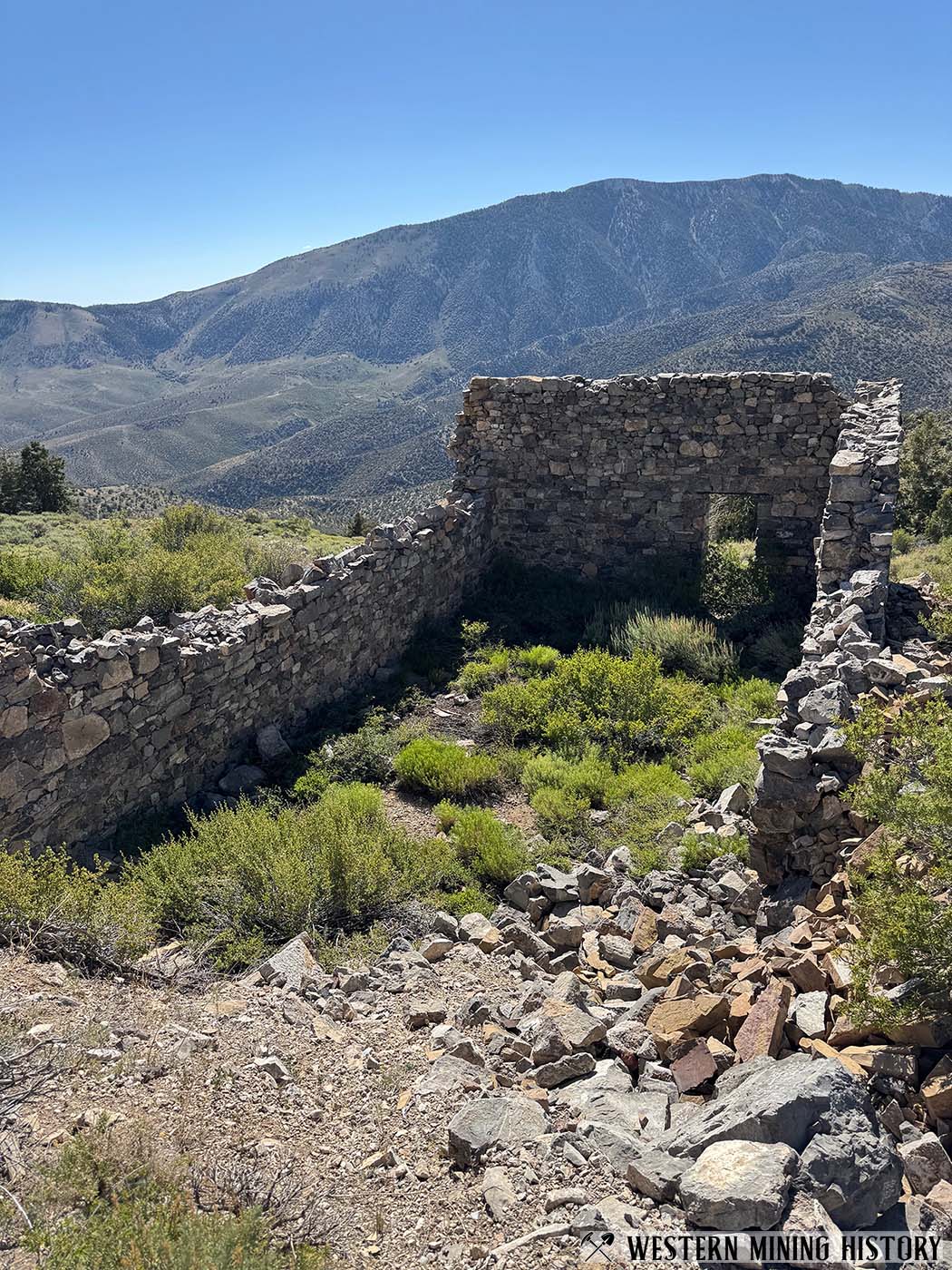
By the early 1880s, Treasure City was completely abandoned. Today, many of the town’s rock walls still stand. The site is difficult to reach, accessible only by capable four-wheel-drive vehicles able to navigate the deeply rutted roads connecting it to Hamilton.
The White Pine Silver Rush
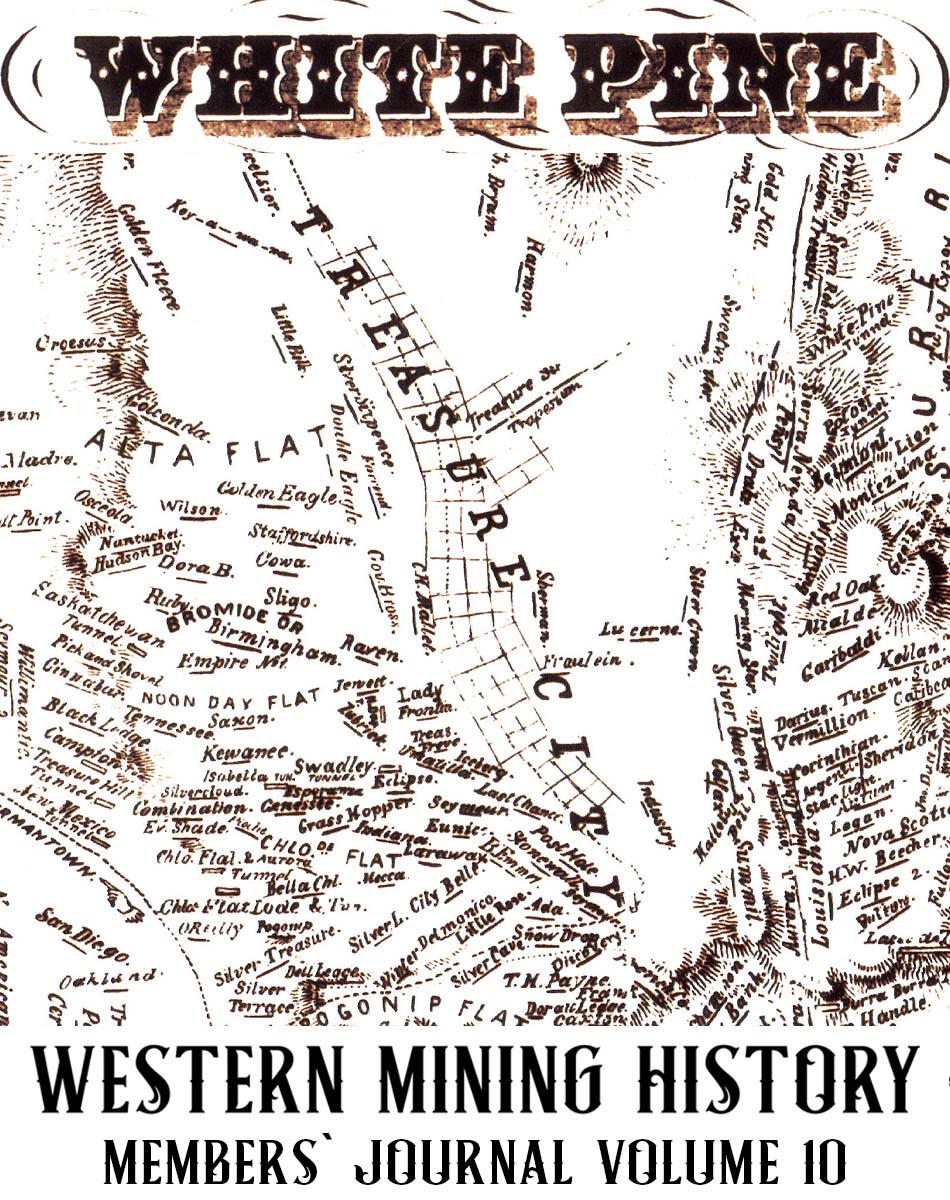
Deep in what was a vast wilderness in eastern Nevada, the White Pine district experienced one of the most intense and short-lived mining excitements in the history of the American West. What began as a modest discovery in the mid-1860s escalated into a boom that drew thousands of miners, speculators, and investors to the heights of Treasure Hill. Continue reading... (members only content)
Nevada Mining Photos
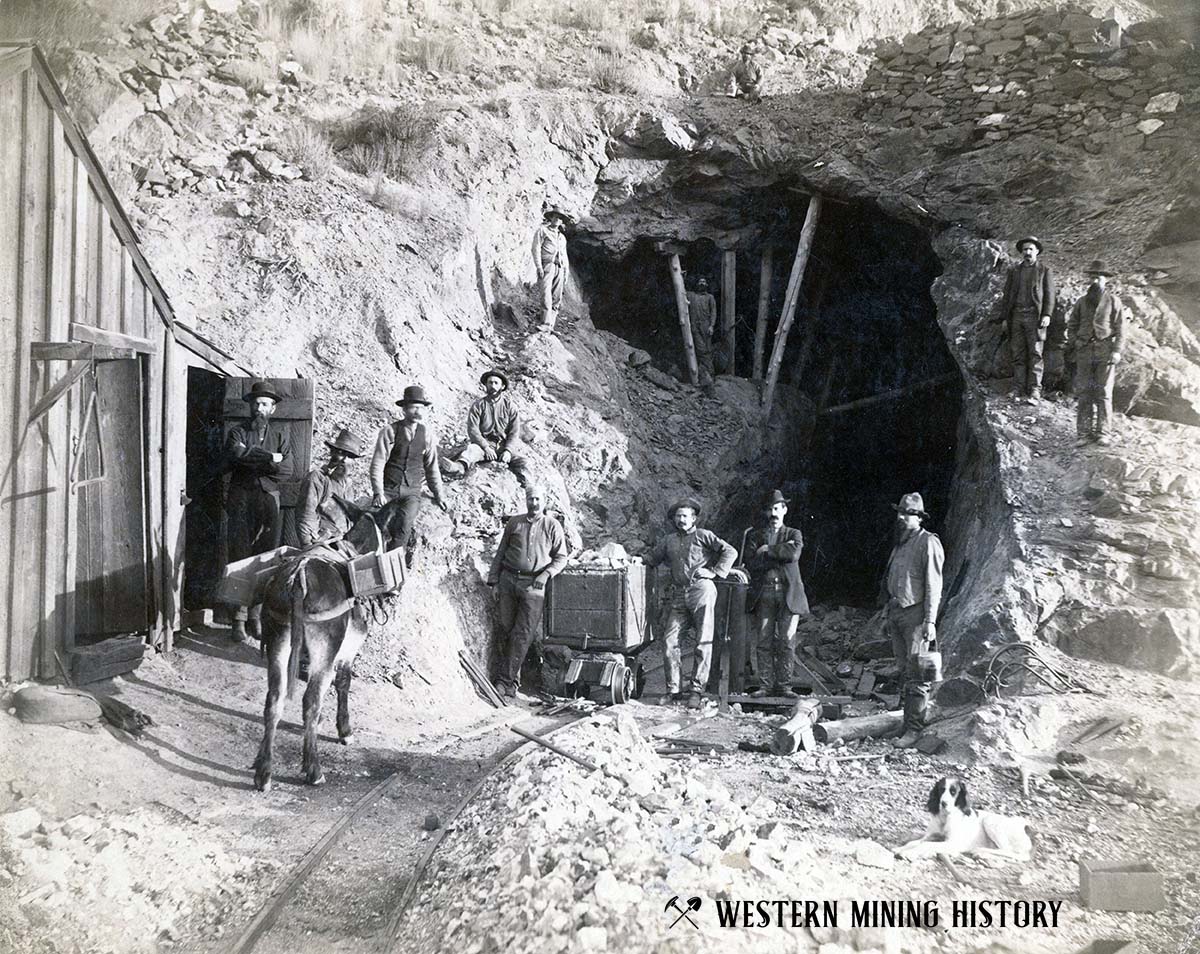
A Collection of Nevada Mining Photos contains numerous examples of Nevada's best historic mining scenes.
Nevada Gold
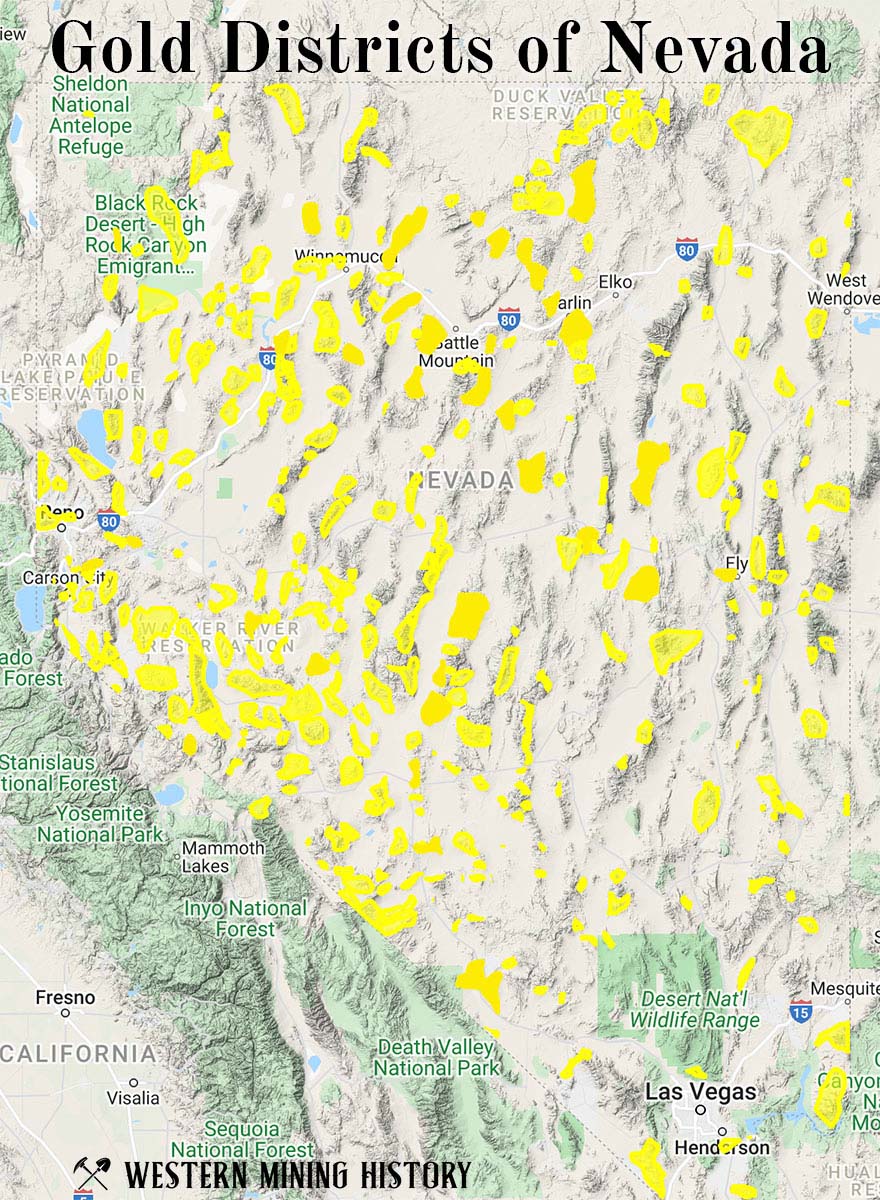
Nevada has a total of 368 distinct gold districts. Of the of those, just 36 are major producers with production and/or reserves of over 1,000,000 ounces, 49 have production and/or reserves of over 100,000 ounces, with the rest having less than 100,000 ounces. Read more: Gold Districts of Nevada.

