Eberhardt History
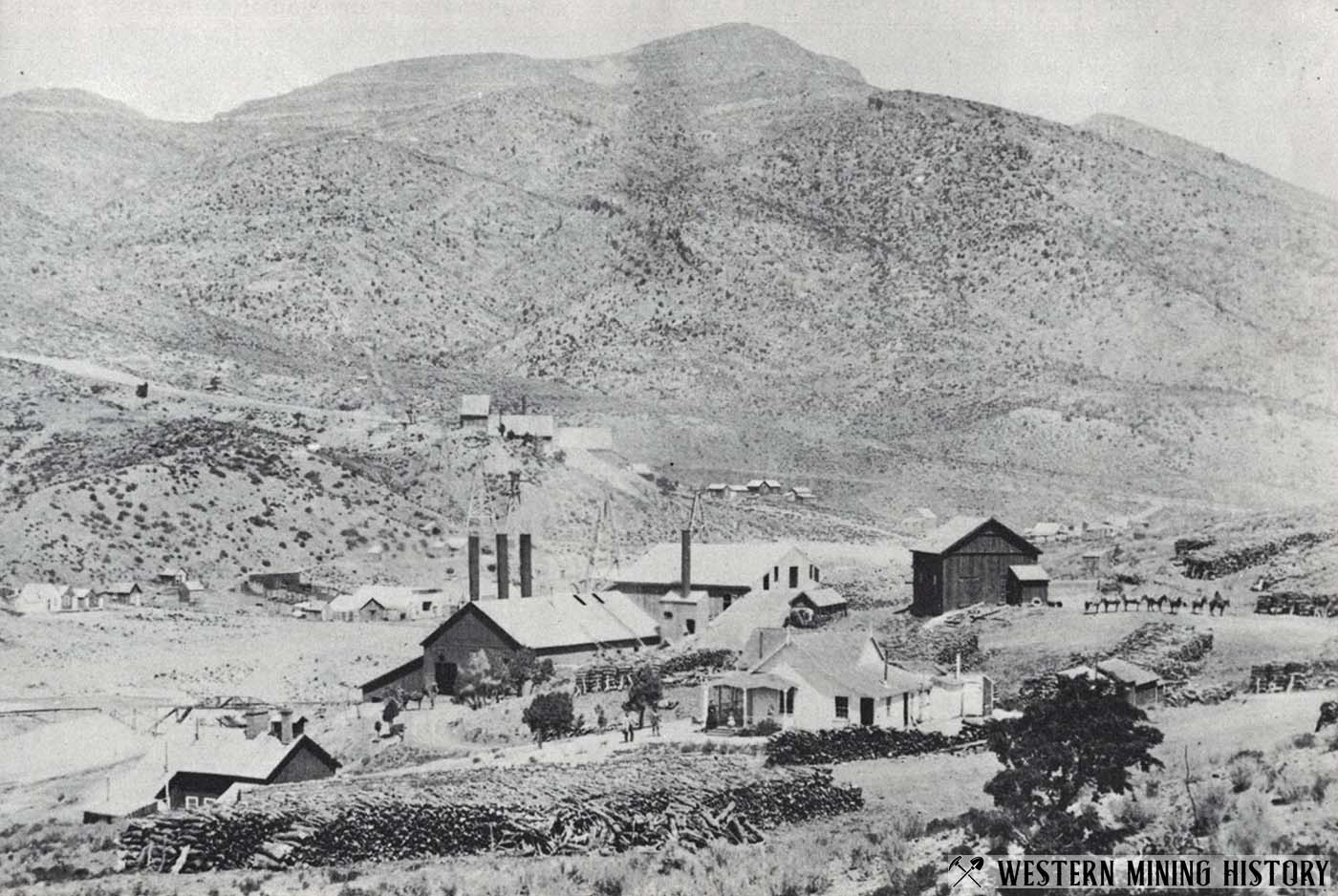
Eberhardt was established as a milling center in 1869 and, although it was not initially one of the White Pine district’s leading towns, it ultimately outlived most of them by many years.
While the district contained numerous mills, Eberhardt’s thirty-stamp Stanford mill was the largest operating in the summer of 1869. The town’s role as the leading milling center was reinforced the following year with the completion of the sixty-stamp International Mill, the largest ever to operate in the district. Shortly after the mill began operations, 2,000 ounces of crude bullion valued at $3,000 were stolen, and the sheriff arrested five men in connection with the theft.
By the summer of 1869, the White Pine silver rush was over, and nearby towns like Shermantown and Treasure City quickly faded. British investment in the district, much of it centered on Eberhardt, kept the town active during this period, leaving only Hamilton as a larger surviving community.
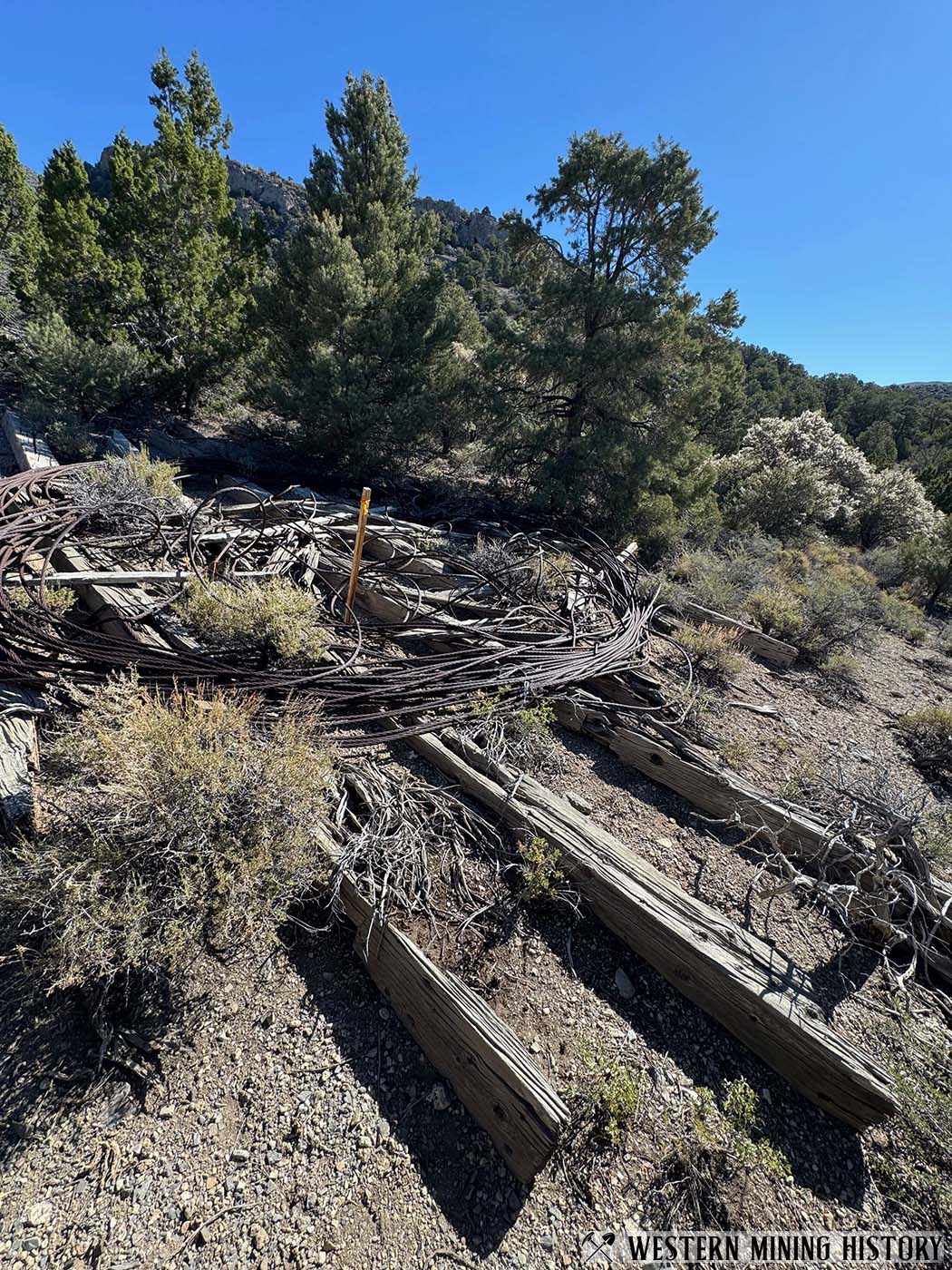
In 1871 an aerial tramway was constructed to connect the Eberhardt mine with the International Mill. Stretching 2.25 miles, it was the longest aerial tram in the country at the time and cost $135,000 to build. The tram greatly reduced the cost of transporting ore from mine to mill and proved especially valuable during winter, when snow and ice made wagon roads nearly impassable. Remnants of the tramway system, including a collapsed tower and sections of cable, can still be found at the site.
Disaster struck on August 31, 1872, when the International Mill burned, but it was rebuilt the following year. By the summer of 1873, Eberhardt—considered a company town of the English-backed Eberhardt and Aurora Company—had a population of about 100 residents.
British capital continued to sustain Eberhardt even as the rest of the district declined steeply. The 1880 census recorded 49 voters in the town, which supported a general store, blacksmith shop, carpenter’s shop, post office, and an active temperance organization. Mail was delivered by stage three times a week.
English investors persisted in their efforts to revive the district for many years, with most of their remaining interests concentrated at Eberhardt. These efforts kept the town alive long after most others had been abandoned, but ultimately the British mining ventures failed. By 1893 the town was largely deserted, and the post office closed.
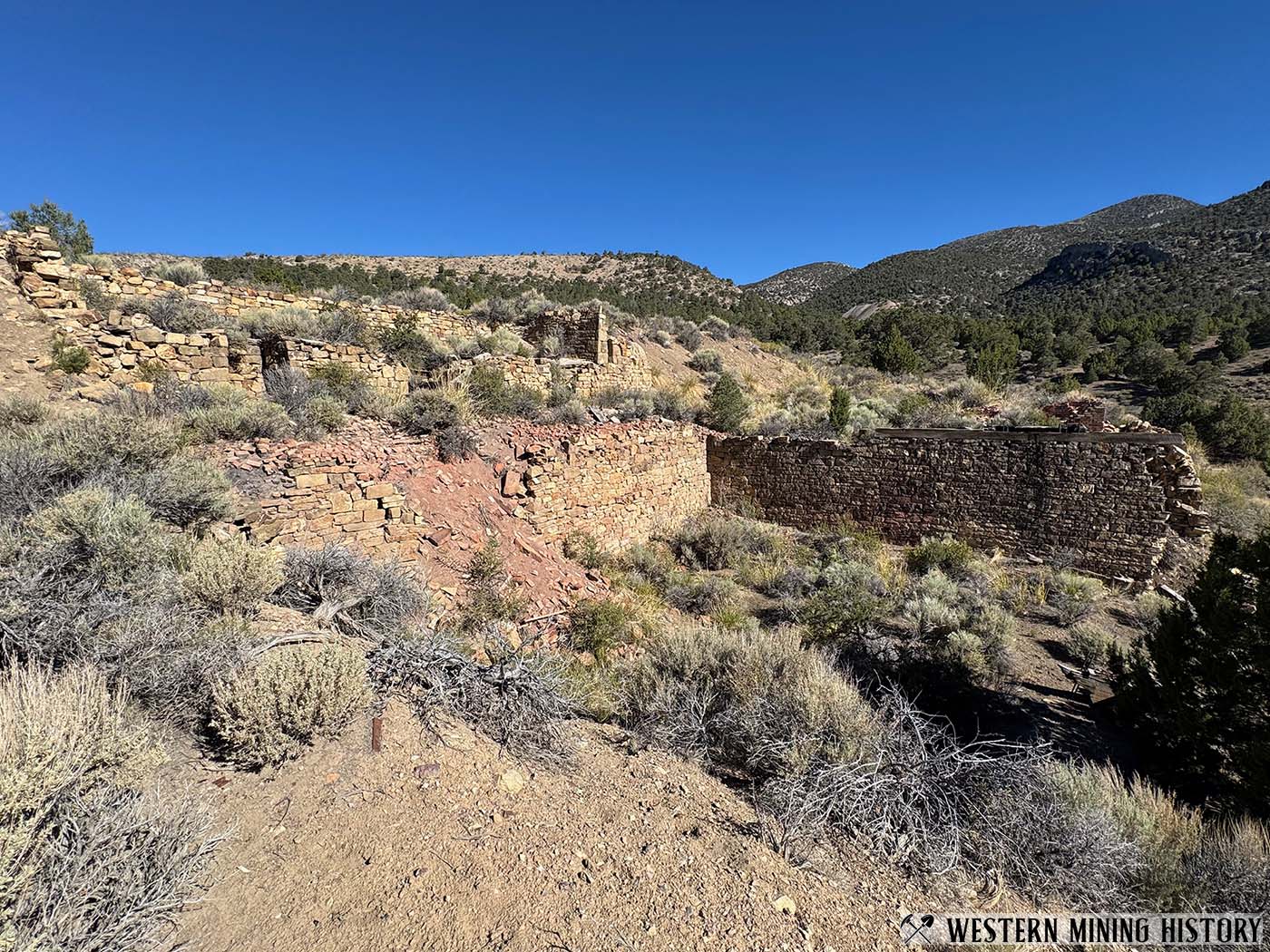
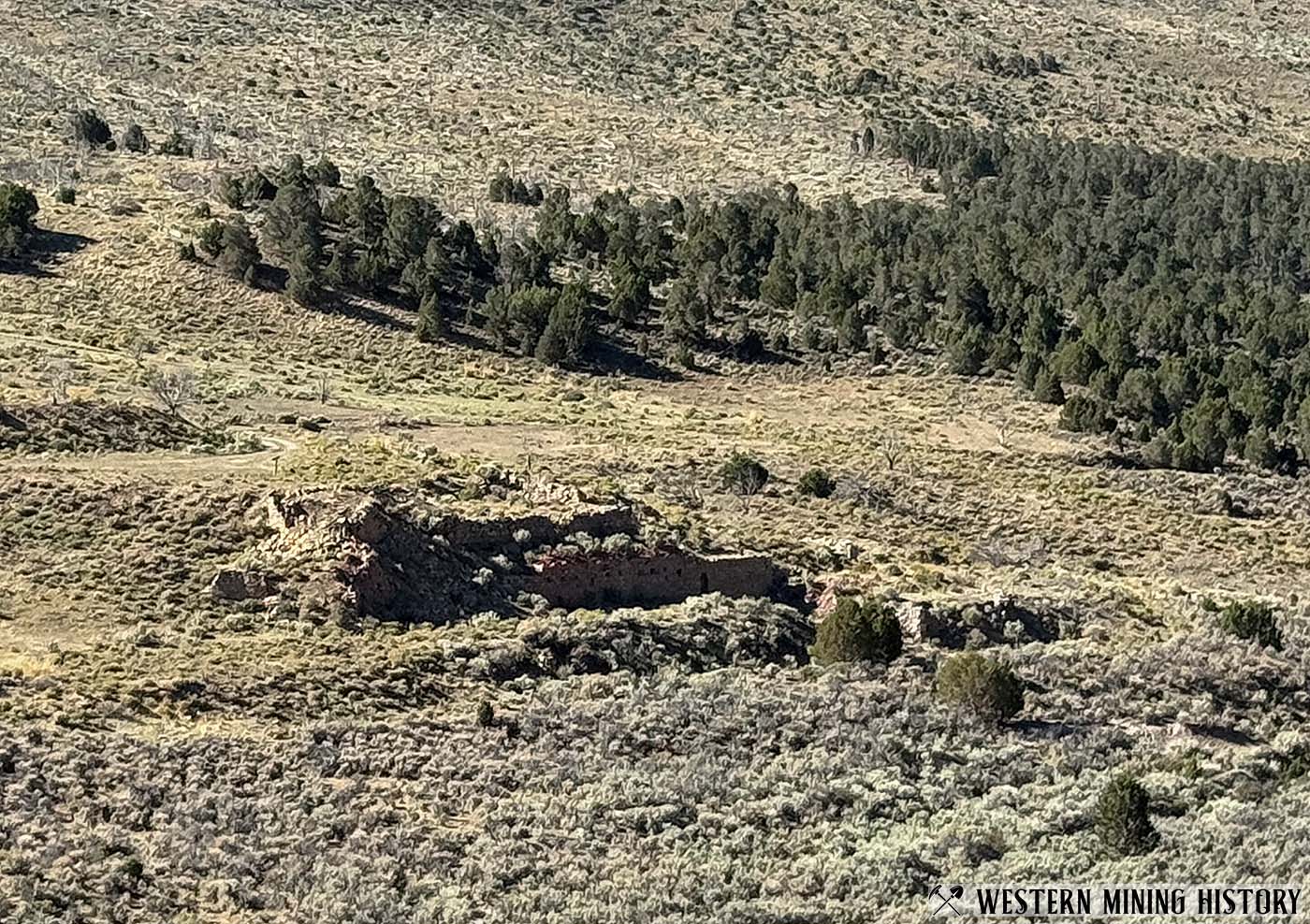
Today, nothing remains of Eberhardt beyond two mill foundations and small piles of tailings.
A Duel to the Death at Eberhardt
From the September 30, 1875 edition of the Helena Weekly Independent:
A frightful and fatal affray occurred at Eberhardt City recently between two men by the names of Jackson and Beck. The former was recently from Arizona, and the latter has been a resident of Eberhardt City for the past few months, engaged in keeping a saloon.
The two had a quarrel a short time before the fatal meeting, in which Jackson made an assault upon Beck with a knife, but was driven off by Beck with a fire-shovel. Some three or four hours after this Jackson returned to Beck's saloon, and while the latter was standing in the doorway plunged an eight-inch bowie-knife to the hilt in Beck's side, and the two clinched, and a very fierce encounter ensued, Jackson using his knife and fatally stabbing Beck, who, however, succeeded in freeing himself from Jackson, and ran as far as Dana's saloon, a distance of sixty yards, when he was overtaken by Jackson, who was pursuing his victim with a bloody and fiendish intent.
Beck at this place called for protection, but before the astonished bystanders could render him assistance the human fiend had done his work–he had given poor Beck five fatal stabs. At this juncture a party by the name of Brown, seeing what was going on, knocked Jackson off from the porch into the street with a chair, and while he was down, Beck. while actually dying, crawled to Jackson, and taking the knife which had been used on him, he plunged it into Jackson's breast, giving him a fatal wound. Beck died almost immediately after being separated from Jackson, and the latter was brought to the county jail, where he lingered until Wednesday last, when death ended his career.
No one thereabouts knew anything of the former career of Jackson; all that is known is his statement that he is from Arizona. Beck was considered a peaceable man, and leaves an invalid widow to mourn his untimely end.
The White Pine Silver Rush
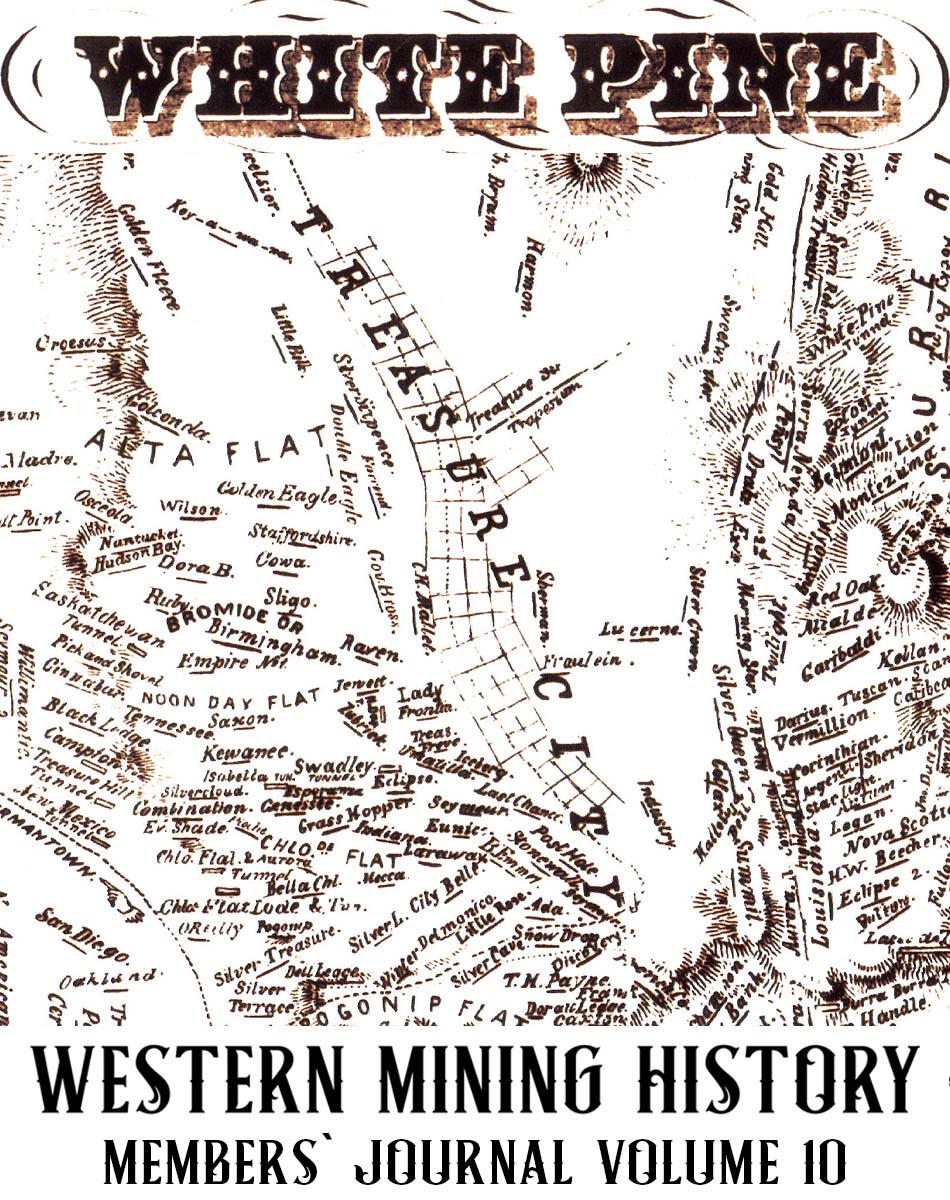
Deep in what was a vast wilderness in eastern Nevada, the White Pine district experienced one of the most intense and short-lived mining excitements in the history of the American West. What began as a modest discovery in the mid-1860s escalated into a boom that drew thousands of miners, speculators, and investors to the heights of Treasure Hill. Continue reading... (members only content)
Nevada Mining Photos
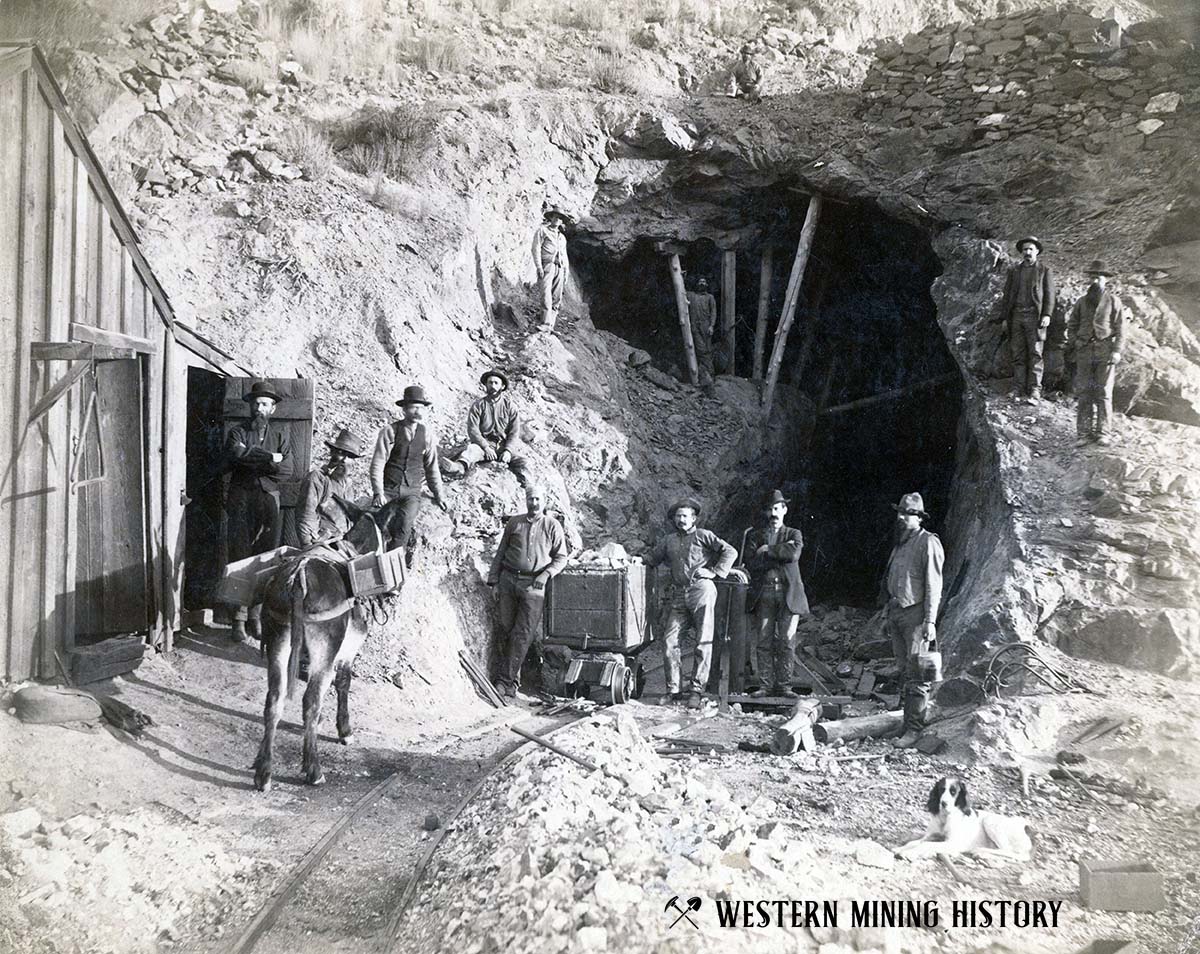
A Collection of Nevada Mining Photos contains numerous examples of Nevada's best historic mining scenes.
Nevada Gold
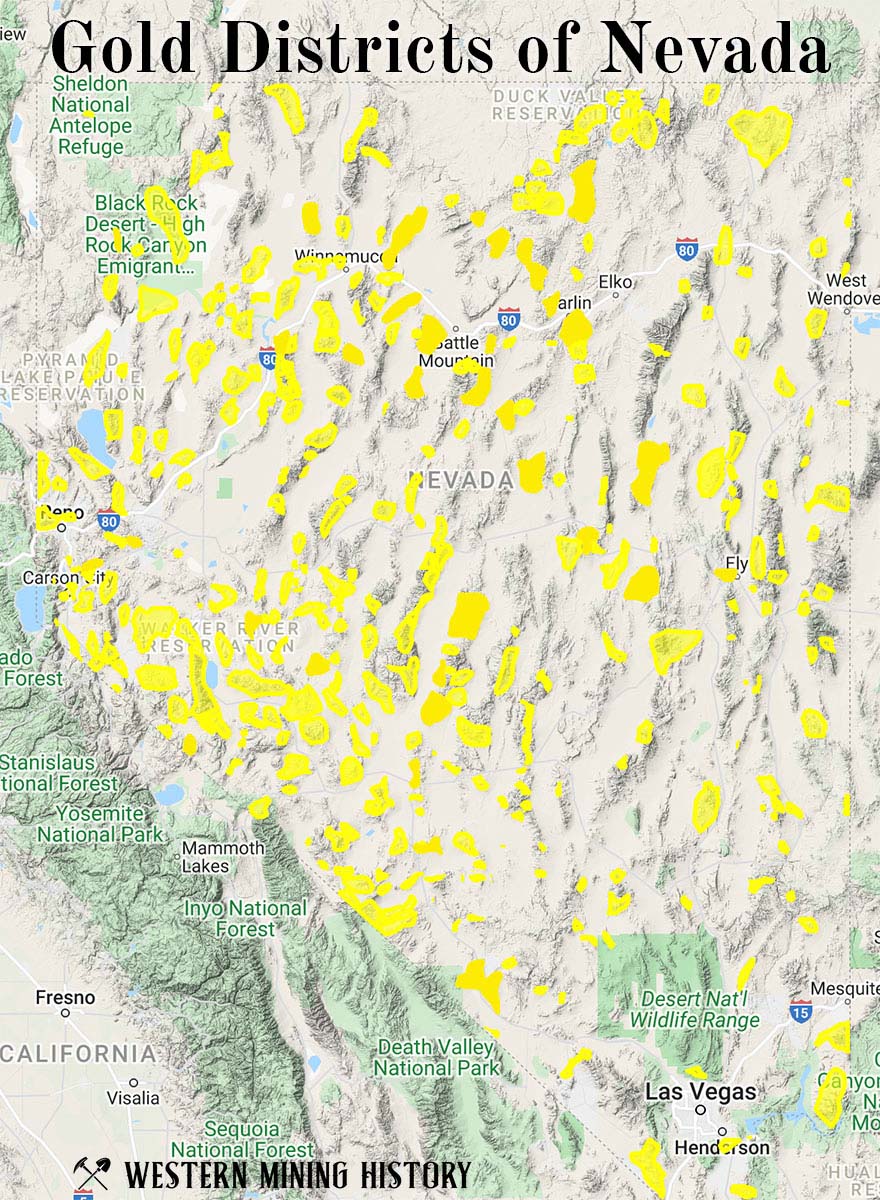
Nevada has a total of 368 distinct gold districts. Of the of those, just 36 are major producers with production and/or reserves of over 1,000,000 ounces, 49 have production and/or reserves of over 100,000 ounces, with the rest having less than 100,000 ounces. Read more: Gold Districts of Nevada.